Uncategorized
Top 10 Heavy-Duty Mobility Scooters (300 lb+) for 2026

 This post contains affiliate links. If you use these links to buy something, we may earn a commission. Thanks.
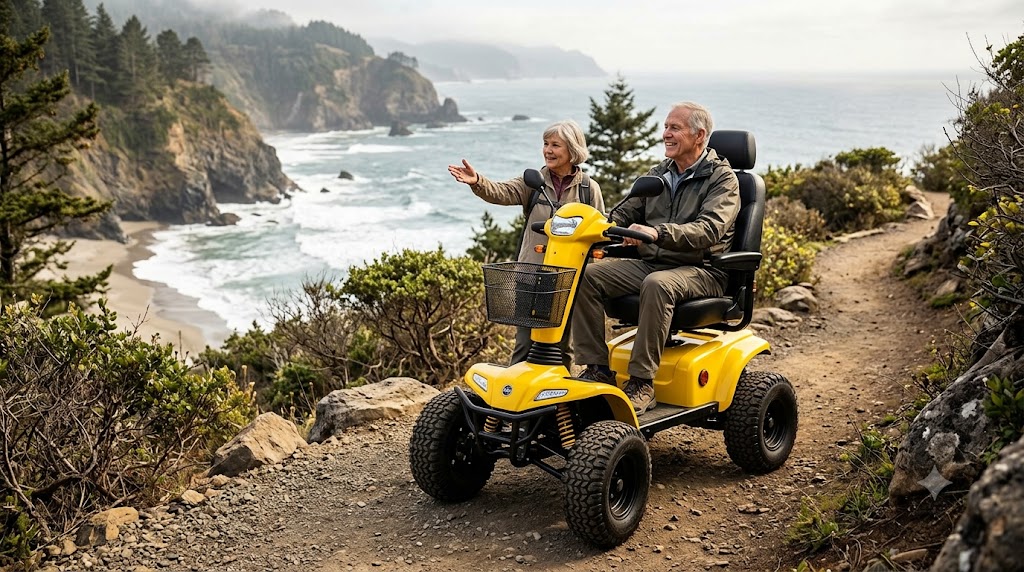
When your spirit calls you toward rugged coastal pathways, bustling city markets, and unpaved trails, standard compact travel scooters simply will not suffice. For those who require robust construction, superior weight capacity, and heavy-duty performance, finding the right machine is essential for maintaining total independence.
Before diving into our heavy-duty heavyweights, if you are transitioning from smaller models or just beginning your journey, you may want to review our foundational guide on choosing your very first travel scooter. Additionally, keeping these heavy-duty powerhouses in peak condition through every season requires proper care—be sure to consult our comprehensive Maintenance & Battery Guide for Coast-to-Coast Reliability to protect your investment.
For 2026, the engineering behind heavy-duty mobility has reached extraordinary new heights. After thorough research and testing, we have curated the definitive list of the top heavy-duty mobility scooters offering 300lb+ weight capacities.
What Makes a Heavy-Duty Mobility Scooter?
Heavy-duty mobility scooters are engineered for durability, power, and stability. Unlike lightweight or folding units, these titans feature:
-
Higher Weight Capacities: Ranging comfortably from 300 lbs up to 500 lbs and beyond.
-
Rugged Terrain Handling: Larger tires, high ground clearance, and powerful motors to conquer gravel, grass, and steep inclines.
-
Advanced Suspension Systems: Designed to absorb bumps and deliver a cloud-like ride on extended outdoor journeys.
Top Heavy-Duty Contenders for 2026
1. The Ultimate Powerhouse: Pride Mobility PX4
For those who refuse to let terrain dictate their schedule, the Pride PX4 stands as an undisputed champion. With massive high-traction tires and full suspension, it devours rough trails with grace.
-
Weight Capacity: Up to 500 lbs
-
Bob’s Take: “This is the steel-hearted machine I trust for our toughest outdoor expeditions. It inspires absolute confidence.”
Check the Pride PX4 at Electric Wheelchairs USA
2. The Comfort King: Drive Medical Panther
If you crave plush, all-day comfort paired with rugged muscle, the Drive Medical Panther is your ideal companion. It features an ergonomic captain’s seat and advanced lighting for safe evening strolls.
-
Weight Capacity: Up to 425 lbs
-
Janice’s Take: “It feels like riding on a cozy armchair while exploring scenic viewpoints! Pure luxury.”
See the Drive Medical Panther at Electric Wheelchairs USA
3. The Versatile Performer: Afiscooter S4
A masterpiece of modern engineering, the Afiscooter S4 balances heavy-duty performance with nimble urban maneuverability and sleek, head-turning style.
-
Weight Capacity: Up to 450 lbs
-
Bob & Janice’s Tip: “Strong enough for steep coastal hills, yet nimble enough for crowded boardwalks.”
See the Afikim Afiscooter S4 at Electric Wheelchairs USA
Quick Comparison Table
Final Thoughts & Where to Buy
Choosing a heavy-duty mobility scooter is an investment in your freedom and outdoor lifestyle. Whether you prioritize the raw power of the PX4, the luxurious embrace of the Panther, or the agile versatility of the S4, your next great adventure awaits just beyond your doorstep.
Before you set sail into the sunset, deepen your knowledge by exploring our detailed Pride Mobility Reviews and our expert guide on Senior Independence & Outdoor Accessibility.
Ready to upgrade your mobility? Find Your Perfect Scooter on Electric Wheelchairs USA today! Check out the full selection and get expert advice at our heavy-duty scooter collection.
May the wind always be at your back and your battery forever full… 🌊
– Bob & Janice
Compare prices: Browse heavy-duty mobility scooters or scooters rated for 400 lbs or more at our partner, Mobility Department. These models are also listed there: Pride PX4, Drive Medical Panther, Afikim Afiscooter S4.
Best Compact Scooters for Tight Indoor Spaces

This post contains affiliate links. If you use these links to buy something, we may earn a commission. Thanks.
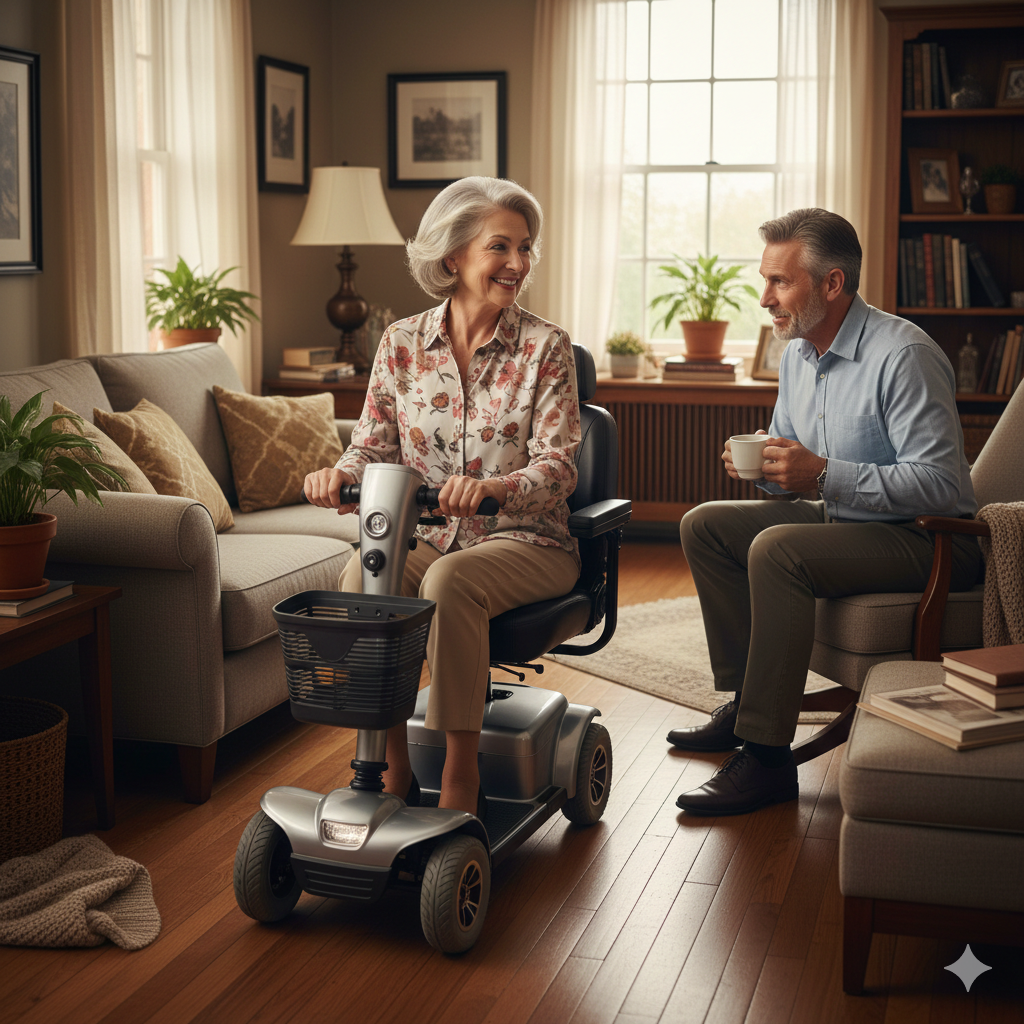
In cramped quarters — narrow hallways, cozy apartments, compact retail floors, or tight storage corners — the need for mobility doesn’t disappear. It just demands a different kind of machine. Enter the compact scooter: a lean, nimble, foldable solution engineered not for highways or open roads, but for tight indoor spaces where agility, portability, and subtlety matter much more than brute power.
In this guide, we’ll dive into what makes a scooter “ideal for indoor spaces,” highlight top picks on the market today, and walk you through how to choose the right model. By the end, you’ll have clarity — and maybe more mobility than you expected.
Why Compact Scooters Shine Indoors
Large scooters and bulky mobility devices often falter once you step into confined spaces: doorways become bottlenecks, furniture becomes obstacles, and storage becomes a headache. Compact scooters — by design — circumvent those hurdles. They bring several inherent advantages:
- Maneuverability & Tight Turning Radius. Scooters built for indoor use often feature three-wheel configurations or specialized steering mechanisms to allow quick, tight turns. That makes navigating narrow hallways, aisles, or corners far easier.
- Portability & Foldability. Many compact scooters can be folded, disassembled, or reduced to a more manageable size — a huge plus when you need to store them under beds, in closets, or corners, or when you want to transport them between rooms or buildings.
- Space Efficiency. Their slim frames often allow them to fit through standard doorways and move around furniture — making them ideal for homes, apartments, malls, offices, or other indoor environments.
- Convenience for Frequent Use. For people who need a scooter for short distances — maybe around a house, small building, or indoor public space — compact scooters offer a convenient, low-effort solution without the hassle of large, heavy vehicles.
Because of these traits, compact scooters have carved a niche in indoor mobility: for seniors, people with limited mobility, urban dwellers, and anyone who values space-saving design without sacrificing functionality.
What to Look For — Key Features & Specs
Before you commit to a model, it’s worth pausing to examine the essential attributes that make a compact scooter truly indoor-ready.
Maneuverability & Wheel Configuration
- Three-wheel vs. Four-wheel: Many indoor scooters employ a three-wheel design because it provides a tighter turning radius — ideal for navigating narrow doorways, corners, and hallways.
- Turning Radius: A smaller turning radius (often 30–36 inches or so for 3-wheelers) enhances agility in tight spaces.
- Tiller / Steering Design: Intuitive, easy-to-manage steering makes a big difference, especially in confined areas where oversteering can lead to collisions.
Size, Weight & Portability
- Compact Dimensions: A slim frame that fits through standard doors and navigates hallways is ideal.
- Weight: Lighter scooters (some as light as ~35–40 lbs) are easier to lift, fold, store, or transport.
- Disassemblable or Foldable Frames: Make storage and transport much easier for homes, apartments, or even cars.
Battery, Range & Performance (if electric)
- Sufficient Range for Intended Usage: For indoor use or short trips indoors/outdoors, a modest battery range (e.g., 6–12 miles) may suffice.
- Power vs. Space Trade-off: Indoor scooters often sacrifice long-range or high-speed motors for compact form factors.
Comfort & Safety Features
- Seat Comfort and Adjustability: Swivel seats, adjustable seats/armrests — these make for ease of getting on/off in tight quarters.
- Stability & Weight Capacity: The scooter must safely support the user’s weight. Typical indoor compact scooters support 250–300+ lbs.
- Ease of Use Controls: Simple, intuitive controls (steering, acceleration, braking) help reduce frustration and increase safety — especially important indoors where reaction time might be limited.
Recommended Compact Scooters for Tight Indoor Spaces
Here are several of the most recommended compact scooters, particularly suited for indoor environments or tight-space navigation. Their differences in size, construction, functionality, and cost provide plenty of options to suit various preferences.
Highlights & Why They Stand Out
- HandyScoot Small Mobility Scooter for Indoor Use — A folding, three-wheeled scooter that balances portability with practicality. Top speed up to 9 mph and a range of up to ~15 miles per charge. Its foldable design and manageable weight make it a suitable candidate for indoor and travel use.
- EV Rider Gypsy Small Indoor Mobility Scooter — Extremely lightweight (≈ 37 lbs), folds down easily, and ideal for indoor mobility or frequent transport (e.g., stairs, car trunks). Its compact build makes it a good everyday indoor companion.
- Go-Go Elite Traveller Compact Scooter — A well-rounded option with solid indoor maneuverability, relatively easy disassembly, and sufficient weight capacity for many users. It suits those who want portability without compromising too much on comfort and Stability.
- Pride i-Go 3-Wheel Folding Mobility Scooter — Compact, foldable, and built with indoor use in mind. Its foldable build allows for quick storage and hassle-free transport, and the three-wheel setup provides smoother handling in narrow or crowded areas.
- SmartScoot Foldable Mobility Scooter — Among the lightest foldable scooters on the market, making it highly portable and easy to store. Great for users living in apartments or small homes, or for frequent mobility without bulky equipment.
- Featherweight Mobility Scooter — Ultra-light design prioritizing portability and storage — ideal for very tight living spaces, frequent transport, or minimal-space lifestyles.
- eFOLDi Lite Mobility Scooter — Combines a lightweight frame with a respectable load capacity, and folds easily for storage or transport. Useful for users needing a balance of convenience, indoor mobility, and everyday reliability.
- Triaxe Sport Compact Mobility Scooter — A slightly sturdier compact scooter that still embraces a slim, space-efficient design. For those wanting a more durable build while staying within the compact-scooter category.
How to Choose — Matching Scooter to Your Needs
Selecting the “right” compact scooter depends heavily on how you intend to use it. Here’s a practical framework to guide your decision:
Usage Environment
Mostly within apartments, homes, offices, or indoor spaces → prioritize foldability, light weight, narrow width, and tight turning radius.
Expect occasional outdoor use (e.g., sidewalks, short errands) → opt for slightly more robust frames and better battery/range.
Mobility & Storage Constraints
Limited storage (closet, under bed, corner room) → choose foldable or disassemblable scooters like the Featherweight, SmartScoot, or EV Rider models.
Need portability (stairs, moving between rooms/buildings, transport in a car) → light scooters (under ~40–50 lbs) or foldable designs.
User’s Weight & Comfort Needs
Always check weight capacity — many compact scooters support 250–300+ lbs.
For frequent daily use, a comfortable seat, stable build, easy controls, and good maneuverability matter more than high speed.
Battery, Range & Frequency of Use
If the scooter will be used indoors or for short trips, a modest range (6–15 miles) may suffice.
For longer or more frequent trips, prioritize models with better battery life, even if they are slightly heavier.
Maneuverability Over Power
For indoor spaces, a tight turning radius and responsive steering trump high speed or outdoor power.
Potential Trade-offs: What You Might Sacrifice
No solution is perfect. Compact scooters — for all their space-efficient brilliance — come with trade-offs.
- Limited Comfort or Suspension: Because of their small frame and lighter build, many compact scooters offer only basic suspension (if any) and limited comfort features. This can make them less comfortable over longer rides or rougher indoor surfaces.
- Reduced Range or Power: Compact/foldable scooters often have smaller batteries and less powerful motors. Not ideal if you plan long rides or frequent outdoor use.
- Less Stability (on Rough Ground): While fine indoors or on smooth floors, compact scooters — exceptionally light three-wheel ones — may wobble or struggle on uneven terrain.
- Fewer Features: To keep size and weight down, manufacturers may sacrifice extras such as advanced suspension, large storage baskets, heavy-duty build, or high-end controls.
Accepting these trade-offs is part of embracing compact scooters: you gain range, portability, and indoor friendliness — but sacrifice some comfort or all-terrain robustness.
Who Benefits Most from Compact Indoor Scooters?
Compact scooters for tight indoor spaces tend to be especially beneficial for:
- Elderly or mobility-challenged individuals who need dependable, easy-to-use devices to navigate homes, apartments, or assisted-living facilities.
- Urban dwellers living in small apartments or condominiums, where storage is limited, and the transport of a regular scooter would be burdensome.
- People needing a portable mobility device for frequent transport (between rooms, buildings, or even vehicles), but still requiring Stability and comfort.
- Temporary use cases (e.g., injury recovery, short-term mobility assistance) where large, expensive devices are unnecessary.
- Space-conscious households or establishments like small shops, clinics, assisted-living homes, or indoor recreation centers, where maneuverability and compact storage are essential.
Maintenance, Safety, and Practical Use Tips
Owning a compact indoor scooter isn’t just about buying — it’s also about using it properly. Here are some tips to ensure longevity and safe use:
| Tip / Consideration | Reason / Benefit |
| Regularly inspect wheels / turning mechanisms | Frequent tight turns can stress wheels or bearings; early checks prevent accidents. |
| Keep battery charged; avoid deep discharge | For electric models, consistent charging prolongs battery life and ensures reliability. |
| Avoid rough surfaces or stairs if not designed for them | Compact scooters often lack suspension or a rugged build — rough terrain can tip or damage them. |
| Use indoors first — take time to get used to steering radius & braking | Indoor spaces leave little margin for error — practice helps build control and confidence. |
| Store in dry, dry-climate spaces | Prevent rust or battery damage from humidity, especially in tropical climates like Manila. |
| Check weight load regularly (especially with cargo or bags) | Overloading may stress the frame or degrade performance over time. |
Should You Use a Compact Scooter in Manila / Urban Asia Context?
Given your likely context — dense urban living, limited indoor space, perhaps shared living quarters — compact scooters make a compelling case. A few reasons:
- Housing in metro areas often means smaller apartments or condos; traditional large scooters become cumbersome to store or move.
- Narrow corridors, small elevators, and limited staircases — compact scooters navigate these with ease.
- For short errands, quick commutes within buildings, or trips to nearby destinations, compact scooters offer a practical alternative to cars or larger vehicles.
- Portability means you can carry them up staircases, into cars or public transport (if allowed), or store them in small corners when not in use.
As long as you choose a model matching your weight, mobility needs, and intended use — and follow safety/maintenance guidelines — compact scooters can transform mobility for urban dwellers.
Cost Breakdown: How Much Should You Expect to Spend on a Compact Indoor Scooter?
While compact scooters are smaller and more streamlined than their full-sized counterparts, their prices vary widely — often surprising buyers who assume “smaller” means “cheaper.” In reality, the cost reflects engineering trade-offs, specialized materials, battery technology, and whether the scooter is built for portability, durability, or all-day indoor use. Understanding these cost tiers can help you avoid overspending while ensuring you choose a model that aligns with your needs.
Entry-Level Compact Scooters ($450–$900)
These models offer the essentials: a basic three-wheel design, modest top speeds (usually 3–4 mph), and limited range. They’re ideal for those who need occasional indoor mobility — navigating a small apartment, moving from room to room, or performing light daily tasks. Foldability may be minimal, and materials tend toward lightweight plastics and simple foam seating.
- Best for: Budget-conscious shoppers, light users, temporary mobility needs.
- Trade-offs: Shorter battery life, minimal comfort features, and limited suspension.
Mid-Range Indoor Scooters ($900–$1,600)
This category represents the “sweet spot” for most users. These scooters typically include better seating, improved maneuverability, tighter turning radii, and more durable frames. Many mid-range compact scooters offer quick-disassembly systems or semi-folding mechanisms that still allow for easy storage in closets or small storage areas.
- Best for: Daily indoor users, seniors who need dependable home mobility, and small-space dwellers.
- Trade-offs: May still lack advanced cushioning or high-weight capacities.
Premium Ultra-Compact & Foldable Scooters ($1,600–$3,400+)
At the high end of the spectrum lie the featherweight and ultra-portable models — scooters engineered for seamless movement in tight indoor spaces and effortless transport outdoors. Many are aircraft-friendly, made with aluminum alloys or carbon-infused frames, and can fold in seconds. Despite their light footprint, some models still deliver impressive speed and range.
- Best for: Users prioritizing portability, travelers, and those with limited strength who need lightweight frames.
- Trade-offs: Higher price, sometimes smaller seating, and limited cushioning due to weight-saving designs.
Hidden Costs to Consider
Small scooters might look like low-maintenance machines, but ownership can introduce a few extra expenses that often catch new users off guard:
- Battery replacements (every 12–24 months) — Lithium-ion batteries last longer but cost more; sealed lead-acid alternatives are cheaper but heavier.
- Tire wear or replacements — Indoor environments can still create friction on non-marking tires.
- Seat upgrades — Cheaper models may benefit from cushioned add-ons for long-term comfort.
- Warranty extensions or servicing — Especially worthwhile if you rely on the scooter daily.
Depending on your needs, these extras could add $60 to $300 per year. However, for frequent users, these costs are often justified by the increased reliability and comfort they provide.
FAQs
Are compact scooters safe to use indoors?
Yes. Compact scooters are designed with tight turning radii and controlled speeds, making them safe for hallways, kitchens, bedrooms, and other indoor spaces when appropriately used.
Can these scooters fit through standard doorways?
Most compact scooters can pass through standard 28–32-inch doorways thanks to their slim frames. Always check the exact width before purchasing.
How long does the battery last?
Indoor-friendly models typically offer 6–15 miles per charge — more than enough for daily home use.
Can compact scooters be used outdoors too?
They can, but only on smooth surfaces like sidewalks or mall floors. They are not ideal for uneven terrain or rough outdoor conditions.
Do foldable scooters lose durability?
Not necessarily. High-quality folding mechanisms are engineered for repeated use, but ultra-lightweight frames may have lower comfort or load capacity.
Are compact scooters easy to store?
Yes. Most either fold or disassemble, allowing storage in small closets, corners, or even under furniture.
Conclusion
We often equate mobility with size: bigger wheels, heavier build, more power. But when it comes to indoor spaces or small-footprint living, that assumption becomes a liability. Compact scooters challenge that notion. They prove — gently, efficiently, and sometimes surprisingly elegantly — that freedom of movement doesn’t require bulk.
If you value agility over raw power, portability over long-haul range, and space-efficiency over ruggedness, compact scooters offer a liberating alternative.
Whether for seniors longing for independence, urban residents craving mobility without clutter, or anyone navigating tight indoor spaces, the right compact scooter can help you rediscover movement on your own terms.
Gear up for your ride: front basket · folding basket · scooter batteries and chargers · lithium scooter battery · all-weather scooter cover · scooter canopy.
Ready to shop? Browse lightweight folding scooters at our partner, Electric Wheelchairs USA.
Compare prices: Browse folding mobility scooters at our partner, Mobility Department. These models are also listed there: EV Rider Gypsy Q2, eFOLDi Lite.
Stairlift or Mobility Scooter? 2026 Staircase Safety Guide
This post contains affiliate links. If you use these links to buy something, we may earn a commission. Thanks.
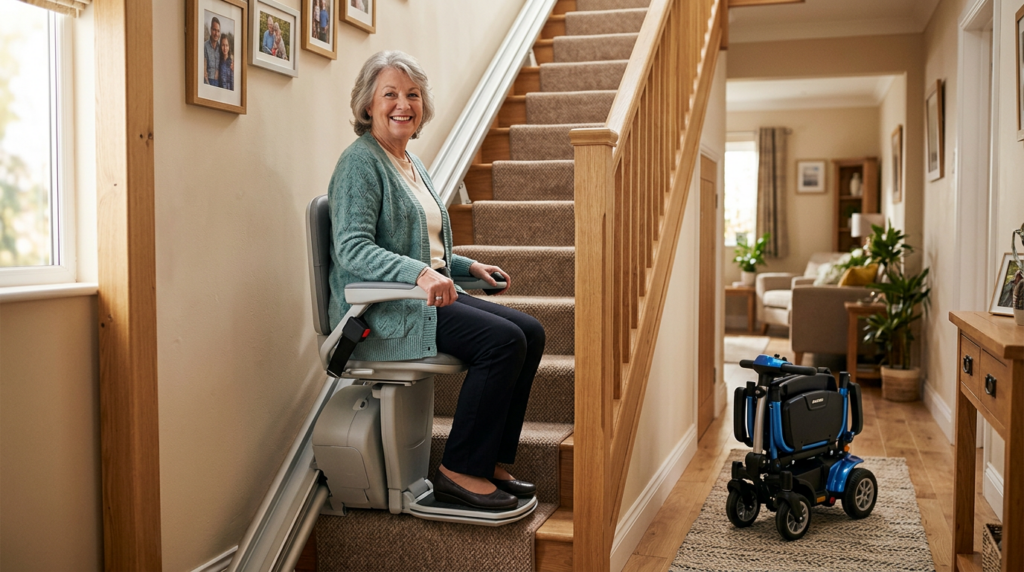
Two devices, one goal: never let stairs — or distance — slow you down.
By Frank Cannon | Updated July 2026
This guide breaks down exactly when each device matters, how they work together in a real home, and — critically — how to avoid overpaying for either one.
Mobility Scooter vs. Stairlift: They’re Not Competing, They’re Teammates
The 5 Warning Signs You Need a Stairlift (Not Just a Scooter)
- You’ve started sitting down partway up the stairs to rest. This is the single biggest predictor cited by home-safety assessors — if you’re pausing mid-staircase more than occasionally, a fall risk is already forming.
- You avoid the second floor of your own house. If you’ve unofficially “moved” your bedroom downstairs to skip the stairs, that’s not a lifestyle choice — that’s your body telling you the stairs have become the obstacle.
- A caregiver or family member has started walking behind you on stairs “just in case.” If someone else has noticed this risk before you have, it’s usually further along than it feels.
- You’ve had a stair-related near-miss — a stumble, a missed step, a grab for the railing that worked but scared you. This is the point most stairlift buyers finally act, but the ideal window to act is before this happens, not after.
- You already rely on a mobility scooter for outdoor and level-ground movement, per our guide on the top signs you’re ready to upgrade your mobility scooter — if you’ve already accepted assistance for flat-ground mobility, stairs are very often the next fall risk to address, not a separate issue to ignore.
What a Stairlift Actually Costs in 2026 (And Why the List Price Isn’t the Real Number)
Does Medicare Pay for a Stairlift?
- Medicaid HCBS waivers cover stairlifts in many states when medically necessary and tied to a home-care plan.
- VA grants (HISA, SAH, SHA) can fund stairlifts for eligible veterans.
- Long-term care insurance frequently includes home modification riders that cover part or all of the cost.
- Some installers offer their own in-house financing at 0% for 12–24 months.
If you haven’t already checked whether your mobility scooter itself qualifies for reimbursement, do that first — it’s usually the faster win:
👉 Find Out If Medicare Will Help Pay for Your Mobility Scooter — Even If You Were Denied Before
How a Stairlift and a Mobility Scooter Work Together in the Same Home
The most common real-world setup we see described by readers looks like this:
- Outdoors and around the block: a lightweight or long-range mobility scooter — see our comparisons of best lightweight mobility scooters and long-range models that keep you moving all day.
- Indoors, tight spaces: a compact scooter built for tight indoor spaces, since full-size scooters rarely fit through interior doorways or hallways.
- Between floors: the stairlift, closing the one gap neither scooter type can touch.
Straight vs. Curved Stairlifts: Why This Distinction Changes Everything
- Straight rail: Installs in as little as a few hours, often without any wall modification, and is the cheaper of the two by a wide margin.
- Curved rail: Custom-measured and fabricated per staircase — expect a 2–6 week lead time and a meaningfully higher price tag.
If your staircase has a landing, a turn, or a spiral, budget for the curved category and get multiple quotes — pricing variance between installers is enormous on curved units specifically, far more than on straight rails.
Safety Features Worth Paying Extra For
- Swivel seat at the top landing — reduces the twisting motion that causes most stairlift-adjacent falls (getting on/off, not riding).
- Seatbelt and sensor obstruction detection — stops the lift automatically if something is on the track.
- Battery backup operation — critical if you lose power; a stairlift that only runs on mains power is a liability during outages.
- Remote call/send controls at both the top and bottom of the stairs, so a spouse or caregiver can summon it without you climbing to fetch it.
A Simple Decision Framework
Ask yourself these three questions in order:
- Is the mobility issue mainly about distance/endurance on flat ground? → A mobility scooter alone likely solves it. Revisit our guide to choosing the right scooter for your lifestyle.
- Is the mobility issue mainly about stairs specifically — going up/down safely? → A stairlift is the direct fix, independent of whether you own a scooter.
- Is it both? → This is the most common answer among readers over 70, and it simply means budgeting for both across your household — not choosing one over the other.
Frequently Asked Questions
30 Days Without a Car: Living on an Enclosed Mobility Scooter
This post contains affiliate links. If you use these links to buy something, we may earn a commission. Thanks.
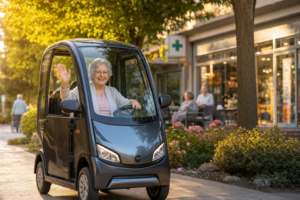
Who needs a car payment when your ride pays you back? ☀️🛺 Meet the enclosed mobility scooter giving seniors their independence back — one sunny errand at a time.
What Is an Enclosed Mobility Scooter, Exactly?
Why This Question Is Suddenly Everywhere
The 5 Questions That Actually Decide “Car Replacement or Not”
1. How far do you really drive in a normal week?
A good exercise: pull up your last two weeks of driving in your head (or check your car’s trip odometer). Most people are shocked at how few of those trips actually needed highway speeds or long distances. If yours don’t either, you’re a strong candidate.
2. Does the weather where you live actually threaten you?
3. Can you legally park and charge it where you live?
4. What does it cost you monthly vs. a car?
| Cost Category | Average Car | Enclosed Mobility Scooter |
|---|---|---|
|
Fuel/Charging
|
$150–$250/mo
|
$8–$15/mo (electric)
|
|
Insurance
|
$100–$220/mo
|
$0–$30/mo (optional)
|
|
Maintenance
|
$50–$100/mo
|
$10–$25/mo
|
|
Registration/Plates
|
$10–$40/mo
|
Usually $0
|
5. Are you replacing the car entirely, or replacing 80% of your trips?
3-Wheel or 4-Wheel Enclosed? It Matters More Here Than You’d Think
A Practical 7-Point Checklist Before You Buy
Before you commit to an enclosed model, walk through this list:
- Map your typical week’s trips. If most are under 5 miles one-way, you’re a strong fit.
- Check your local ordinances. Confirm sidewalk/bike-lane legality and any speed cap in your city or county.
- Test the door and step-through height in person. Comfort here matters more than horsepower specs — our notes on scooters for people with back or joint pain apply directly to enclosed cabin ergonomics.
- Confirm charging access. Garage outlet, covered carport, or dedicated charging dock — enclosed models still need a dry, accessible plug.
- Ask about accessory compatibility. Mirrors, extra lighting, phone mounts, and cargo baskets — see our must-have mobility scooter accessories guide.
- Check the warranty and battery replacement cost up front, not after you’ve bought it.
- Confirm Medicare/insurance reimbursement eligibility before paying full price (see the CTA below — this step alone can save you thousands).
Real Talk: Where an Enclosed Scooter Can’t Replace a Car (Yet)
- Highway speeds. Most top out at 15–25 mph. Fine for neighbourhoods, dangerous on arterial roads.
- Long-distance family visits. If “seeing the grandkids” means a 3-hour drive, you still need four wheels and a full tank.
- Severe winter states. Even enclosed cabins aren’t rated for heavy snow/ice traction the way a car is.
- Multiple passengers. These are single-rider vehicles. Family errands with grandkids in tow still need the car.
- Extreme heat exposure at highway shoulders or unshaded lots — cabins trap heat quickly without AC, so factor that into summer routes.
If any of these describe your daily reality, an enclosed scooter is better framed as a second vehicle, not a replacement — and that’s still a legitimate, money-saving upgrade over relying on your car for every single errand.
Before You Buy: Don’t Skip the Money Question
👉 Find Out If Medicare Will Help Pay for Your Mobility Scooter — Even If You Were Denied Before
We built a free, no-obligation guide that walks you through the exact qualification steps and appeal process (first-time approval rates run 70%+ when done right). Check your eligibility now →
Signs You’re Ready to Make the Switch
Frequently Asked Questions
Gear up for your ride: all-weather scooter cover · scooter canopy · scooter batteries and chargers · lithium scooter battery · portable ramps · scooter and wheelchair lifts.
Compare prices: Browse enclosed mobility scooters at our partner, Mobility Department. These models are also listed there: Shoprider Flagship Enclosed.
Best Heavy-Duty Mobility Scooters for Strength & Stability


This post contains affiliate links. If you use these links to buy something, we may earn a commission. Thanks.
Mobility challenges can alter how someone moves through the world—but choosing the right mobility scooter should never feel like settling. For those who need exceptional strength, stability, and unwavering support, a heavy-duty mobility scooter is not just equipment; it’s a lifeline. Whether navigating uneven terrain, carrying higher weight loads, or ensuring all-day comfort, these scooters are engineered with reinforced frames, advanced suspension systems, and rock-solid durability.
We go further into the top heavy-duty mobility scooters specifically designed for strength and stability in this extensive guide. You’ll discover what sets them apart, how to choose the right model, and which scooters outperform the rest in real-world use.
Why Choose a Heavy-Duty Mobility Scooter?
Heavy-duty mobility scooters aren’t simply larger versions of standard scooters. They are built with a completely different purpose in mind—to deliver unmatched structural strength, enhanced stability, and superior comfort, especially for users with higher weight capacities or who traverse challenging terrain.
Higher Weight Capacity
Most standard scooters cap out around 250–300 lbs. Heavy-duty models surpass that by a wide margin, with many supporting 400–500 lbs or more. This gives users confidence, safety, and comfort without performance degradation.
Enhanced Durability
These scooters are used:
- Reinforced steel or aircraft-grade aluminum frames
- Thicker wheels
- Industrial-grade suspension
- High-torque motors
The result? A mobility machine that can withstand continuous daily use and harsher environmental conditions.
Superior Stability
Because of their wider bases, lower centers of gravity, and rugged tires, heavy-duty scooters remain stable even when navigating slopes, grass, gravel, and uneven terrain—areas where lightweight scooters struggle.
Extended Range and Stronger Motors
Heavy-duty scooters tend to include larger batteries and high-power motors, offering:
- Longer travel distances
- Better hill-climbing ability
- Reliable performance under maximum load
These aren’t scooters that quit halfway through the day. They’re built to keep going.
Top 7 Best Heavy-Duty Mobility Scooters Built for Strength and Stability
Below is a curated list of the strongest, most reliable heavy-duty mobility scooters on the market today. Each model excels in weight capacity, stability, comfort, and overall performance.
Pride Mobility Wrangler MV600
Best Overall for Rugged Terrain and Power
The Wrangler MV600 is a powerhouse designed for users who want the confidence to go almost anywhere. This scooter’s focus on rugged durability makes it exceptional for outdoor adventures.
Key Features
- Weight capacity: 450 lbs
- Top speed: 11 mph
- Range: Up to 29 miles
- Suspension: Full enhanced suspension for off-road use
- Tires: Extra-large, 14.5-inch pneumatic tires
Why It Excels
Built like an all-terrain vehicle, the Wrangler MV600 offers unmatched shock absorption, powerful torque, and fantastic stability. The broad base and heavy frame create an anchored feel on rough, bumpy paths. It’s ideal for rural areas, farms, gravel roads, and parks.
Best for Comfort and Long-Distance Travel
The Cobra GT4 delivers a perfect blend of size, style, strength, and comfort. For users who spend long hours on their scooters, this model provides luxury-level seating and ergonomic design.
Key Features
- Weight capacity: 450 lbs
- Top speed: 10 mph
- Range: 35 miles
- Seat: Captain’s seat with multiple adjustments
- Lighting: Ultra-bright LED package
Why It Excels
With its long-range battery and ultra-comfortable seating, the Cobra GT4 is ideal for those who want an extremely stable, smooth ride over extended periods. The stability stems from its wide wheelbase and sophisticated suspension system.
Best for Speed and Long Range
This all-terrain heavy-duty scooter pairs a brisk cruising pace with a dual-battery range option and genuine outdoor capability.
Key Features
- Weight capacity: 400 lbs
- Top speed: 9.3 mph
- Range: Up to 34.8 miles with dual lithium batteries
- Braking: Regenerative and electromechanical braking system
- Suspension: Front and rear suspension
Why It Excels
The Pursuit 2 is ideal for users who want a fast, rugged scooter for the great outdoors. Pneumatic tires on split rims give excellent handling and traction, and the memory foam seat with adjustable slider keeps long rides comfortable.
Best for Stability and User Safety
Afikim is known for its premium build quality, and the S4 is no exception. It’s one of the most stable heavy-duty scooters available.
Key Features
- Weight capacity: 450 lbs
- Top speed: 9.3 mph
- Range: Up to 38 miles
- Tires: Extra-wide, shock-absorbing pneumatic tires
- Safety: Advanced control system and rear bumper
Why It Excels
The Afiscooter S4 has some of the best rider stability features on the market. Its advanced suspension system keeps the scooter level even on uneven ground, providing a safe, balanced ride.
E-Wheels EW-72
Best for High Performance and Style
E-Wheels scooters combine performance with aesthetics, and the EW-72 balances both exceptionally well.
Key Features
- Weight capacity: 500 lbs
- Top speed: 15 mph
- Range: Up to 43 miles
- Braking: Hydraulic rear disc brakes
- Frame: Heavy reinforced frame for extra stability
Why It Excels
One of the fastest and strongest scooters on this list, the EW-72 offers a remarkably stable ride thanks to its wide rear axle and heavy-duty construction. It’s built for users who want absolute confidence on the road.
Merits Health S941L Silverado Extreme
Best for Outdoor Adventures and Heavy Loads
The Silverado Extreme is a workhorse—built for longevity, harsh weather, and maximum user support.
Key Features
- Weight capacity: 450 lbs
- Top speed: 9.6 mph
- Range: 55 miles (one of the longest available)
- Lighting: Smart LED lights
- Suspension: Full front and rear suspension
Why It Excels
This scooter boasts one of the greatest travel ranges on the market, making it excellent for customers who need consistent long-distance capacity. Stability is outstanding, thanks to its thick tires and reinforced frame.
Bangeran Heavy-Duty Mobility Scooter
★ Best Budget-Friendly Heavy-Duty Option**
Not everyone wants premium-priced scooters, and the Bangeran model offers solid performance at a more reasonable cost.
Key Features
- Weight capacity: 400 lbs
- Top speed: 7.5 mph
- Range: 20–25 miles
- Design: Anti-tip wheels and reinforced chassis
Why It Excels
This scooter provides impressive stability and strength without breaking the bank. For users who need a reliable and supportive scooter for daily tasks, it’s a fantastic option.
What to Look for in a Heavy-Duty Mobility Scooter
Choosing a heavy-duty mobility scooter isn’t just about the highest weight capacity. Below are essential factors to consider to make sure you get the right fit.
Weight Capacity
Aim for a scooter that exceeds your current weight by at least 50–75 lbs to ensure longevity and performance.
Stability Features
Look for:
- Low center of gravity
- Wide wheelbase
- Anti-tip wheels
- High-quality suspension
These factors significantly enhance safety and handling.
Suspension Quality
A great suspension means:
- Less jarring movement
- Better control over uneven terrain
- Increased comfort for long trips
Heavy-duty scooters usually feature dual or complete suspension.
Motor Power
High-torque motors provide:
- Better hill-climbing ability
- Improved acceleration
- More stability at higher speeds
Battery Range
For daily use, aim for a range of 20–30 miles. If you enjoy long excursions or rural living, a 40+ mile range is ideal.
Seat Comfort and Adjustability
Comfort directly affects usability. Look for:
- Captain’s seats
- Swivel base
- Adjustable armrests
- Lumbar support
Comfort is key to maintaining long-term mobility.
Tire Type
Evaluating tires is essential:
- Pneumatic tires: Best for outdoor use and smoothness
- Solid tires: Best for indoor or flat surfaces
- Large-diameter tires: Improved stability and traction
Understanding the Engineering Behind Heavy-Duty Mobility Scooters
Heavy-duty scooters are more than oversized versions of standard scooters—they’re the result of precise engineering and an intricate combination of mechanical systems working in harmony. Beneath the sleek exterior and plush seats lies an entire ecosystem of structural reinforcements.
Reinforced Chassis Architecture
Manufacturers use:
- High-tensile steel
- Aircraft-grade aluminum
- Dual-welded frame joints
These materials provide torsional stiffness, reducing sway and vibration while supporting increased weight loads. The result? A ride that feels planted, stable, and safe—even at top speed.
High-Torque Motor Systems
Unlike lightweight scooters, heavy-duty variants often use:
- Brushless DC motors
- Torque-optimized gear ratios
- Thermal protection systems
These components ensure the scooter maintains power even on steep inclines or under maximum load, providing reliability in all travel conditions.
Advanced Suspension Mechanics
Heavy-duty scooters frequently include:
- Dual-coil shock absorbers
- Independent front suspensions
- Rear swing-arm suspensions
This kind of engineering absorbs bumps and vibrations, making the scooter glide over uneven surfaces rather than jolt or bounce.
Benefits of Heavy-Duty Mobility Scooters Beyond Weight Capacity
While weight capacity is often the headline feature, the benefits of heavy-duty scooters extend far beyond accommodating larger riders.
Enhanced Psychological Comfort
A stable scooter doesn’t just improve physical comfort—it also enhances mental peace. Users report feeling:
- Less anxious on slopes
- More confident outdoors
- Safer in environments with unpredictable terrain
Greater Longevity
Because components are built to withstand greater stress, heavy-duty scooters typically last longer and experience fewer mechanical failures. Even under daily, heavy use, they maintain structural integrity.
Better Posture Support
The seating on heavy-duty scooters tends to be larger, more ergonomic, and more adjustable than standard models. This helps:
- Reduce back strain
- Improve circulation
- Prevent fatigue during long rides
These benefits make heavy-duty scooters ideal for people with chronic pain, arthritis, or limited core strength.
Comparing Heavy-Duty vs. Standard Mobility Scooters: What Makes the Difference?
To understand why heavy-duty scooters command higher prices, it’s essential to compare what sets them apart from standard models.
| Feature | Heavy-Duty Scooter | Standard Scooter |
| Weight Capacity | 400–600 lbs | 250–300 lbs |
| Frame Material | Reinforced steel/aluminum | Lightweight aluminum |
| Motor Type | High-torque motors | Standard output motors |
| Suspension | Full suspension | Minimal or no suspension |
| Tires | Oversized, pneumatic | Standard solid tires |
| Terrain Capability | Grass, gravel, hills | Primarily flat indoor/outdoor |
| Stability | High due to the wide wheelbase | Moderate |
This comparison makes it clear: a heavy-duty scooter isn’t a “nice-to-have “—it’s essential for those who depend on maximum stability and durability.
Who Should Use a Heavy-Duty Mobility Scooter?
Heavy-duty mobility scooters aren’t only for individuals who need higher weight capacity. They’re ideal for a variety of users with differing lifestyle needs.
Rural or Suburban Residents
Those who live in areas with:
- Uneven sidewalks
- Dirt paths
- Gravel driveways
- Grass yards
…benefit significantly from the rugged design.
Users Who Travel Long Distances
If you regularly visit:
- Shopping centers
- Parks
- Medical facilities
- Community events
…a long-range heavy-duty scooter provides consistent, dependable support.
Individuals with Balance Issues
The broad base and low center of gravity help prevent tipping, making heavy-duty scooters especially beneficial for individuals with:
- Vertigo
- MS
- Parkinson’s
- Limited core strength
People Who Need Extra Seating Support
The larger seat width, memory foam cushioning, and adjustable ergonomics are perfect for those seeking improved posture and comfort.
Maintenance Tips to Keep Your Heavy-Duty Scooter in Peak Condition
Heavy-duty scooters last longer when properly maintained. Here are essential tips to ensure performance and longevity:
Check Tire Pressure Weekly
Pneumatic tires provide the best stability, but they require regular pressure checks. Underinflated tires reduce:
- Range
- Speed
- Stability
Clean and Inspect the Motor Housing
Efficiency might be decreased by dust and debris building up around the engine and cooling vents. A quick monthly wipe-down helps maintain airflow and prevent overheating.
Charge the Batteries Properly
Avoid:
- Overcharging
- Fully draining
- Storing batteries in extreme temperatures
These simple practices can extend battery life by years.
Lubricate Moving Parts
Steering joints, suspension pivots, and folding mechanisms benefit from light lubrication. This keeps movements smooth and secure.
Schedule Annual Professional Servicing
Technicians can check:
- Brake calibration
- Motor efficiency
- Structural welding
- Suspension health
This ensures your scooter remains safe and reliable in the long term.
Heavy-Duty Mobility Scooter Accessories to Enhance Comfort and Safety
Accessories can dramatically improve the daily usability of a heavy-duty scooter.
Popular Add-ons Include:
- Canopies and umbrellas for sun and rain protection
- Rear metal baskets for groceries and packages
- Front storage bags
- Cup holders
- USB charging ports
- Cane or walker holders
- Oxygen tank brackets
Upgrade for Stability and Safety
- All-terrain tire upgrades
- Enhanced LED lighting systems
- Horn alarms or anti-theft locks
These not only boost comfort but also reinforce stability and mobility freedom.
Heavy-Duty Mobility Scooters: Are They Worth the Investment?
Short answer: absolutely—if you need one, there’s no substitute.
Here’s Why Users Say They’re Worth Every Penny:
- Increased independence
- Ability to navigate places once off-limits
- Reliable support for daily activities
- Higher safety ratings
- Less physical strain
- Better long-term mobility outcomes
A high-quality heavy-duty scooter becomes more than a device; it becomes a pathway to reclaiming freedom and confidence.
Where to Buy Heavy-Duty Mobility Scooters
For the best selection, warranty support, and service options, consider purchasing from:
- Authorized medical equipment dealers
- Mobility specialty storefronts
- Reputable online retailers
SpinLife
MobilityScootersDirect
Scootaround
Amazon (for select models)
Pro Tip:
Always check for:
- Extended warranties
- In-home repair services
- Battery replacement policies
- Return or exchange guidelines
This prevents unpleasant surprises later.
Conclusion
Choosing the best heavy-duty mobility scooter depends on your lifestyle and priorities. Here’s a quick summary:
- Best Overall: Pride Wrangler MV600
- Best for Comfort: Cobra GT4
- Best for Speed: Pride Pursuit 2
- Most Stable: Afiscooter S4
- Best Value: Bangeran Heavy-Duty Scooter
Each scooter listed offers exceptional strength, durability, and stability—and all are engineered to deliver safe, smooth, and comfortable mobility for heavy-duty users.
Frequently Asked Questions
Are heavy-duty mobility scooters safe on uneven terrain?
Yes—these scooters are designed with reinforced frames, thick tires, and superior suspension, allowing them to handle grass, gravel, sand, and slight inclines with ease.
Do heavy-duty scooters work indoors?
Some do, but large turning radii may make indoor navigation challenging. Three-wheel heavy-duty models offer better indoor maneuverability.
How long do heavy-duty scooters last?
With proper maintenance, many models last 5–10 years or longer. Replacing the battery every 1–3 years is typical.
Can you travel with a heavy-duty scooter?
Some heavy-duty scooters can be disassembled, but many full-size models require vehicle lifts or ramps for transport because of their size and weight.
Gear up for your ride: anti-tip wheels · tire inflator · replacement tires and parts · all-weather scooter cover · scooter canopy.
Ready to shop? Browse heavy-duty scooters at our partner, Electric Wheelchairs USA.
Compare prices: Browse heavy-duty mobility scooters at our partner, Mobility Department. These models are also listed there: Cobra GT4, Afikim Afiscooter S4, Merits Silverado Extreme.
How to Break In Mobility Scooter Batteries for More Range

This post contains affiliate links. If you use these links to buy something, we may earn a commission. Thanks.
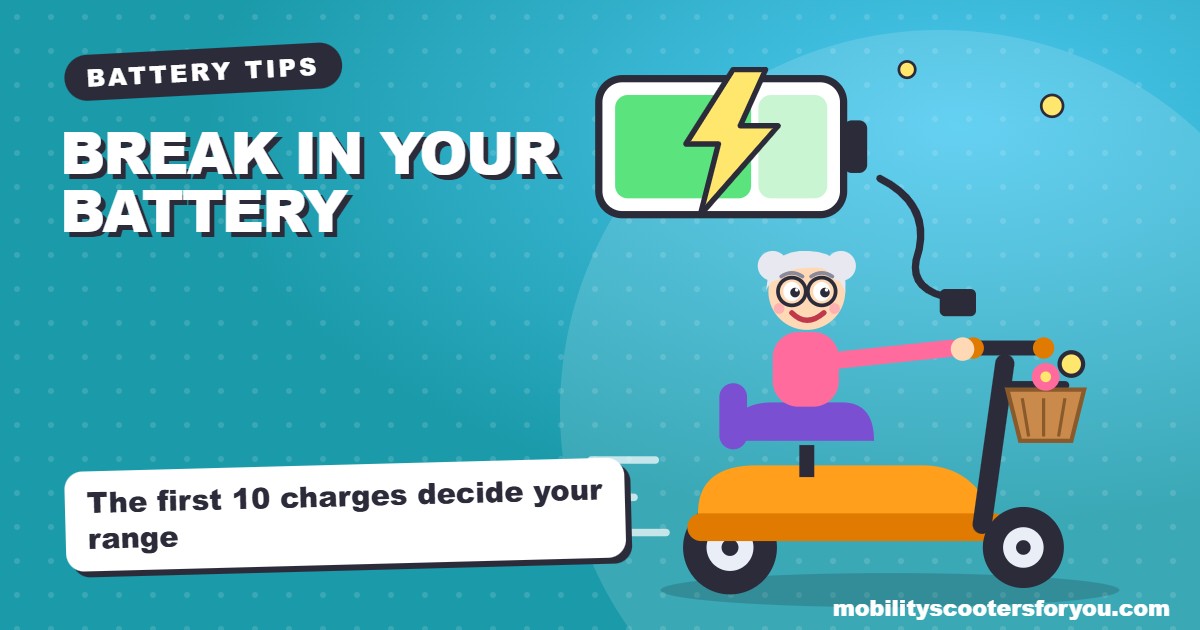
How to Break In Mobility Scooter Batteries (So You Actually Get the Range You Paid For)
Introduction
*Looking for the perfect travel companion? Check out the latest Electric Wheelchairs and Scooters at ElectricWheelchairsUSA for exclusive 2026 deals!*
Are you the proud new owner of a mobility scooter, perhaps a reliable Pride, a comfortable Golden, or a versatile Travel model? You’ve made a significant investment in your independence and mobility. Now, you’re likely eager to hit the road and experience the freedom your new scooter offers. However, before you embark on your first long journey, there’s a crucial step many new owners overlook: properly breaking in your mobility scooter batteries. This initial conditioning process is not just a recommendation; it’s the foundation for ensuring you get the maximum range, optimal performance, and the longest possible lifespan from your battery investment. Neglecting this step can lead to disappointing range and premature battery wear, leaving you wondering why your scooter isn’t living up to its potential. In this comprehensive guide, we’ll walk you through the essential steps to properly break in your mobility scooter batteries, ensuring you truly get the range you paid for.
What Does “Breaking In” a Battery Mean?
The term “breaking in” a battery might sound like something reserved for a new car engine, but it applies equally to the power source of your mobility scooter. Essentially, it refers to the initial period of use and charging that allows the battery to reach its full capacity and optimize its internal chemistry. Most mobility scooters, including popular models from Pride, Golden, and Travel, utilize sealed lead-acid (SLA) batteries, which can be either Absorbent Glass Mat (AGM) or Gel Cell. These battery types benefit significantly from a proper break-in period. During manufacturing and storage, the chemical components within the battery may not be fully active or evenly distributed. The initial charge and subsequent discharge cycles help to activate these chemicals, form stable plates, and ensure the battery can hold and deliver its maximum rated capacity. Think of it like training a muscle: you wouldn’t expect peak performance on the first day. Similarly, your new mobility scooter battery needs a few cycles to get into top shape. This conditioning is vital for achieving the advertised range and extending the overall life of your battery.
The Crucial First Charge: Your Foundation for Range
The most critical step in breaking in your mobility scooter batteries is the initial charge. This isn’t just about topping it off; it’s about establishing the battery’s baseline for future performance. Many manufacturers, including those for Pride, Golden, and Travel scooters, recommend an extended first charge. Here’s how to do it correctly:
- Read Your Manual: Always start by consulting your mobility scooter’s owner’s manual. While general guidelines apply, specific models might have unique recommendations.
- Connect the Charger: Use only the charger provided by the manufacturer. Aftermarket or incorrect chargers can damage your batteries and void your warranty. Ensure the charger is plugged into a standard wall outlet and then connected securely to your scooter’s charging port.
- The Extended Charge: For the very first charge, it is highly recommended to charge your batteries for a minimum of 10 to 14 hours, regardless of whether the charger’s indicator light turns green earlier. This extended period allows the battery cells to fully equalize and reach their maximum potential. Interrupting this first charge prematurely can permanently limit the battery’s capacity.
- Avoid Immediate Discharge: Resist the urge to take your new scooter for a long ride immediately after the indicator light turns green. Allow the battery to complete its full initial charge cycle. Deeply discharging a brand-new battery before it has been properly conditioned can be detrimental to its long-term health.
- Charge in a Well-Ventilated Area: While modern SLA batteries are sealed, it’s always good practice to charge them in a well-ventilated area, away from direct sunlight or extreme temperatures.
This initial, thorough charge is the single most important step you can take to ensure your mobility scooter batteries deliver the range and reliability you expect.
The First Few Cycles: Building Battery Memory (or Conditioning)
After the crucial initial charge, the next phase involves the first few charge and discharge cycles. This process further conditions the battery and helps it to in the same way as older nickel-cadmium batteries, these initial cycles are still vital for optimal performance. Aim for approximately 3 to 5 full charge/discharge cycles during this break-in period.
- Partial Discharges: For these initial cycles, it’s best to use your scooter until the battery charge indicator shows it’s around 20-30% remaining before recharging. Avoid running the batteries completely flat during this period. Deep discharges can stress new batteries and hinder their conditioning process.
- Full Recharges: After each partial discharge, fully recharge your batteries. Again, allow for an extended charge, ideally overnight (8-10 hours), even if the charger light indicates a full charge sooner. This ensures the battery cells are balanced and fully topped up.
- Consistent Use: Regular, consistent use during this period is more beneficial than sporadic, heavy use. Short trips followed by full recharges will help the battery adapt and build its capacity more effectively.
By carefully managing these first few cycles, you’re actively contributing to the long-term health and efficiency of your mobility scooter batteries, setting them up for reliable performance for years to come.
Ongoing Battery Care for Maximum Lifespan and Range
Once your mobility scooter batteries are properly broken in, maintaining their health is key to enjoying consistent range and extending their overall lifespan. This involves adopting good charging habits and being mindful of environmental factors. These tips apply universally to most mobility scooter batteries, including those found in Pride, Golden, and Travel models.
- Charge After Every Use: The golden rule for lead-acid batteries is to charge them after every use, regardless of how short the trip was. This prevents sulfation, a common cause of capacity loss and premature battery failure. Think of it as topping off a gas tank – you wouldn’t wait until it’s completely empty every time.
- Avoid Deep Discharges: While occasional deep discharges won’t immediately ruin your battery, consistently running your batteries until they are completely depleted significantly shortens their lifespan. Aim to recharge when the battery indicator shows around 20-30% remaining.
- Don’t Overcharge or Undercharge: Modern mobility scooter chargers are designed to prevent overcharging. However, using an old or faulty charger can be detrimental. Similarly, consistently undercharging (not allowing a full charge cycle) can lead to reduced capacity over time. Always use the manufacturer-recommended charger and ensure it’s functioning correctly.
- Storage Best Practices: If you plan to store your mobility scooter for an extended period (more than a few weeks), ensure the batteries are fully charged before storage. Then, recharge them every 3-4 weeks to maintain their charge and prevent self-discharge from causing damage. Store the scooter in a cool, dry place, away from direct sunlight or extreme temperatures.
- Temperature Matters: Extreme temperatures, both hot and cold, can negatively impact battery performance and lifespan. Batteries perform optimally at room temperature. Avoid charging or storing your scooter in very hot garages or freezing outdoor conditions.
- Regular Checks: Periodically inspect your battery terminals for corrosion and ensure all connections are tight. Keep the battery compartment clean and free of debris.
Specific Considerations for Pride, Golden, and Travel Scooters
While the general principles of battery break-in and maintenance apply across the board, it’s worth noting that leading brands like Pride Mobility, Golden Technologies, and Travel Scooter manufacturers design their products with specific battery systems in mind. Always refer to the owner’s manual provided with your specific model for any brand-specific recommendations regarding charging times, battery types, and maintenance schedules. For instance, some newer models might incorporate more advanced battery management systems that optimize charging. However, the fundamental need for proper initial conditioning and consistent charging remains paramount for all quality mobility scooters.
Troubleshooting Common Battery Issues
Even with the best care, you might encounter battery-related issues. Here are some common problems and what to consider:
- Poor Range Despite Proper Break-In: If your scooter isn’t achieving the expected range even after proper break-in and consistent charging, first check your charger. A faulty charger might not be fully charging the batteries. Also, consider the age of your batteries; even well-maintained batteries have a finite lifespan, typically 1-2 years for daily users, or 3-5 years for occasional users. Environmental factors like cold weather can also temporarily reduce range.
- Scooter Dies Suddenly: This often indicates a battery that is no longer holding a charge effectively. It could be one or both batteries failing. A professional battery test can confirm this.
- When to Consider Battery Replacement: If your batteries are old, not holding a charge, or consistently providing significantly reduced range, it’s likely time for a replacement. Always replace both batteries at the same time, and ensure they are of the same type, size, and amp-hour (Ah) rating as the originals. Consult with a reputable dealer like MobilityScootersForYou.com for advice on compatible and high-quality replacement batteries.
Conclusion
Properly breaking in and maintaining your mobility scooter batteries is not a chore; it’s an investment in your freedom and independence. By following the simple yet crucial steps outlined in this guide – especially the extended initial charge and the careful management of the first few cycles – you can significantly enhance your battery’s performance, maximize your scooter’s range, and extend its overall lifespan. Whether you own a Pride, Golden, or Travel mobility scooter, these practices will ensure you get the most out of your valuable equipment. Don’t let a neglected battery limit your adventures. Take charge of your battery care today and enjoy the full range and reliability your mobility scooter was designed to deliver. For more tips on mobility scooter care, accessories, or to explore our range of high-quality scooters and replacement batteries, visit MobilityScootersForYou.com.
Plan Your Next Adventure
If you’re planning a trip to Orlando or a cruise, don’t forget to arrange your mobility rental in advance. Prefer to bring your own? A lightweight folding travel scooter fits in most car trunks and makes your vacation stress-free.
Gear up for your ride: lithium scooter battery · car charger adaptor · front basket · folding basket.
Compare prices: Browse scooter batteries and chargers at our partner, Mobility Department.
Best Folding Mobility Scooter Under $1,000 for Travel

This post contains affiliate links. If you use these links to buy something, we may earn a commission. Thanks.

Bob has always been a man of absolute, surgical precision. As one of California’s most respected retired Medical Doctors, he doesn’t leave complex details to chance. And neither does his incredibly sharp wife, Betty.
So, when the two retired MDs decided to take a spontaneous, romantic weekend road trip down the 101 to sunny San Diego—the very city where they met at University and opened their first bustling medical practice—they knew they couldn’t afford a heavy, clunky medical device ruining their flow.
Traveling with a mobility scooter doesn’t have to break the bank, and it definitely shouldn’t require installing a massive, expensive lifting system to the back of your luxury car!
If you’re on a budget but refuse to compromise on top-tier quality and effortless convenience, Bob and Betty have already done the exhausting, medical-grade research for you. Stop wasting money and look at the Best Affordable Folding Mobility Scooters for your travel needs in 2026.
The Secret to True Independence? A Budget-Friendly Folding Scooter!
“It’s about effortless independence,” Betty explained with a warm smile, watching Bob effortlessly collapse their sleek, modern scooter into the trunk of their car in seconds.
A folding mobility scooter is the ultimate travel companion because it collapses into a hyper-compact shape. Unlike traditional, heavy-duty mobility scooters that require expensive van modifications or exterior vehicle lifts, a modern folding scooter simply slides right into a car trunk. It fits flawlessly in an airplane cargo hold, and it tucks easily into the back of an Uber when you are exploring a new city.
Better yet? Finding a premium model under $1000 means you have extra cash in your pocket to spend on fine dining, cruise ship excursions, and making memories with your grandchildren during your vacation!
Why Heavy Duty Scooters Ruin Vacations
It’s easy to get drawn into the appeal of massive, all-terrain scooters. After all, if you are planning to ride over rough trails or spend hours at a massive outdoor festival, you need something robust. (If that sounds like you, check out our in-depth California Cruising: 2026 Pursuit 2 Review or read about our friend’s wild ride in YOU Won’t Believe What Frank Took Off-Road).
But for standard travel—navigating airports, cruise ships, hotel lobbies, and paved tourist attractions—a heavy-duty scooter is a massive mistake. They weigh hundreds of pounds, require you to rent accessible vans at a premium price, and cannot be easily stored in standard hotel rooms. Bob and Betty realized early on that traveling light is the only way to travel happily.
Doctor’s Orders: Top 5 Features to Look For Under $1000
When shopping for an affordable folding scooter, Bob highly recommends keeping an analytical eye out for these completely non-negotiable features:
1. Ultra-Lightweight Frame
“Save your back!” Bob insists. The scooter should absolutely weigh less than 50 lbs (without the battery) so it’s a breeze to lift into a car trunk. Aluminum frames are the industry standard for combining durability with feather-light weight. If a travel scooter weighs over 70 lbs, it defeats the purpose of being a travel hack.
2. Airline Approved Lithium-Ion Battery
This is critical! Ensure your scooter comes with a lithium-ion battery that is legally permitted on airplanes. The Federal Aviation Administration (FAA) requires batteries to be under 300 Watt-hours (Wh) to be allowed in the cabin or checked at the gate. Having an airline-approved battery makes TSA checks essentially disappear.
*(Pro Tip from Bob: To ensure your battery survives the cold cargo holds and lasts your entire trip, read our essential Battery Care and Maintenance Tips.)*
3. Tool-Free Folding Mechanism
You shouldn’t need a toolbox just to fold your scooter. A simple, one-click lever or remote-control folding mechanism is the absolute best for maintaining mobility without breaking a sweat! Some models under $1000 now feature auto-folding capabilities—you just press a button on a key fob, and the scooter collapses itself in 10 seconds.
4. Adequate Ground Clearance
While you aren’t going off-roading, you still need to navigate cobblestone streets, uneven sidewalks, and hotel thresholds. Look for a travel scooter with at least 1.5 to 2.5 inches of ground clearance. Anything lower, and you risk getting stuck on uneven pavement, which can quickly ruin a sightseeing tour.
5. Tight Turning Radius
If you plan on taking a cruise, this is the most important spec you can check. Cruise ship cabins and hallways are notoriously narrow. A scooter with a turning radius of 35 inches or less will allow you to navigate tight corners, fit into small elevators, and pull up to dining tables without requiring a complicated three-point turn.
TSA and Airline Rules for 2026: Traveling Like a Pro
Betty has traveled through dozens of airports over her career, and she knows exactly how to navigate the system with a mobility scooter. Here is her step-by-step guide to flying stress-free:
Booking Your Flight
Always call the airline after you book your ticket online. Inform them that you will be traveling with a folding mobility scooter. They will ask for the make, model, weight, and battery type (Lithium-ion or Sealed Lead Acid). Having this on your reservation ensures the ground crew is prepared for you.
Getting Through Security (TSA)
You are allowed to ride your scooter all the way through the airport and right up to the gate. When you reach the TSA checkpoint, they will likely swab your scooter for explosives and do a quick pat-down if you cannot walk through the metal detector. It is a painless, 5-minute process if you are polite and prepared.
Gate Checking Your Scooter
When you arrive at the gate, ask the gate agent for a “Gate Check Tag.” You will ride the scooter down the jet bridge. Right before you step onto the plane, you will remove the lithium-ion battery (this must come into the cabin with you) and fold the scooter.
The baggage handlers will take the folded scooter and place it in the cargo hold. When you land, they will bring it right back up to the jet bridge so you can unfold it, pop the battery back in, and ride away!
Does Insurance Pay for Travel Scooters?
This is a question Bob and Betty hear constantly from their retired friends. The short answer is: Usually, no.
As we outlined in our comprehensive guide, Does Medicare Cover Your Mobility Scooter?, Medicare operates under a very strict “In-Home” rule. They only pay for mobility equipment if it is deemed medically necessary to survive and perform basic tasks inside your house.
Because folding scooters are explicitly designed for outdoor travel, vacations, and grocery shopping, Medicare categorizes them as “leisure” items rather than medical necessities.
However, because these travel scooters are priced so affordably (under $1000), they are easily accessible out-of-pocket for most retirees, especially with the 0% financing options available at many retailers today.
Frequently Asked Questions (FAQ)
Can I take a folding scooter in an Uber or Lyft?
Absolutely! This is the beauty of the folding design. When collapsed, they are no larger than a medium-sized suitcase. They easily fit in the trunk of a standard Uber Sedan or Lyft. You do not need to order an expensive wheelchair-accessible van.
How fast do travel scooters go?
Most travel scooters under $1000 have a top speed of around 4 mph. This is equivalent to a brisk walking pace, which is perfectly safe and suitable for crowded areas like theme parks, cruise ships, and museums.
Will it fit through the door of my cruise cabin?
Standard cruise cabin doors are incredibly narrow—often just 22 to 24 inches wide. Most folding travel scooters are designed with a width of 17 to 19 inches, meaning you can drive right into your room without issue. Just double-check the width specifications before you buy!
Reclaim Your Freedom Today!
The clear winner under the $1000 mark offers a stunningly durable aluminum frame, an ingeniously easy single-motion folding design, and a plush, comfortable padded seat. It proves once and for all that you don’t need a massive budget to reclaim your travel independence!
Stop Struggling and Start Traveling!
Are you ready to find the exact model that fits your lifestyle, height, and budget? Don’t leave it to guesswork. Take our fast, free Scooter Matchmaker Quiz to instantly compare the best models for your physical needs!
Head over to our premium catalog at Mobility Scooters For You to find your absolute perfect travel accessory today. Your next adventure is waiting!
Gear up for your ride: scooter batteries and chargers · lithium scooter battery · portable ramps · scooter and wheelchair lifts · front basket · folding basket.
Compare prices: Browse budget-friendly mobility scooters at our partner, Mobility Department.
Plan the ride: try our free Ride Finder trail map for history trails, accessible stops and local weather.
Zoe’s Grandparent’s Guide to Bling

This post contains affiliate links. If you use these links to buy something, we may earn a commission. Thanks.
By Zoe 💖✨
Hey guys! So, why should your ride be boring?
Imagine rolling up to the mall and turning every single head. Imagine your scooter matching your absolute best outfit.
You don’t just want to get around. You want to arrive in style! Here is my ultimate guide to adding that gorgeous sparkle to your everyday ride.
Step 1: The Sparkle Details
- Custom Decals: Stick on your favorite colors!
- Rhinestone Trim: Outline the base and the front basket. Make it shine!
Step 2: The Comfort Upgrades
- Faux-Fur Seat Covers: Stay cozy and look totally glamorous.
- Cute Cup Holders: Essential for your iced coffee on a sunny day.
Step 3: Animal Friend Space!
- Pet Carriers: Because our little furry friends need to ride in fashion too!
Your scooter is your personal chariot. Make it as fabulous as you are. Go ahead, add that bling!
Why You Absolutely MUST Customize Your Scooter
Hi everyone, Zoe here again! I wrote that quick intro for my grandmother, Janice (yes, the absolute fashion icon who crushes the Fold-in-10 Challenge at all the best LA boutiques with her best friend Betty).
When she first got her scooter, I noticed she felt a little self-conscious. It looked so… clinical. It looked like it belonged in a hospital, not on Rodeo Drive! That got me thinking: we customize our phone cases, our car interiors, and our designer handbags. Why on earth are we driving boring, grey mobility scooters?
Customizing your scooter isn’t just about looking cute (though that is a massive bonus!). It is about psychology. When your mobility device reflects your vibrant personality, you feel confident, empowered, and excited to go out. You stop seeing it as a medical necessity and start seeing it as an extension of your fabulous wardrobe.
*(Plus, if we let my grandfather Bob and his friend Frank drive those massive, rugged Pursuit 2 off-road beasts, we absolutely deserve some sparkle on our rides!)*
Let’s dive deep into exactly how you can transform your everyday scooter into a certified head-turner, and exactly where to buy the best accessories!
Deep Dive: The Sparkle Details
If you want to make a statement, you have to start with the exterior. The plastic shrouds on most mobility scooters are just begging for a makeover.
1. Custom Decals and Wraps
You don’t need a professional paint job to change the color of your scooter. Vinyl decals and wraps are incredibly inexpensive, totally waterproof, and peel off easily if you ever want to change your look.
- Pro Tip: If you have a scooter with interchangeable color panels (like the Pride Go-Go), you can wrap the spare panels in hot pink, leopard print, or sparkling gold vinyl!
- Where to buy: You can find incredible, heavy-duty outdoor vinyl wraps online that apply with just a hair dryer.
2. Rhinestone Trim
This is my absolute favorite. Applying self-adhesive rhinestone ribbon to the base of your scooter, the steering tiller, or the rim of your front basket adds instant Hollywood glamour.
- Application Secret: Make sure you wipe the plastic down with rubbing alcohol before applying the adhesive strips. This removes any oils or waxes and ensures the rhinestones won’t peel off if you get caught in the rain.
Deep Dive: The Comfort Upgrades
Looking fabulous is only half the battle. You also need to ride in absolute comfort, especially if you are out running errands all day!
1. Faux-Fur Seat Covers
Most scooter seats are made of black vinyl. Not only is this boring, but it gets incredibly hot in the summer sun and freezing cold in the winter.
A gorgeous faux-fur or plush velvet seat cover solves both problems! It protects your actual seat from wear and tear while making you look like royalty.
- Fit Matters: Make sure you measure the width of your seat (standard seats are usually 17-18 inches) and buy a cover with elastic edges so it stays snug when you get on and off.
👉 Shop scooter seat & tiller cover sets at Mobility Department
2. Cute, Universal Cup Holders
A chic coffee morning with your best friends requires a proper cup holder. My brilliant grandparents, Bob and Janice (you might know them from their Travel Doctors post), never travel without one!
Don’t settle for the ugly, flimsy plastic rings. You can find stunning, insulated cup holders with clamp-on mechanisms that attach directly to your scooter’s armrest or tiller.
- Must-Have Feature: Look for holders that have a drawstring top to keep your iced latte perfectly secure when navigating bumpy sidewalks.
👉 Shop the Cup Holder Deluxe at Mobility Department
Deep Dive: Animal Friend Space!
We cannot forget about our furry best friends! Taking your small dog or cat along for the ride makes every trip infinitely better, but they need to ride safely and in style.
The Ultimate Scooter Pet Carrier
Please, never try to balance a leash while driving your scooter. It is incredibly dangerous for both you and your pet. Instead, upgrade your standard wire basket to a luxury, soft-sided pet carrier that straps securely to the front tiller.
- Safety First: The best pet carriers feature an internal safety tether that clips to your dog’s harness so they can’t jump out at a squirrel. They also feature breathable mesh siding and a sunshade!
- Weight Limits: Always check your scooter’s tiller weight capacity. Most front baskets can safely hold up to 15 lbs, which is perfect for Yorkies, Pomeranians, and Shih Tzus.
👉 Shop front baskets for your scooter at Mobility Department
Important: Safety First, Bling Second!
While I want you to go absolutely crazy with the rhinestones, we have to talk about safety for just one second. When customizing your ride:
- Never cover the headlights or reflectors: You must remain visible at night!
- Don’t block the charging port: Make sure your decals and trims are cut perfectly around the battery ports.
- Keep moving parts clear: Ensure that faux-fur covers or long hanging accessories do not interfere with the wheels or the folding mechanism.
Will Insurance Pay for My Bling?
I hate to break it to you, but the answer is a massive NO!
As explained in the ultimate Medicare Mobility Scooter Guide, Medicare only pays for the bare minimum equipment needed to survive inside your house. They definitely do not care if your cup holder matches your faux-fur seat cover!
The good news? All of the amazing accessories I’ve listed above are incredibly affordable out-of-pocket, meaning you can completely transform your scooter for under $50.
Ready for Your Makeover?
Your mobility scooter is your personal chariot. Do not settle for boring. Do not settle for clinical. Go ahead, add that bling and arrive in style!
Of course, the best accessories in the world won’t help if you are driving a scooter that doesn’t fit your body or your lifestyle. If you are still driving a clunky, outdated medical device, it is time for an upgrade!
Take our totally free, 2-minute Scooter Matchmaker Quiz today. We will instantly pair you with a sleek, modern, gorgeous scooter that is the perfect blank canvas for all your new accessories!
Stay fabulous! ✨💖
Gear up for your ride: all-weather scooter cover · scooter canopy · cane holder · folding basket · armrest bag.
Pride Pursuit 2 9.3mph Speed & Range Test

This post contains affiliate links. If you use these links to buy something, we may earn a commission. Thanks.
Methodically Tested by Bob Daniels, MD
Precision. Performance. Pure adrenaline.
Imagine taking control of an absolute beast of a machine. Picture yourself gliding over rugged trails without a single bump.
Today, we are dissecting the Pride Pursuit 2, Pride Mobility’s upgraded all-terrain heavy-duty scooter. It is priced at $3,682 at our partner, Electric Wheelchairs USA. Is it worth it? Let’s look at the data.
The 9.3mph Speed Test
Most scooters crawl. The Pursuit 2 cruises at up to 9.3 mph, fast enough to get you to your destination sooner.
- Confident Pace: A fast 9.3 mph cruising speed gets you across the park, campground or ballpark with time to spare.
- Planted Stability: Pneumatic tires on split rims give excellent handling and traction on grass, dirt and compacted gravel.
The Range Test
How far can you go? With the upgraded dual lithium battery configuration, up to 34.8 miles on a single charge.
- Massive Battery Life: Dual lithium batteries mean fewer recharges and longer days out.
- Built for Real Weight: A 400 lb. weight capacity gives stability and dependability for riders of many different sizes.
Comfort and Visibility
- Comfortable Seat: Memory foam plus an adjustable 6″ slider lets you find a comfortable position for long rides.
- Brighter Lights: An improved LED lighting system helps you see, and be seen, in low light.
If you want real speed, strong range and rugged reliability from a trusted brand, the Pride Pursuit 2 is your machine. Experience the thrill yourself.
Check price and availability: See the Pride Pursuit 2 at Electric Wheelchairs USA, or browse Pride mobility scooters at our partner, Mobility Department.
Plan the ride: try our free Ride Finder trail map for history trails, accessible stops and local weather.
Best Folding Mobility Scooter Under $1000 for Easy Travel

This post contains affiliate links. If you use these links to buy something, we may earn a commission. Thanks.
Why Choose a Folding Mobility Scooter?
If you love to travel, a folding mobility scooter is your best companion. Unlike heavy-duty outdoor scooters, these lightweight marvels are designed to collapse in seconds, fitting seamlessly into car trunks, cruise ship cabins, and even airplane cargo holds. The best part? You don’t have to spend a fortune.
Top Features to Look For
- Portability: Look for a scooter that weighs under 50 lbs fully assembled.
- Battery Life: Ensure it has an airline-approved lithium-ion battery with a range of at least 10 miles.
- Durability: A solid weight capacity of at least 250 lbs is a good benchmark for a sturdy frame.
Our Top Affordable Recommendation
When searching for the best folding mobility scooter under $1000, we highly recommend focusing on models from top brands like Pride Mobility or EV Rider. These brands offer a mix of reliability, warranty support, and excellent turning radiuses for tight indoor spaces.
Remember, investing in the right lightweight electric scooter ensures your next trip is focused on making memories.
Ready to shop? Browse folding scooters for easy travel at our partner, Electric Wheelchairs USA.
Compare prices: Browse budget-friendly mobility scooters at our partner, Mobility Department.