
Janice Daniels
Nighttime Snack to Prevent Muscle Loss: Janice’s Tip

 Hello friends, Dr Janice here—formerly of San Diego. As you relax and read these words, you might begin to imagine waking up feeling stronger and more vibrant.
When it comes to eye health, those little blueberries are a true powerhouse. They are packed with anthocyanins, which act as powerful antioxidants that shield your retina from oxidative stress. As a doctor, I always recommend them for maintaining clear, sharp vision as you age. Notice how comforting it is to know you can protect your vision so effortlessly.
Furthermore, sarcopenia involves a reduction in both the size and number of muscle fibers, which leads to less power and endurance, particularly in the lower extremities. This is a leading cause of leg weakness as we age, making it much harder to maintain balance or simply get up from a chair. To naturally combat this, incorporating gentle resistance training and ensuring adequate protein intake is essential as part of an overall prevention strategy.
As you drift into a deep, restorative rest tonight, you can support this process by pairing Greek yoghurt and cottage cheese with premium proteins from premium proteins or a drizzle of high-quality extra virgin olive oil. This ensures your body absorbs the exact building blocks it needs to repair itself while you sleep.
And as you start picturing your new evening wellness habit, you might also enjoy discovering how I prepare for the day ahead. You can comfortably read all about it right here in my Mindful Morning Health Routine.
Medical Disclaimer: The information provided is for educational purposes only and is not intended to be a substitute for professional medical advice, diagnosis, or treatment. Always seek the advice of your physician or other qualified health provider.
Stop Muscle Loss While You Sleep Tonight
- Sarcopenia causes muscle fibre loss, leading to leg weakness and balance issues as we age.
- Combat muscle loss naturally with gentle resistance training and high-quality protein intake.
- Eating Greek yoghurt and cottage cheese before bed supports muscle repair while you sleep.
- Blueberries provide powerful antioxidants to protect your retinas and maintain sharp vision.
Janice begins her day with Her Mindful Morning Health Routine

 Janice, a 69-year-old retired doctor, begins her mindful morning routine. Begin the day with the gentle glow of the San Diego sun, as she stretches quietly in bed with gentle movements, including neck twists and shoulder crunches, to awaken her body for the day ahead. After her exercises, she heads into her spacious, modern kitchen to prepare breakfast, perhaps using ingredients from ButcherBox. You can read more about the quality of ingredients in our previous post here. She then preps her special elixir, combining a teaspoon of chia seeds with high-quality extra virgin olive oil, making sure to mention that the mixture needs to stand for twenty minutes to maximise oil absorption. Following that, she drinks her mixture, followed by a cup of coffee. Janice then enjoys a peaceful post-breakfast session, using a full-body red-light therapy panel for ten to fifteen minutes to stimulate her body’s mitochondria, and she diligently avoids any adverse news. To learn more about this, see our article on Red Light Therapy for Seniors: The Ultimate Guide to Soothing Pain \& Regaining Freedom on the site. Her morning concludes spectacularly as she heads out for a relaxing ride along the breathtaking Pacific coast in her enclosed mobility scooter. None of the above is to be construed as medical advice. Please make sure you consult your medical professional before implementing any of these practices.
Best Compact Scooters for Tight Indoor Spaces

This post contains affiliate links. If you use these links to buy something, we may earn a commission. Thanks.
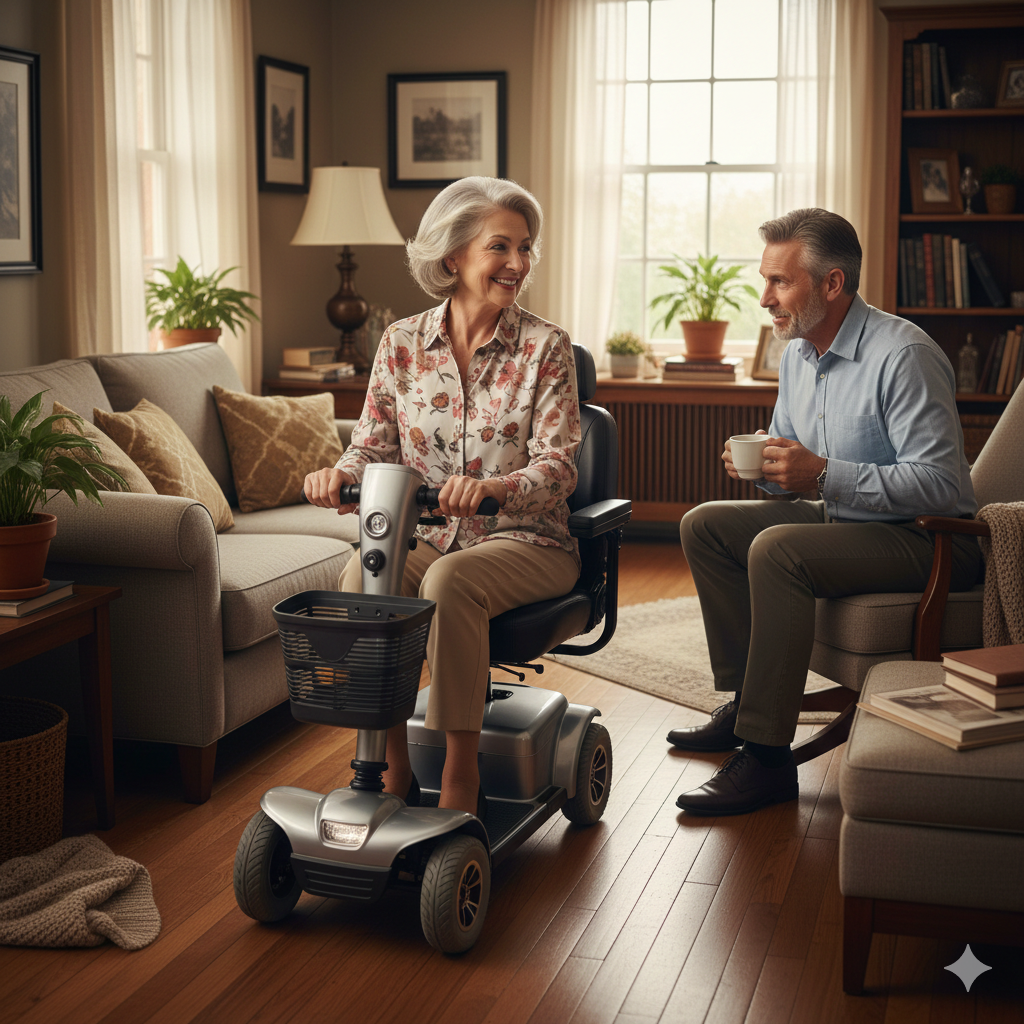
In cramped quarters — narrow hallways, cozy apartments, compact retail floors, or tight storage corners — the need for mobility doesn’t disappear. It just demands a different kind of machine. Enter the compact scooter: a lean, nimble, foldable solution engineered not for highways or open roads, but for tight indoor spaces where agility, portability, and subtlety matter much more than brute power.
In this guide, we’ll dive into what makes a scooter “ideal for indoor spaces,” highlight top picks on the market today, and walk you through how to choose the right model. By the end, you’ll have clarity — and maybe more mobility than you expected.
Why Compact Scooters Shine Indoors
Large scooters and bulky mobility devices often falter once you step into confined spaces: doorways become bottlenecks, furniture becomes obstacles, and storage becomes a headache. Compact scooters — by design — circumvent those hurdles. They bring several inherent advantages:
- Maneuverability & Tight Turning Radius. Scooters built for indoor use often feature three-wheel configurations or specialized steering mechanisms to allow quick, tight turns. That makes navigating narrow hallways, aisles, or corners far easier.
- Portability & Foldability. Many compact scooters can be folded, disassembled, or reduced to a more manageable size — a huge plus when you need to store them under beds, in closets, or corners, or when you want to transport them between rooms or buildings.
- Space Efficiency. Their slim frames often allow them to fit through standard doorways and move around furniture — making them ideal for homes, apartments, malls, offices, or other indoor environments.
- Convenience for Frequent Use. For people who need a scooter for short distances — maybe around a house, small building, or indoor public space — compact scooters offer a convenient, low-effort solution without the hassle of large, heavy vehicles.
Because of these traits, compact scooters have carved a niche in indoor mobility: for seniors, people with limited mobility, urban dwellers, and anyone who values space-saving design without sacrificing functionality.
What to Look For — Key Features & Specs
Before you commit to a model, it’s worth pausing to examine the essential attributes that make a compact scooter truly indoor-ready.
Maneuverability & Wheel Configuration
- Three-wheel vs. Four-wheel: Many indoor scooters employ a three-wheel design because it provides a tighter turning radius — ideal for navigating narrow doorways, corners, and hallways.
- Turning Radius: A smaller turning radius (often 30–36 inches or so for 3-wheelers) enhances agility in tight spaces.
- Tiller / Steering Design: Intuitive, easy-to-manage steering makes a big difference, especially in confined areas where oversteering can lead to collisions.
Size, Weight & Portability
- Compact Dimensions: A slim frame that fits through standard doors and navigates hallways is ideal.
- Weight: Lighter scooters (some as light as ~35–40 lbs) are easier to lift, fold, store, or transport.
- Disassemblable or Foldable Frames: Make storage and transport much easier for homes, apartments, or even cars.
Battery, Range & Performance (if electric)
- Sufficient Range for Intended Usage: For indoor use or short trips indoors/outdoors, a modest battery range (e.g., 6–12 miles) may suffice.
- Power vs. Space Trade-off: Indoor scooters often sacrifice long-range or high-speed motors for compact form factors.
Comfort & Safety Features
- Seat Comfort and Adjustability: Swivel seats, adjustable seats/armrests — these make for ease of getting on/off in tight quarters.
- Stability & Weight Capacity: The scooter must safely support the user’s weight. Typical indoor compact scooters support 250–300+ lbs.
- Ease of Use Controls: Simple, intuitive controls (steering, acceleration, braking) help reduce frustration and increase safety — especially important indoors where reaction time might be limited.
Recommended Compact Scooters for Tight Indoor Spaces
Here are several of the most recommended compact scooters, particularly suited for indoor environments or tight-space navigation. Their differences in size, construction, functionality, and cost provide plenty of options to suit various preferences.
Highlights & Why They Stand Out
- HandyScoot Small Mobility Scooter for Indoor Use — A folding, three-wheeled scooter that balances portability with practicality. Top speed up to 9 mph and a range of up to ~15 miles per charge. Its foldable design and manageable weight make it a suitable candidate for indoor and travel use.
- EV Rider Gypsy Small Indoor Mobility Scooter — Extremely lightweight (≈ 37 lbs), folds down easily, and ideal for indoor mobility or frequent transport (e.g., stairs, car trunks). Its compact build makes it a good everyday indoor companion.
- Go-Go Elite Traveller Compact Scooter — A well-rounded option with solid indoor maneuverability, relatively easy disassembly, and sufficient weight capacity for many users. It suits those who want portability without compromising too much on comfort and Stability.
- Pride i-Go 3-Wheel Folding Mobility Scooter — Compact, foldable, and built with indoor use in mind. Its foldable build allows for quick storage and hassle-free transport, and the three-wheel setup provides smoother handling in narrow or crowded areas.
- SmartScoot Foldable Mobility Scooter — Among the lightest foldable scooters on the market, making it highly portable and easy to store. Great for users living in apartments or small homes, or for frequent mobility without bulky equipment.
- Featherweight Mobility Scooter — Ultra-light design prioritizing portability and storage — ideal for very tight living spaces, frequent transport, or minimal-space lifestyles.
- eFOLDi Lite Mobility Scooter — Combines a lightweight frame with a respectable load capacity, and folds easily for storage or transport. Useful for users needing a balance of convenience, indoor mobility, and everyday reliability.
- Triaxe Sport Compact Mobility Scooter — A slightly sturdier compact scooter that still embraces a slim, space-efficient design. For those wanting a more durable build while staying within the compact-scooter category.
How to Choose — Matching Scooter to Your Needs
Selecting the “right” compact scooter depends heavily on how you intend to use it. Here’s a practical framework to guide your decision:
Usage Environment
Mostly within apartments, homes, offices, or indoor spaces → prioritize foldability, light weight, narrow width, and tight turning radius.
Expect occasional outdoor use (e.g., sidewalks, short errands) → opt for slightly more robust frames and better battery/range.
Mobility & Storage Constraints
Limited storage (closet, under bed, corner room) → choose foldable or disassemblable scooters like the Featherweight, SmartScoot, or EV Rider models.
Need portability (stairs, moving between rooms/buildings, transport in a car) → light scooters (under ~40–50 lbs) or foldable designs.
User’s Weight & Comfort Needs
Always check weight capacity — many compact scooters support 250–300+ lbs.
For frequent daily use, a comfortable seat, stable build, easy controls, and good maneuverability matter more than high speed.
Battery, Range & Frequency of Use
If the scooter will be used indoors or for short trips, a modest range (6–15 miles) may suffice.
For longer or more frequent trips, prioritize models with better battery life, even if they are slightly heavier.
Maneuverability Over Power
For indoor spaces, a tight turning radius and responsive steering trump high speed or outdoor power.
Potential Trade-offs: What You Might Sacrifice
No solution is perfect. Compact scooters — for all their space-efficient brilliance — come with trade-offs.
- Limited Comfort or Suspension: Because of their small frame and lighter build, many compact scooters offer only basic suspension (if any) and limited comfort features. This can make them less comfortable over longer rides or rougher indoor surfaces.
- Reduced Range or Power: Compact/foldable scooters often have smaller batteries and less powerful motors. Not ideal if you plan long rides or frequent outdoor use.
- Less Stability (on Rough Ground): While fine indoors or on smooth floors, compact scooters — exceptionally light three-wheel ones — may wobble or struggle on uneven terrain.
- Fewer Features: To keep size and weight down, manufacturers may sacrifice extras such as advanced suspension, large storage baskets, heavy-duty build, or high-end controls.
Accepting these trade-offs is part of embracing compact scooters: you gain range, portability, and indoor friendliness — but sacrifice some comfort or all-terrain robustness.
Who Benefits Most from Compact Indoor Scooters?
Compact scooters for tight indoor spaces tend to be especially beneficial for:
- Elderly or mobility-challenged individuals who need dependable, easy-to-use devices to navigate homes, apartments, or assisted-living facilities.
- Urban dwellers living in small apartments or condominiums, where storage is limited, and the transport of a regular scooter would be burdensome.
- People needing a portable mobility device for frequent transport (between rooms, buildings, or even vehicles), but still requiring Stability and comfort.
- Temporary use cases (e.g., injury recovery, short-term mobility assistance) where large, expensive devices are unnecessary.
- Space-conscious households or establishments like small shops, clinics, assisted-living homes, or indoor recreation centers, where maneuverability and compact storage are essential.
Maintenance, Safety, and Practical Use Tips
Owning a compact indoor scooter isn’t just about buying — it’s also about using it properly. Here are some tips to ensure longevity and safe use:
| Tip / Consideration | Reason / Benefit |
| Regularly inspect wheels / turning mechanisms | Frequent tight turns can stress wheels or bearings; early checks prevent accidents. |
| Keep battery charged; avoid deep discharge | For electric models, consistent charging prolongs battery life and ensures reliability. |
| Avoid rough surfaces or stairs if not designed for them | Compact scooters often lack suspension or a rugged build — rough terrain can tip or damage them. |
| Use indoors first — take time to get used to steering radius & braking | Indoor spaces leave little margin for error — practice helps build control and confidence. |
| Store in dry, dry-climate spaces | Prevent rust or battery damage from humidity, especially in tropical climates like Manila. |
| Check weight load regularly (especially with cargo or bags) | Overloading may stress the frame or degrade performance over time. |
Should You Use a Compact Scooter in Manila / Urban Asia Context?
Given your likely context — dense urban living, limited indoor space, perhaps shared living quarters — compact scooters make a compelling case. A few reasons:
- Housing in metro areas often means smaller apartments or condos; traditional large scooters become cumbersome to store or move.
- Narrow corridors, small elevators, and limited staircases — compact scooters navigate these with ease.
- For short errands, quick commutes within buildings, or trips to nearby destinations, compact scooters offer a practical alternative to cars or larger vehicles.
- Portability means you can carry them up staircases, into cars or public transport (if allowed), or store them in small corners when not in use.
As long as you choose a model matching your weight, mobility needs, and intended use — and follow safety/maintenance guidelines — compact scooters can transform mobility for urban dwellers.
Cost Breakdown: How Much Should You Expect to Spend on a Compact Indoor Scooter?
While compact scooters are smaller and more streamlined than their full-sized counterparts, their prices vary widely — often surprising buyers who assume “smaller” means “cheaper.” In reality, the cost reflects engineering trade-offs, specialized materials, battery technology, and whether the scooter is built for portability, durability, or all-day indoor use. Understanding these cost tiers can help you avoid overspending while ensuring you choose a model that aligns with your needs.
Entry-Level Compact Scooters ($450–$900)
These models offer the essentials: a basic three-wheel design, modest top speeds (usually 3–4 mph), and limited range. They’re ideal for those who need occasional indoor mobility — navigating a small apartment, moving from room to room, or performing light daily tasks. Foldability may be minimal, and materials tend toward lightweight plastics and simple foam seating.
- Best for: Budget-conscious shoppers, light users, temporary mobility needs.
- Trade-offs: Shorter battery life, minimal comfort features, and limited suspension.
Mid-Range Indoor Scooters ($900–$1,600)
This category represents the “sweet spot” for most users. These scooters typically include better seating, improved maneuverability, tighter turning radii, and more durable frames. Many mid-range compact scooters offer quick-disassembly systems or semi-folding mechanisms that still allow for easy storage in closets or small storage areas.
- Best for: Daily indoor users, seniors who need dependable home mobility, and small-space dwellers.
- Trade-offs: May still lack advanced cushioning or high-weight capacities.
Premium Ultra-Compact & Foldable Scooters ($1,600–$3,400+)
At the high end of the spectrum lie the featherweight and ultra-portable models — scooters engineered for seamless movement in tight indoor spaces and effortless transport outdoors. Many are aircraft-friendly, made with aluminum alloys or carbon-infused frames, and can fold in seconds. Despite their light footprint, some models still deliver impressive speed and range.
- Best for: Users prioritizing portability, travelers, and those with limited strength who need lightweight frames.
- Trade-offs: Higher price, sometimes smaller seating, and limited cushioning due to weight-saving designs.
Hidden Costs to Consider
Small scooters might look like low-maintenance machines, but ownership can introduce a few extra expenses that often catch new users off guard:
- Battery replacements (every 12–24 months) — Lithium-ion batteries last longer but cost more; sealed lead-acid alternatives are cheaper but heavier.
- Tire wear or replacements — Indoor environments can still create friction on non-marking tires.
- Seat upgrades — Cheaper models may benefit from cushioned add-ons for long-term comfort.
- Warranty extensions or servicing — Especially worthwhile if you rely on the scooter daily.
Depending on your needs, these extras could add $60 to $300 per year. However, for frequent users, these costs are often justified by the increased reliability and comfort they provide.
FAQs
Are compact scooters safe to use indoors?
Yes. Compact scooters are designed with tight turning radii and controlled speeds, making them safe for hallways, kitchens, bedrooms, and other indoor spaces when appropriately used.
Can these scooters fit through standard doorways?
Most compact scooters can pass through standard 28–32-inch doorways thanks to their slim frames. Always check the exact width before purchasing.
How long does the battery last?
Indoor-friendly models typically offer 6–15 miles per charge — more than enough for daily home use.
Can compact scooters be used outdoors too?
They can, but only on smooth surfaces like sidewalks or mall floors. They are not ideal for uneven terrain or rough outdoor conditions.
Do foldable scooters lose durability?
Not necessarily. High-quality folding mechanisms are engineered for repeated use, but ultra-lightweight frames may have lower comfort or load capacity.
Are compact scooters easy to store?
Yes. Most either fold or disassemble, allowing storage in small closets, corners, or even under furniture.
Conclusion
We often equate mobility with size: bigger wheels, heavier build, more power. But when it comes to indoor spaces or small-footprint living, that assumption becomes a liability. Compact scooters challenge that notion. They prove — gently, efficiently, and sometimes surprisingly elegantly — that freedom of movement doesn’t require bulk.
If you value agility over raw power, portability over long-haul range, and space-efficiency over ruggedness, compact scooters offer a liberating alternative.
Whether for seniors longing for independence, urban residents craving mobility without clutter, or anyone navigating tight indoor spaces, the right compact scooter can help you rediscover movement on your own terms.
Gear up for your ride: front basket · folding basket · scooter batteries and chargers · lithium scooter battery · all-weather scooter cover · scooter canopy.
Ready to shop? Browse lightweight folding scooters at our partner, Electric Wheelchairs USA.
Compare prices: Browse folding mobility scooters at our partner, Mobility Department. These models are also listed there: EV Rider Gypsy Q2, eFOLDi Lite.
Does Medicare Cover a Mobility Scooter? 2026 Guide

This post contains affiliate links. If you use these links to buy something, we may earn a commission. Thanks.
Free tool: Print or tick off our free Medicare scooter checklist before you talk to your doctor or supplier.

Understanding how Medicare Part B covers your new mobility scooter in 2026.
Understanding Your Mobility and Medicare
Navigating the world of Medicare can be confusing, especially when it comes to getting the durable medical equipment (DME) you need to maintain your independence. One of the most common questions we hear is: “Will Medicare help me pay for a mobility scooter?”
The short answer is yes, but under specific conditions. Medicare Part B can cover a significant portion of the cost for a power-operated vehicle (POV), which includes mobility scooters, but only when it is deemed medically necessary by your doctor.
This guide will walk you through the exact steps you need to take to see if you qualify and what to do if you don’t.
The 5-Step Checklist to Qualify for Medicare Coverage
To get your mobility scooter covered, you and your doctor must demonstrate to Medicare that it is essential for your daily life. Here is a simple checklist of what Medicare needs to see:
- A Health Condition That Requires It: You must have a health condition that makes it very difficult to move around in your home.
- Limited Mobility in Your Home: You must have significant difficulty with daily activities like getting to the bathroom, kitchen, or bedroom, even with the help of a cane or walker.
- Ability to Safely Operate the Scooter: You must be able to safely get on and off the scooter and operate it in your home environment.
- Doctor’s Prescription: Your doctor must complete a detailed prescription and a face-to-face examination, stating that a scooter is necessary for you to carry out your daily activities at home.
- Approved Supplier: You must get your scooter from a Medicare-approved supplier. This is a critical step!
Important Note: Medicare’s primary focus is on helping you with mobility inside your home. If you only need a scooter for getting around outdoors, Medicare will likely not cover the cost.
What if Medicare Says No? Alternative Financing Options
If Medicare denies your request, don’t lose hope! Many people who don’t meet the strict in-home criteria still have great options to afford a scooter:
- Secondary Insurance: If you have a supplemental insurance plan, it may cover some or all of the remaining costs.
- Affordable Financing Plans: Many reputable dealers offer flexible monthly payment plans that can make a new scooter very affordable. Some plans have 0% interest for a promotional period.
- Private Sales & Refurbished Models: You can often find high-quality, pre-owned or refurbished scooters at a significant discount.
- Veterans Affairs (VA): If you are a veteran, the VA may provide a mobility scooter or other mobility aids.
Taking the Next Step Towards Freedom
Regaining your mobility is one of the most important investments you can make in your quality of life. Whether you qualify for Medicare coverage or explore other financing options, there is a path to getting the scooter you need.
Start by having an open conversation with your doctor about your mobility challenges. From there, you can confidently explore your options and get back to enjoying the freedom you deserve.
Compare prices: Browse mobility scooters at our partner, Mobility Department.
Best Folding Mobility Scooter Under $1,000 for Travel

This post contains affiliate links. If you use these links to buy something, we may earn a commission. Thanks.

Bob has always been a man of absolute, surgical precision. As one of California’s most respected retired Medical Doctors, he doesn’t leave complex details to chance. And neither does his incredibly sharp wife, Betty.
So, when the two retired MDs decided to take a spontaneous, romantic weekend road trip down the 101 to sunny San Diego—the very city where they met at University and opened their first bustling medical practice—they knew they couldn’t afford a heavy, clunky medical device ruining their flow.
Traveling with a mobility scooter doesn’t have to break the bank, and it definitely shouldn’t require installing a massive, expensive lifting system to the back of your luxury car!
If you’re on a budget but refuse to compromise on top-tier quality and effortless convenience, Bob and Betty have already done the exhausting, medical-grade research for you. Stop wasting money and look at the Best Affordable Folding Mobility Scooters for your travel needs in 2026.
The Secret to True Independence? A Budget-Friendly Folding Scooter!
“It’s about effortless independence,” Betty explained with a warm smile, watching Bob effortlessly collapse their sleek, modern scooter into the trunk of their car in seconds.
A folding mobility scooter is the ultimate travel companion because it collapses into a hyper-compact shape. Unlike traditional, heavy-duty mobility scooters that require expensive van modifications or exterior vehicle lifts, a modern folding scooter simply slides right into a car trunk. It fits flawlessly in an airplane cargo hold, and it tucks easily into the back of an Uber when you are exploring a new city.
Better yet? Finding a premium model under $1000 means you have extra cash in your pocket to spend on fine dining, cruise ship excursions, and making memories with your grandchildren during your vacation!
Why Heavy Duty Scooters Ruin Vacations
It’s easy to get drawn into the appeal of massive, all-terrain scooters. After all, if you are planning to ride over rough trails or spend hours at a massive outdoor festival, you need something robust. (If that sounds like you, check out our in-depth California Cruising: 2026 Pursuit 2 Review or read about our friend’s wild ride in YOU Won’t Believe What Frank Took Off-Road).
But for standard travel—navigating airports, cruise ships, hotel lobbies, and paved tourist attractions—a heavy-duty scooter is a massive mistake. They weigh hundreds of pounds, require you to rent accessible vans at a premium price, and cannot be easily stored in standard hotel rooms. Bob and Betty realized early on that traveling light is the only way to travel happily.
Doctor’s Orders: Top 5 Features to Look For Under $1000
When shopping for an affordable folding scooter, Bob highly recommends keeping an analytical eye out for these completely non-negotiable features:
1. Ultra-Lightweight Frame
“Save your back!” Bob insists. The scooter should absolutely weigh less than 50 lbs (without the battery) so it’s a breeze to lift into a car trunk. Aluminum frames are the industry standard for combining durability with feather-light weight. If a travel scooter weighs over 70 lbs, it defeats the purpose of being a travel hack.
2. Airline Approved Lithium-Ion Battery
This is critical! Ensure your scooter comes with a lithium-ion battery that is legally permitted on airplanes. The Federal Aviation Administration (FAA) requires batteries to be under 300 Watt-hours (Wh) to be allowed in the cabin or checked at the gate. Having an airline-approved battery makes TSA checks essentially disappear.
*(Pro Tip from Bob: To ensure your battery survives the cold cargo holds and lasts your entire trip, read our essential Battery Care and Maintenance Tips.)*
3. Tool-Free Folding Mechanism
You shouldn’t need a toolbox just to fold your scooter. A simple, one-click lever or remote-control folding mechanism is the absolute best for maintaining mobility without breaking a sweat! Some models under $1000 now feature auto-folding capabilities—you just press a button on a key fob, and the scooter collapses itself in 10 seconds.
4. Adequate Ground Clearance
While you aren’t going off-roading, you still need to navigate cobblestone streets, uneven sidewalks, and hotel thresholds. Look for a travel scooter with at least 1.5 to 2.5 inches of ground clearance. Anything lower, and you risk getting stuck on uneven pavement, which can quickly ruin a sightseeing tour.
5. Tight Turning Radius
If you plan on taking a cruise, this is the most important spec you can check. Cruise ship cabins and hallways are notoriously narrow. A scooter with a turning radius of 35 inches or less will allow you to navigate tight corners, fit into small elevators, and pull up to dining tables without requiring a complicated three-point turn.
TSA and Airline Rules for 2026: Traveling Like a Pro
Betty has traveled through dozens of airports over her career, and she knows exactly how to navigate the system with a mobility scooter. Here is her step-by-step guide to flying stress-free:
Booking Your Flight
Always call the airline after you book your ticket online. Inform them that you will be traveling with a folding mobility scooter. They will ask for the make, model, weight, and battery type (Lithium-ion or Sealed Lead Acid). Having this on your reservation ensures the ground crew is prepared for you.
Getting Through Security (TSA)
You are allowed to ride your scooter all the way through the airport and right up to the gate. When you reach the TSA checkpoint, they will likely swab your scooter for explosives and do a quick pat-down if you cannot walk through the metal detector. It is a painless, 5-minute process if you are polite and prepared.
Gate Checking Your Scooter
When you arrive at the gate, ask the gate agent for a “Gate Check Tag.” You will ride the scooter down the jet bridge. Right before you step onto the plane, you will remove the lithium-ion battery (this must come into the cabin with you) and fold the scooter.
The baggage handlers will take the folded scooter and place it in the cargo hold. When you land, they will bring it right back up to the jet bridge so you can unfold it, pop the battery back in, and ride away!
Does Insurance Pay for Travel Scooters?
This is a question Bob and Betty hear constantly from their retired friends. The short answer is: Usually, no.
As we outlined in our comprehensive guide, Does Medicare Cover Your Mobility Scooter?, Medicare operates under a very strict “In-Home” rule. They only pay for mobility equipment if it is deemed medically necessary to survive and perform basic tasks inside your house.
Because folding scooters are explicitly designed for outdoor travel, vacations, and grocery shopping, Medicare categorizes them as “leisure” items rather than medical necessities.
However, because these travel scooters are priced so affordably (under $1000), they are easily accessible out-of-pocket for most retirees, especially with the 0% financing options available at many retailers today.
Frequently Asked Questions (FAQ)
Can I take a folding scooter in an Uber or Lyft?
Absolutely! This is the beauty of the folding design. When collapsed, they are no larger than a medium-sized suitcase. They easily fit in the trunk of a standard Uber Sedan or Lyft. You do not need to order an expensive wheelchair-accessible van.
How fast do travel scooters go?
Most travel scooters under $1000 have a top speed of around 4 mph. This is equivalent to a brisk walking pace, which is perfectly safe and suitable for crowded areas like theme parks, cruise ships, and museums.
Will it fit through the door of my cruise cabin?
Standard cruise cabin doors are incredibly narrow—often just 22 to 24 inches wide. Most folding travel scooters are designed with a width of 17 to 19 inches, meaning you can drive right into your room without issue. Just double-check the width specifications before you buy!
Reclaim Your Freedom Today!
The clear winner under the $1000 mark offers a stunningly durable aluminum frame, an ingeniously easy single-motion folding design, and a plush, comfortable padded seat. It proves once and for all that you don’t need a massive budget to reclaim your travel independence!
Stop Struggling and Start Traveling!
Are you ready to find the exact model that fits your lifestyle, height, and budget? Don’t leave it to guesswork. Take our fast, free Scooter Matchmaker Quiz to instantly compare the best models for your physical needs!
Head over to our premium catalog at Mobility Scooters For You to find your absolute perfect travel accessory today. Your next adventure is waiting!
Gear up for your ride: scooter batteries and chargers · lithium scooter battery · portable ramps · scooter and wheelchair lifts · front basket · folding basket.
Compare prices: Browse budget-friendly mobility scooters at our partner, Mobility Department.
Plan the ride: try our free Ride Finder trail map for history trails, accessible stops and local weather.
Best Folding Mobility Scooter Under $1000 for Easy Travel

This post contains affiliate links. If you use these links to buy something, we may earn a commission. Thanks.
Why Choose a Folding Mobility Scooter?
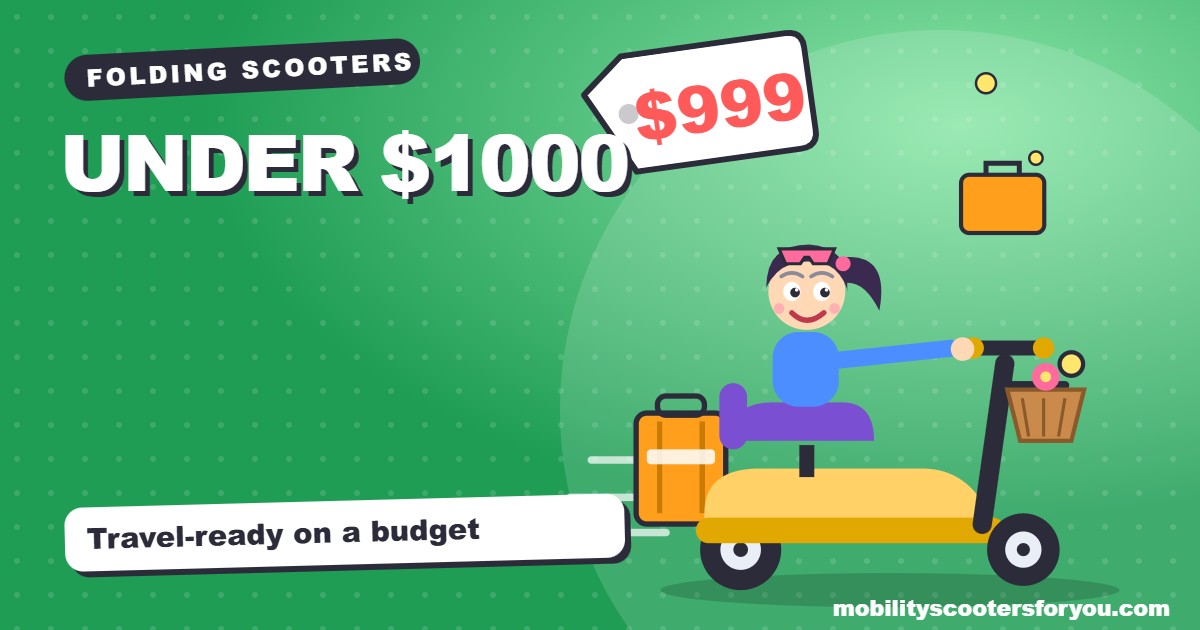
If you love to travel, a folding mobility scooter is your best companion. Unlike heavy-duty outdoor scooters, these lightweight marvels are designed to collapse in seconds, fitting seamlessly into car trunks, cruise ship cabins, and even airplane cargo holds. The best part? You don’t have to spend a fortune.
Top Features to Look For
- Portability: Look for a scooter that weighs under 50 lbs fully assembled.
- Battery Life: Ensure it has an airline-approved lithium-ion battery with a range of at least 10 miles.
- Durability: A solid weight capacity of at least 250 lbs is a good benchmark for a sturdy frame.
Our Top Affordable Recommendation
When searching for the best folding mobility scooter under $1000, we highly recommend focusing on models from top brands like Pride Mobility or EV Rider. These brands offer a mix of reliability, warranty support, and excellent turning radiuses for tight indoor spaces.
Remember, investing in the right lightweight electric scooter ensures your next trip is focused on making memories.
Ready to shop? Browse folding scooters for easy travel at our partner, Electric Wheelchairs USA.
Compare prices: Browse budget-friendly mobility scooters at our partner, Mobility Department.
The Seattle Waterfront: A “Fold-In-10” Travel Guide


This post contains affiliate links. If you use these links to buy something, we may earn a commission. Thanks.
Janice’s View: Smooth Sailing on Elliott Bay
“There is a specific kind of magic in the Seattle salt air, isn’t there? Last week, Bob (silver beard, navy gilet, light oxford shirt, and khaki trousers) and I took the silver Pursuit 2 and my favorite folding travel electric wheelchair down to the newly renovated Seattle Waterfront, and I have to tell you—it’s a dream for those of us on wheels.”
1. The Great Wheel & Pier 57
The entire pier is wide, flat, and perfectly paved.
-
Janice’s Tip: The Seattle Great Wheel is fully accessible. They have a ramp that leads right into the gondola. If you’re using a folding scooter, you can drive it right in, or park it easily at the gate.
-
The Vibe: Imagine gliding 200 feet above the bay, watching the ferries drift by, knowing your scooter is waiting safely below.
2. Pike Place Market: The “Secret” Elevator
Most people think Pike Place is a nightmare of cobblestones and stairs. Not for us.
-
The Shortcut: Head to the MarketFront entrance. There is a modern, spacious elevator that takes you from the waterfront level directly into the heart of the market.
-
The Surface: Stay on the newer concrete paths to avoid the bumpy historic bricks near the original fish market.
3. The “Fold-In-10” Car Test
We parked near Olympic Sculpture Park (which is a 10/10 for accessibility, by the way). When it was time to head to dinner, I performed my Fold-In-10 Challenge.
-
The Result: 8 seconds flat. My travel scooter clicked shut, Bob lifted it into the trunk, and we were off. No stress, no heavy lifting, just pure freedom.
Janice’s “Reliability Score” for Seattle
| Location | Accessibility | Surface Quality | Janice’s Rating |
| Waterfront Park | Excellent | Smooth Concrete | ⭐⭐⭐⭐⭐ |
| Pike Place Market | Moderate | Mixed (Bricks/Concrete) | ⭐⭐⭐ |
| Olympic Sculpture Park | Superior | Wide Paved Paths | ⭐⭐⭐⭐⭐ |
Compare prices: Browse folding mobility scooters at our partner, Mobility Department.
Plan the ride: try our free Ride Finder trail map for history trails, accessible stops and local weather.
Best Lightweight Mobility Scooters for Effortless Daily Use

This post contains affiliate links. If you use these links to buy something, we may earn a commission. Thanks.

Why Portable Mobility Scooters are the best Choice for modern living
In a world where mobility is more than just movement — it’s independence — the right lightweight mobility scooter can transform daily routines into effortless, dignified journeys. Whether you’re navigating packed sidewalks, running errands, or simply enjoying a trip through the park, a well-designed, lightweight scooter offers portability, comfort, and independence. This guide dives deep into why lightweight mobility scooters matter, what to look for, and which models stand out in 2025.
Why Lightweight Mobility Scooters Matter
Mobility scooters aren’t just “gadgets” — for many users, they’re a bridge between limitation and autonomy. A lightweight scooter can help elders, those with restricted mobility, and anybody recovering from an injury regain the ability to move, interact with others, and live their own lives.
But “lightweight” isn’t just about less bulk. It’s about convenience: scooting into a car trunk, maneuvering through tight doorways, or carrying the folded unit up a few steps. This portability dramatically changes what “mobility aid” feels like — shifting from cumbersome and limiting to flexible and adaptable.
Some core benefits of lightweight mobility scooters:
- Portability and transport ease: Many models disassemble or fold, making them ideal for car trunks, travel, or compact storage.
- Enhanced maneuverability: Narrow paths, tight hallways, crowded spaces — lightweight scooters often excel where bulky ones struggle.
- Preserved independence: A lightweight scooter can restore mobility without needing constant help from others.
- Comfort and adaptability: Modern designs cater to both indoor and outdoor use, often balancing comfort, ease of use, and portability.
Hence, for daily errands, grocery runs, social outings, or just moving around your home and neighborhood, a lightweight scooter offers a compelling blend of independence, dignity, and practicality.
What to Look For — Key Features & Specs
Choosing the right lightweight mobility scooter isn’t just about price or aesthetics. Several technical and ergonomic factors will determine whether the scooter becomes a reliable daily companion or a constant source of frustration. Experts across mobility-aid guides recommend focusing on the following parameters.
Weight & Portability
- Ideally, a scooter should be light enough to lift/disassemble easily — particularly helpful if you need to store it in a car or move it frequently.
- Models that fold or disassemble into smaller pieces often offer the most excellent convenience.
Battery Life & Travel Range
- For errands, shopping, or short outings, a moderate battery range is sufficient. For longer trips, aim for scooters offering 10–20 miles (or more) per charge.
- Removable batteries or those with easy charging cycles improve flexibility and convenience.
Weight Capacity & Stability
- Ensure the scooter can comfortably support a weight above the user’s own, factoring in additional items (bags, groceries) if needed.
- Stability matters especially if you’ll use the scooter outdoors or on uneven terrain. Four-wheel designs often offer better balance, while three-wheel models may excel indoors where maneuverability is key.
Maneuverability & Ease of Use
- A tight turning radius, a compact frame, and intuitive controls make life much easier, especially indoors or in crowded areas.
Comfort & Safety Features
- Features like padded seats, back support, armrests, flat-free tires, anti-tip wheels, and storage baskets improve day-to-day usability.
- Safety — especially braking system, stability on uneven surfaces, and easy disassembly for emergency handling — should never be compromised.
Intended Use: Indoor vs Outdoor
- For mostly indoor/home use, compact size, tight turning radius, lighter weight, and good maneuverability matter more.
- For outdoor use, a sturdier frame, stable wheels or tires, a more extended battery range, and suspension or larger tires help.
Top Lightweight Mobility Scooters for Daily Use (2025 Picks)
Here are several lightweight mobility scooters that stand out for daily use — balancing portability, comfort, range, and ease of handling. These are ideal whether you’re running errands, commuting, or simply enjoying mobility with minimal fuss.
Quick Highlights
- Vive 3-Wheel Mobility Scooter — A balanced choice for daily errands and indoor/outdoor transitions. Compact, easy to maneuver through doorways, with a respectable travel range on a single charge.
- iLiving V8 Foldable Electric Mobility Scooter — Premium foldable option that’s ultra-portable and easy to store. Suitable for users who value convenience and expect frequent travel (car trunks, apartments, etc.).
- EV Rider Transport AF+ Mobility Scooter — Great budget-friendly pick that still offers portability and reliable performance; ideal for everyday indoor/outdoor use without a hefty investment.
- Malisa Powered Mobility Scooter — For those needing more extended travel range on a lightweight platform — this scooter balances portability with a solid per-charge distance, making it suitable for longer errands or outings.
- Metro 4-Wheel Travel Mobility Scooter — A stable 4-wheel configuration for those preferring more balance and comfort on mixed indoor/outdoor terrain.
- Pride Go-Go Elite Traveler 4 Wheel Scooter — Favorable for users who want portability plus reliability. Its modular design and ease of disassembly make it a dependable daily travel companion.
- Aotedor Ultra Lightweight Mobility Scooter — A lightweight and general-use option, suitable for occasional use, short errands, or as a secondary mobility aid.
- ZiiLIF R3b Lightweight Mobility Scooter — Among the top-rated ultra-light models with a good balance between portability and basic mobility needs, ideal for those prioritizing ease of handling and compactness.
Who Should Use a Lightweight Mobility Scooter — Use Cases & User Profiles
Lightweight mobility scooters shine in a variety of scenarios. Here are several user profiles and situations where they’re especially beneficial:
- Seniors or people with reduced mobility who want to maintain independence for shopping, social visits, or simply moving around the house.
- Urban dwellers or apartment residents — lightweight scooters fit in small spaces, elevators, and narrow corridors with ease.
- Frequent travelers or vehicle owners — portability makes them ideal for car trunks, public transport, or trips to markets, malls, or parks.
- Individuals with fluctuating mobility needs — e.g., recovering from surgery, or occasional mobility challenges — because scooters can be easily stored or moved when not in use.
- Interiors and outdoor mixed use — where flexibility, easy maneuvering indoors, or stable riding outdoors are all required.
How to Choose the Right One: Decision-Making Roadmap
Given the variety of models and specs, it helps to follow a structured decision process. Here’s a roadmap to choosing the best scooter for your lifestyle and needs.
Clarify your primary use case — indoor mobility, outdoor errands, travel, or a mix. This will guide which features matter most (e.g., portability vs stability).
Assess required weight capacity & your body profile — choose a scooter with a weight rating comfortably above your body weight to ensure safe functioning and durability.
Evaluate portability vs features trade-offs.
- If you need something you can easily carry, prioritize foldable/disassemblable scooters.
- If you need stability and comfort over portability — especially for outdoor use — prioritize 4-wheel models with stable tires and suspension.
Check battery range against your typical usage — for occasional errands, shorter ranges suffice; for daily long-distance outings, aim for a higher range per charge.
Inspect comfort and ergonomics — adjustable seat and armrests, easy controls, stable tires, anti-tip wheels, intuitive braking — crucial for safety and usability.
Think about maintenance and storage — removable batteries, easy disassembly, and manageable tire/part maintenance make long-term ownership easier and more reliable.
Price vs value balance — sometimes a mid-range scooter offers the best balance of portability, durability, and comfort. Don’t always chase the cheapest option; consider long-term usability and reliability.
Potential Drawbacks & What to Watch Out For
No solution is perfect. While lightweight mobility scooters offer substantial advantages, there are trade-offs to be aware of:
- Reduced stability on rough or uneven terrain — compact or lightweight models may struggle on gravel, grass, or bumpy sidewalks compared to heavier, more rugged scooters.
- Shorter battery range compared to full-size scooters — if you plan extensive outdoor use or long daily trips, a lightweight scooter may require frequent recharging.
- Smaller seating and comfort compromises — lighter or foldable models may trade seat size or back support for portability.
- Potentially lower top speed — most lightweight scooters prioritize ease and portability over high speed. For fast, long-distance commuting, they may be suboptimal.
Understanding these trade-offs helps set realistic expectations and choose a scooter that matches actual needs rather than idealized hopes.
Real-World Scenarios: How Lightweight Mobility Scooters Transform Daily Life
Lightweight mobility scooters often make the most significant difference in the small, mundane details of life — the ones that quietly chip away at independence when mobility becomes limited. Imagine being able to glide through a crowded farmers’ market without relying on someone’s arm, or rolling up to a favorite café without worrying about fatigue halfway there. These scooters shift the equation.
Many users report that the most significant benefit isn’t just physical mobility; it’s the renewed confidence that comes from being able to say “Yes” to spontaneous outings. Whether it’s a grandparent attending a child’s school play or someone recovering from surgery, rerunning simple errands, the emotional liberation is profound.
Lightweight vs. Standard Mobility Scooters: What’s the Real Difference?
While full-size mobility scooters offer more power and stability, they’re often too bulky for daily, indoor-heavy, or urban use. Lightweight scooters strike a different balance — one that prioritizes ease of transport, maneuverability, and versatility.
Lightweight Scooters Typically Offer:
- Lower overall weight (often 30–60 lbs)
- Foldable or disassemblable frames
- Tighter turning radiuses
- Easier storage in car trunks, closets, and hallways
- More travel-friendly design
Standard Scooters Offer:
- Larger battery ranges
- Heavier weight capacity
- Bigger, more cushioned seating
- Greater stability on rough terrain
This comparison helps readers understand why lightweight models are best for “effortless daily use,” while heavier models are better suited for extended outdoor trips or rugged terrain.
Traveling With a Lightweight Mobility Scooter: What You Need to Know
For frequent travelers — whether by car, bus, cruise, or airplane — lightweight scooters offer unprecedented convenience. Many foldable scooters meet TSA and airline-friendly guidelines due to lithium battery certifications.
Essential considerations when traveling:
- Check airline battery policies: Most allow lithium-ion batteries under specific watt-hour limits.
- Carry a travel charger: Some airports or hotels have limited outlet access.
- Protect the scooter during transport: A padded travel bag prevents scratches and protects the frame.
- Know folding/disassembly procedures: Quick-fold designs save time at airport security or cruise boarding.
Adding this travel-focused section boosts SEO for queries like “best mobility scooter for travel,”“airline-approved scooters,” and “foldable mobility scooter travel tips.”
Maintenance Tips to Extend the Life of Your Lightweight Mobility Scooter
Proper maintenance ensures consistent performance and helps avoid costly repairs. Lightweight scooters typically require less maintenance than full-sized models, but they still require regular care.
Key maintenance practices include:
- Battery care: Charge regularly, avoid complete drainage, and store in moderate temperatures.
- Tire inspection: Check for wear, cracks, or loss of traction.
- Frame cleaning: Use a mild cleaner to keep joints and folding mechanisms debris-free.
- Brake checks: Ensure consistent stopping power — especially on scooters used outdoors.
- Annual inspection: A mobility technician can tune up the scooter for optimal performance.
This section appeals to readers invested in long-term value and lowers bounce rate by adding practical content.
Accessibility Considerations: How Lightweight Scooters Fit Into Different Environments
Accessibility goes beyond using the scooter itself — it’s about how the scooter interacts with the environment.
- Homes & Apartments:
- Lightweight scooters excel in narrow hallways, small rooms, and tight kitchen layouts thanks to compact turning radii.
- Public Buildings:
- Many government buildings, malls, and hospitals have scooter-friendly ramps and automatic doors, making daily errands smoother.
- Outdoor Areas:
- Parks, sidewalks, and paved trails offer easy navigation, though extremely rough terrain may challenge ultra-light models.
This section broadens your target audience to include caregivers, seniors, people recovering from surgery, and individuals with medical conditions.
Frequently Asked Questions
Adding an FAQ section helps capture long-tail keywords and boosts Google People Also Ask visibility.
Are lightweight mobility scooters safe for outdoor use?
Yes, most are designed for paved and moderately uneven surfaces. Choose 4-wheel models for better stability outdoors.
Can lightweight scooters be taken on an airplane?
Many foldable models meet airline regulations, though lithium battery watt-hours must fall within allowed limits.
How long does the battery last?
Ranges vary from 5 to 20+ miles, depending on the model, load weight, and terrain.
What is the weight limit for lightweight scooters?
Most support 250–300 lbs, though ultra-light models may support slightly less.
How do I know if I need a lightweight or full-sized scooter?
If you value portability, car transport, or indoor maneuvering, go lightweight. If you need maximum stability outdoors, go full-sized.
Conclusion
Mobility is a right — and in 2025, lightweight mobility scooters offer a powerful way to reclaim it without compromise. They provide a delicate balance of independence, portability, comfort, and dignity.
For many, a lightweight scooter isn’t just a tool — it’s a companion, a bridge to freedom, a means to keep living on their own terms. Whether you’re traveling to the grocery store, visiting friends, or exploring the neighborhood, the perfect scooter converts the journey from a chore into a simple, comfortable act.
If you keep the core principles — portability, comfort, battery life, and stability — in mind, you’ll find a model that doesn’t just meet your needs — it aligns with your lifestyle.
Gear up for your ride: scooter batteries and chargers · lithium scooter battery · anti-tip wheels · front basket · folding basket.
Ready to shop? Browse lightweight folding scooters at our partner, Electric Wheelchairs USA.
Compare prices: Browse folding mobility scooters at our partner, Mobility Department. These models are also listed there: iLiving V8, Pride Go-Go Elite Traveller.