Flying with Your Mobility Scooter in 2026: A Complete Guide to TSA and Airline Rules
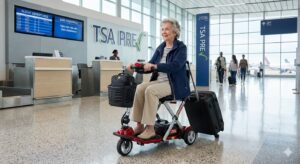 Introduction
Traveling with a mobility scooter can offer unparalleled freedom, but navigating airport security and airline regulations requires careful planning. As of 2026, new guidelines and increased awareness around battery safety are shaping how individuals can fly with their mobility aids. This comprehensive guide will help you understand the essential TSA and airline rules to ensure a smooth journey [1].
Key Regulations for 2026
1. Advance Notification to Airlines
Most airlines require passengers traveling with mobility scooters or electric wheelchairs to provide at least 48 hours’ notice [2]. This allows the airline to make necessary arrangements for storage and handling of your device. It’s advisable to inform them at the time of booking or as soon as possible thereafter.
2. Battery Regulations: A Critical Update
The most significant changes in 2026 revolve around lithium-ion batteries, primarily due to fire safety concerns. The FAA (Federal Aviation Administration) and IATA (International Air Transport Association) have updated their guidelines:
- Lithium-ion Battery Size Limit: The size of lithium-ion batteries is generally limited to 300 watt-hours (Wh) [3] [4].
- Spare Batteries: Spare lithium-ion batteries must be carried in carry-on baggage only [3]. They are not permitted in checked baggage.
- Installed Batteries: Batteries installed in the scooter must be protected from short circuits and securely attached [2].
- Removal Requirement: For mobility scooters with removable lithium-ion batteries, the battery often needs to be removed and carried in the cabin [5].
It is crucial to check with your specific airline for their exact battery policies, as some may have stricter requirements or require specific documentation from the manufacturer [1].
3. TSA Screening Process
When going through security, your mobility scooter will undergo screening. This may include visual inspection, X-ray screening, and potentially a pat-down for the passenger. Seat cushions and any non-removable pouches should also be screened [6].
- Mobility Aids: Walkers, crutches, and other mobility aids must undergo X-ray screening [7].
- Documentation: Having a copy of your scooter’s manual and battery specifications readily available can expedite the screening process [8].
Preparing Your Scooter for Flight
- Documentation: Carry all necessary documentation, including battery specifications (watt-hours) and a copy of your scooter’s manual.
- Disassembly: If your scooter disassembles, understand how to do so quickly and efficiently. Airlines may require this for storage.
- Protection: Consider protecting your scooter with padding or covers to prevent damage during handling.
- Labeling: Clearly label your scooter with your contact information.
- Pre-Flight Check: Ensure your scooter is in good working condition before arriving at the airport.
Onboard and At Your Destination
- Stowage: Power wheelchairs and scooters are typically stowed in the cargo hold. They are generally not allowed in the passenger cabin due to size and weight [9].
- Rentals: For those who prefer not to travel with their own scooter, consider renting one at your destination. Services like Walker Mobility offer convenient rental options, especially in popular travel destinations [10].
Conclusion
Flying with a mobility scooter in 2026 is manageable with proper preparation and awareness of current regulations. By understanding airline policies, especially regarding batteries, and preparing for TSA screening, you can ensure a stress-free and enjoyable travel experience. Always confirm the latest guidelines with your airline before your trip.
References
[1] Scootaround. (n.d.). The Ultimate Guide to Flying With a Mobility Scooter. Retrieved from https://scootaround.com/en/the-ultimate-guide-to-flying-with-a-mobility-scooter
[2] Malisa Mobility. (n.d.). Flying with a Mobility Scooter: Airline & FAA Rules Guide. Retrieved from https://malisamobility.com/blogs/news/flying-with-mobility-scooter-guide
[3] FAA. (n.d.). Airline Passengers and Batteries. Retrieved from https://www.faa.gov/hazmat/packsafe/airline-passengers-and-batteries
[4] The Street. (2025, September 16). Southwest Airlines cites FAA guidance for strict new lithium battery rules. Retrieved from https://www.thestreet.com/travel/southwest-airlines-cites-faa-guidance-for-strict-new-lithium-battery-rules
[5] Travelscoot USA. (n.d.). International Airline Policies for Mobility Scooters. Retrieved from https://travelscootusa.com/policies/international/
[6] Southwest Airlines. (n.d.). Wheelchair and Mobility Aid Information. Retrieved from https://support.southwest.com/helpcenter/s/article/I-am-bringing-my-own-wheelchair-or-mobility-aid
[7] TSA. (n.d.). Disabilities and Medical Conditions. Retrieved from https://www.tsa.gov/travel/tsa-cares/disabilities-and-medical-conditions
[8] WHILL. (n.d.). Your Guide to Traveling With an Electric Wheelchair. Retrieved from https://whill.inc/us/your-guide-to-traveling-with-an-electric-wheelchair/
[9] Quantum Rehab. (n.d.). Flying with an Electric Wheelchair. Retrieved from https://www.quantumrehab.com/resources/consumer-article-flying-with-an-electric-wheelchair.asp
[10] Walker Mobility. (n.d.). Affiliate Program. Retrieved from https://walkermobility.com/affiliate-program/
Ready to upgrade your mobility? Find Your Perfect Scooter on Electric Wheelchairs USA today!
Leave a Reply