Pride vs. Golden Travel Scooters: An In-Depth Comparison for 2026
Why Choose a Travel Mobility Scooter?

Travel scooters are designed for individuals who need mobility assistance on the go. Their compact size, lightweight construction, and easy disassembly or folding mechanisms make them ideal for vacations, shopping trips, or simply moving around your home with greater ease. They strike a perfect balance between portability and functionality, so you don’t have to compromise on mobility, no matter where your adventures take you.
## Pride Mobility: Innovation and Versatility
Pride Mobility is renowned for its diverse range of travel scooters, often characterised by advanced features and user-friendly designs. Their Go-Go series is particularly popular, offering models that are easy to transport and manoeuvre in tight spaces.
### Key Features of Pride Travel Scooters:
* **Feather-Touch Disassembly:** Many Pride models can be quickly disassembled into lightweight pieces for easy transport and storage.
* **Compact Design:** Excellent manoeuvrability
* **Comfort-Trac Suspension (CTS):** Available on select models, providing a smoother ride over varied terrains.
* **Delta Tiller:** Ergonomic wraparound handles make steering easier for those with limited dexterity.
### Popular Pride Travel Models:
* **Pride Go-Go Elite Traveller®:** A classic choice known for its compact design and easy portability.
* **Pride Go-Go Sport:** Offers increased weight capacity and a longer driving range.
* **Pride Go-Go LX with CTS Suspension:** Provides enhanced comfort with its advanced suspension system.
## Golden Technologies: Comfort and Durability
Golden Technologies focuses on delivering exceptional comfort, robust construction, and reliable performance. Their Buzzaround series is a favourite among users seeking a blend of durability and ease of use, often with slightly larger seats and more powerful motors than some competitors.
### Key Features of Golden Travel Scooters:
* **Easy Disassembly:** Similar to Pride, Golden scooters offer straightforward disassembly for transport.
* **Comfortable Seating:** Often feature larger, more padded seats for extended use.
* **Increased Ground Clearance:** Some models offer better ground clearance, making them suitable for slightly uneven surfaces.
* **Bright LED Lighting:** Enhanced visibility for safer operation, especially in low-light conditions.
### Popular Golden Travel Models:
* **Golden Buzzaround LT:** A lightweight and compact option for basic travel needs.
* **Golden Buzzaround XL:** Offers a larger deck and increased weight capacity for enhanced comfort.
* **Golden Buzzaround EX:** Known for its extended range and higher weight capacity, ideal for longer outings.
## Side-by-Side Comparison: Pride Go-Go Elite Traveller vs. Golden Buzzaround LT
| Feature | Pride Go-Go Elite Traveller® | Golden Buzzaround LT |
| :—————- | :—————————- | :——————- |
| **Top Speed** | Up to 4 mph | Up to 4 mph |
| **Range** | Up to 8 miles | Up to 8 miles |
| **Weight Capacity** | Up to 275 lbs | Up to 250 lbs |
| **Heaviest Piece**| 32.5 lbs | 33 lbs |
| **Turning Radius**| 33″ | 37″ |
| **Ground Clearance**| 2″ | 2.5″ |
| **Battery Options**| 12AH or 18AH | 12AH |
## Choosing Your Ideal Travel Scooter
When deciding between a Pride and Golden travel scooter, consider the following:
* **Portability:** How often will you be disassembling and transporting your scooter? Both brands excel here, but specific models may offer lighter components.
* **Comfort:** For longer rides, a Golden Buzzaround model with a larger seat and better suspension might be preferable.
* **Terrain:** If you anticipate navigating slightly uneven paths, look for models with better ground clearance and suspension.
* **Battery Life:** Consider the range you need for your typical outings. Both brands offer options with varying battery capacities.
* **Budget:** Both brands offer a range of price points, so consider your budget alongside your feature requirements.
Explore Purchase Options.
Ready to find your perfect travel companion? Explore a wide selection of Pride and Golden travel scooters, along with competitive pricing and financing options, at our trusted partners:
* **[Shop Pride and Golden Travel Scooters at ElectricWheelchairsUSA])
* **[Find the Latest Travel Scooter Deals at Mobility Department](https://mobilitydepartment.com)**
* **[Rent a Travel Scooter for Your Next Vacation with Walker Mobility](https://walkermobility.com)**
## Conclusion
Both brands offer exceptional travel scooters to enhance your independence. Choose the one that best fits your travel style and start your next adventure today!”
* **Portability:** How often will you be disassembling and transporting your scooter? Both brands excel here, but specific models may offer lighter components.
* **Comfort:** For longer rides, a Golden Buzzaround model with a larger seat and better suspension might be preferable.
* **Terrain:** If you anticipate navigating slightly uneven paths, look for models with better ground clearance and suspension.
* **Battery Life:** Consider the range you need for your typical outings. Both brands offer options with varying battery capacities.
* **Budget:** Both brands offer a range of price points, so consider your budget alongside your feature requirements.
## CPA Integration
Ready to find your perfect travel companion? Explore a wide selection of Pride and Golden travel scooters, along with competitive pricing and financing options, at our trusted partners:
* **[Shop Pride and Golden Travel Scooters at ElectricWheelchairsUSA](https://www.electricwheelchairsusa.com/?aff=406)**
* **[Find the Latest Travel Scooter Deals at Mobility Department](https://mobilitydepartment.com)**
* **[Rent a Travel Scooter for Your Next Vacation with Walker Mobility](https://walkermobility.com)**
## Conclusion
Both Pride Mobility and Golden Technologies offer exceptional travel mobility scooters that can significantly enhance your quality of life. By carefully considering your needs and each brand’s features, you can confidently choose a scooter that helps you travel farther and live more independently. Happy travels!
The Best Mobility Scooter Rain Protection Accessories for 2026: Stay Dry, Stay Independent
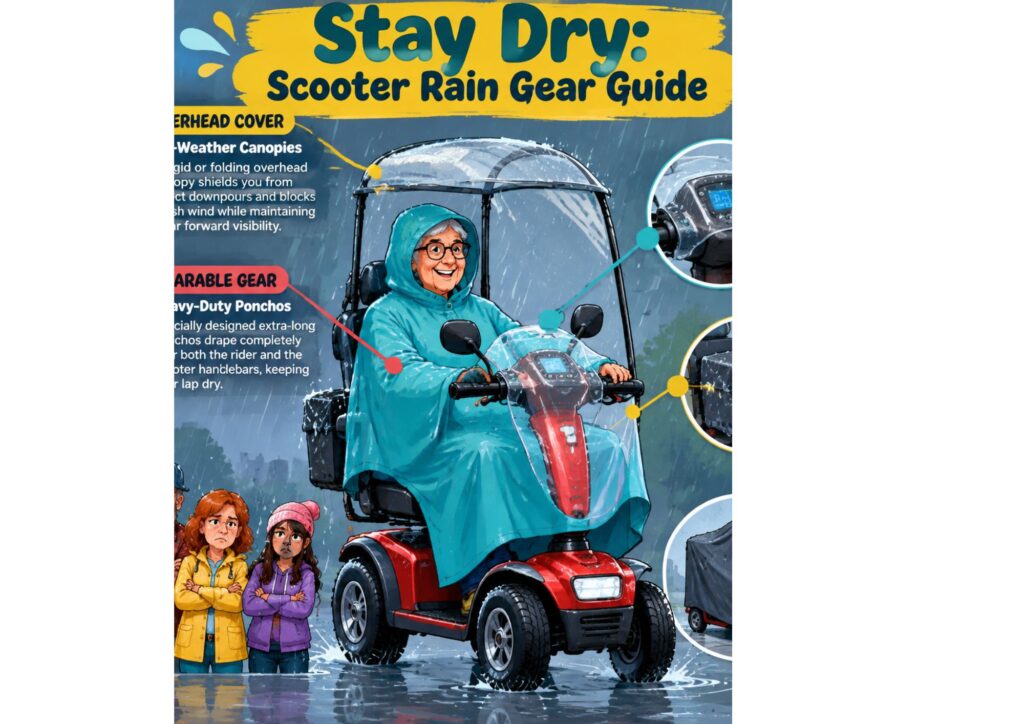 # The Best Mobility Scooter Rain Protection Accessories for 2026: Stay Dry, Stay Independent
For many seniors, a mobility scooter is more than just a mode of transport; it’s a gateway to independence, freedom, and an active lifestyle. It allows you to run errands, visit loved ones, and enjoy the outdoors. However, unpredictable weather, especially rain, can often put a damper on these plans, forcing you indoors and limiting your mobility. But what if you could brave the elements with confidence, knowing your scooter and yourself are well-protected?
This comprehensive guide explores the best mobility scooter rain protection accessories available in 2026, designed to keep you dry, comfortable, and safe, no matter the forecast. We’ll delve into various options, their benefits, and what to look for when making your choice, ensuring your mobility remains unhindered by a little rain.
## Why Rain Protection is Essential for Your Mobility Scooter
Investing in a mobility scooter is a significant decision, and protecting that investment is paramount. Rain and moisture can be surprisingly damaging to these sophisticated devices. Here’s why proper rain protection isn’t just a convenience, but a necessity:
* **Safeguarding Electronics and Mechanics:** Mobility scooters are packed with sensitive electronic components and mechanical parts. Exposure to rain can lead to corrosion, short circuits, and costly repairs. A good rain cover or canopy acts as a shield, extending the lifespan of your scooter.
* **Ensuring Personal Comfort and Safety:** Riding in the rain without protection can be uncomfortable and even unsafe. Wet clothing can lead to chills, and reduced visibility can increase the risk of accidents. Staying dry keeps you warm, focused, and more secure on your journey.
* **Maintaining Independence and Freedom:** Don’t let a rainy day dictate your schedule. With the right protection, you can continue to enjoy your daily routines and spontaneous outings, maintaining the independence your scooter provides.
* **Preventing Upholstery and Cosmetic Damage:** Rain can stain and degrade seat upholstery, grips, and other exterior components over time, diminishing the appearance and comfort of your scooter.
## Types of Mobility Scooter Rain Protection Accessories
The market offers a variety of solutions, each designed for specific needs and situations. Understanding the different types will help you choose the best fit for your lifestyle.
### 1. Mobility Scooter Rain Covers (Storage Covers)
These are full-coverage covers designed primarily for protecting your scooter when it’s parked or stored, either indoors or outdoors. They are essential for long-term protection against the elements.
* **Description:** Typically made from durable, waterproof materials like oxford fabric or PVC-coated polyester, these covers envelop the entire scooter, from top to bottom.
* **Benefits:** They offer comprehensive protection against rain, snow, dust, dirt, UV rays, bird droppings, and tree sap. They are perfect for overnight storage or when your scooter is not in use for extended periods.
* **When to Use:** Ideal for protecting your scooter in a carport, garage, or even outdoors. Look for covers with elasticated hems or drawstrings for a snug fit.
### 2. Scooter Canopies
Scooter canopies provide overhead protection for the rider and the scooter’s controls while in motion. They are a popular choice for those who frequently ride in varied weather conditions.
* **Description:** These structures typically consist of a sturdy frame that mounts to your scooter, supporting a waterproof fabric roof. Many designs also include clear front and side panels for visibility.
* **Benefits:** Canopies shield you from rain, sun, and wind, enhancing comfort during your ride. They allow you to remain dry and protected without needing to wear additional rain gear.
* **Features to Look For:** Consider models that are height-adjustable, easy to mount and dismount, and offer good visibility. Brands like Movo Evolution and Scooterpac offer popular universal canopy options. Some advanced models, like the 2026 PX4 Mobility Scooter with Weather Canopy, integrate seamlessly with the scooter’s design.
### 3. Mobility Scooter Ponchos and Capes
For immediate, personal protection against sudden downpours, a mobility scooter poncho or cape is an excellent, portable solution.
* **Description:** These are oversized, waterproof garments designed to cover both the rider and the scooter’s handlebars and controls. They are often lightweight and can be folded compactly.
* **Benefits:** Easy to put on and take off, ponchos provide quick protection for you and the most vulnerable parts of your scooter. They are ideal for unexpected rain showers during short trips.
* **When to Use:** Keep one stowed away for emergencies. Look for designs with elasticated cuffs, hoods, and ample length to cover your legs and the front of the scooter.
### 4. Waterproof Scooter Accessories (Tiller Covers, Storage Bags)
Beyond full-body protection, specific accessories can offer targeted waterproofing for crucial components or personal items.
* **Description:** These include waterproof covers for the tiller (the steering column and controls), waterproof storage bags that attach to the scooter, and protective covers for baskets.
* **Benefits:** Tiller covers keep your controls dry and functional, preventing water ingress into sensitive electronics. Waterproof storage bags ensure your groceries, medications, and personal belongings remain dry and secure.
* **Importance:** Even with a canopy or poncho, these smaller accessories provide an extra layer of defense for critical areas and items.
## Key Features to Look for in 2026 Mobility Scooter Rain Protection
As you consider your options, keep these important features in mind to ensure you select the best accessories for your needs:
* **Material Quality and Durability:** Opt for high-quality, heavy-duty waterproof fabrics like 600D oxford material, ripstop nylon, or PVC-coated polyester. These materials offer superior water resistance, tear strength, and UV protection, ensuring longevity.
* **Ease of Installation and Use:** Look for designs that are user-friendly and require minimal effort to install or deploy. Quick-release mechanisms for canopies and easy-to-don ponchos are highly desirable, especially for seniors.
* **Compatibility and Fit:** While many accessories boast a
universal fit, always double-check the dimensions and mounting requirements to ensure a perfect match with your specific scooter model. Some manufacturers offer model-specific accessories for optimal integration.
* **Visibility and Safety:** For canopies and ponchos, clear panels are crucial for maintaining good visibility. Reflective strips or bright colours can also enhance safety, especially during low-light conditions.
* **Portability and Storage:** If you plan to carry your rain protection with you, consider how easily it can be folded, stored, and transported. Lightweight and compact options are often preferred.
* **Ventilation:** While keeping rain out, good ventilation is also important to prevent condensation buildup inside canopies, which can affect visibility and comfort.
## Integrating CPA Offers: Stay Dry with Top Brands
To help you find the best rain protection for your mobility scooter, we’ve integrated some excellent CPA offers from trusted retailers. These products are selected for their quality, effectiveness, and suitability for seniors.
### Recommended Rain Covers and Canopies
When it comes to comprehensive protection, a high-quality rain cover or canopy is indispensable. We recommend exploring the extensive selections available at [**ElectricWheelchairsUSA**](https://www.electricwheelchairsusa.com/?aff=406) and **Senior.com**. These platforms offer a wide range of products from reputable brands, ensuring you find a solution that perfectly fits your needs and budget.
* **ElectricWheelchairsUSA:** Known for their vast inventory of mobility solutions, ElectricWheelchairsUSA features a variety of durable and easy-to-install mobility scooter canopies and heavy-duty storage covers. Their selection includes options designed for various scooter models, ensuring a snug and secure fit. [ElectricWheelchairsUSA rain covers and canopies](https://www.electricwheelchairsusa.com/?aff=406)
* **Senior.com:** This platform is a go-to resource for products catering specifically to seniors. Senior.com offers a curated collection of mobility scooter rain protection accessories, including user-friendly ponchos and robust canopies, all chosen for their quality and ease of use. [Link to Senior.com rain covers and canopies]
### Essential Waterproof Accessories
Don’t forget the smaller, yet equally important, waterproof accessories that provide an extra layer of protection.
* **Tiller Covers:** Protect your scooter’s controls from moisture and ensure their longevity. Many universal tiller covers are available, often made from waterproof nylon or neoprene.
* **Waterproof Storage Bags:** Keep your personal items, such as phones, wallets, and medications, safe and dry. These bags often attach securely to your scooter’s seat or handlebars.
## Tips for Using and Maintaining Your Rain Protection Accessories
To maximize the effectiveness and lifespan of your rain protection accessories, follow these simple tips:
* **Regular Cleaning:** Periodically clean your covers and canopies with mild soap and water to remove dirt, grime, and mildew. Ensure they are completely dry before storing.
* **Proper Storage:** When not in use, store your accessories in a cool, dry place, away from direct sunlight, to prevent material degradation.
* **Check for Damage:** Regularly inspect your covers and canopies for any tears, punctures, or signs of wear. Promptly repair any damage to maintain their waterproof integrity.
* **Secure Attachment:** Always ensure canopies and covers are securely attached to your scooter, especially in windy conditions, to prevent them from blowing away or causing obstruction.
## Conclusion: Embrace Every Journey, Rain or Shine
With the right mobility scooter rain protection accessories, you can confidently navigate any weather condition, preserving your independence and extending the life of your valuable scooter. From robust storage covers to convenient canopies and personal ponchos, there’s a solution for every need and preference. Don’t let a little rain keep you from enjoying the freedom your mobility scooter provides.
Explore the wide range of options available at **ElectricWheelchairsUSA** and **Senior.com** today, and invest in the peace of mind that comes with knowing you’re prepared for anything Mother Nature throws your way. Stay dry, stay safe, and keep rolling!
**Call to Action:** Ready to brave the elements? Click here to browse mobility scooter rain covers and canopies at [ElectricWheelchairsUSA](https://www.electricwheelchairsusa.com/?aff=406) and [Senior.com] and find your perfect protection today!
Discover How to Choose the Perfect Mobility Scooter
- How to find the ideal scooter for your lifestyle using a simple quiz
- A step-by-step checklist to navigate Medicare and insurance coverage
- Essential safety tips to operate your scooter with total confidence
Secret Nighttime Snack Stops Muscle Loss While You Sleep—Don’t Go to Bed Without This!

 Hello friends, Dr Janice here—formerly of San Diego. As you relax and read these words, you might begin to imagine waking up feeling stronger and more vibrant.
When it comes to eye health, those little blueberries are a true powerhouse. They are packed with anthocyanins, which act as powerful antioxidants that shield your retina from oxidative stress. As a doctor, I always recommend them for maintaining clear, sharp vision as you age. Notice how comforting it is to know you can protect your vision so effortlessly.
Furthermore, sarcopenia involves a reduction in both the size and number of muscle fibers, which leads to less power and endurance, particularly in the lower extremities. This is a leading cause of leg weakness as we age, making it much harder to maintain balance or simply get up from a chair. To naturally combat this, incorporating gentle resistance training and ensuring adequate protein intake is essential as part of an overall prevention strategy.
As you drift into a deep, restorative rest tonight, you can support this process by pairing Greek yoghurt and cottage cheese with premium proteins from premium proteins or a drizzle of high-quality extra virgin olive oil. This ensures your body absorbs the exact building blocks it needs to repair itself while you sleep.
And as you start picturing your new evening wellness habit, you might also enjoy discovering how I prepare for the day ahead. You can comfortably read all about it right here in my Mindful Morning Health Routine.
Medical Disclaimer: The information provided is for educational purposes only and is not intended to be a substitute for professional medical advice, diagnosis, or treatment. Always seek the advice of your physician or other qualified health provider.
Stop Muscle Loss While You Sleep Tonight
- Sarcopenia causes muscle fibre loss, leading to leg weakness and balance issues as we age.
- Combat muscle loss naturally with gentle resistance training and high-quality protein intake.
- Eating Greek yoghurt and cottage cheese before bed supports muscle repair while you sleep.
- Blueberries provide powerful antioxidants to protect your retinas and maintain sharp vision.
Janice begins her day with Her Mindful Morning Health Routine
 Janice, a 69-year-old retired doctor, begins her mindful morning routine. Begin the day with the gentle glow of the San Diego sun, as she stretches quietly in bed with gentle movements, including neck twists and shoulder crunches, to awaken her body for the day ahead. After her exercises, she heads into her spacious, modern kitchen to prepare breakfast, perhaps using ingredients from ButcherBox. You can read more about the quality of ingredients in our previous post here. She then preps her special elixir, combining a teaspoon of chia seeds with high-quality extra virgin olive oil, making sure to mention that the mixture needs to stand for twenty minutes to maximise oil absorption. Following that, she drinks her mixture, followed by a cup of coffee. Janice then enjoys a peaceful post-breakfast session, using a full-body red-light therapy panel for ten to fifteen minutes to stimulate her body’s mitochondria, and she diligently avoids any adverse news. To learn more about this, see our article on Red Light Therapy for Seniors: The Ultimate Guide to Soothing Pain \& Regaining Freedom on the site. Her morning concludes spectacularly as she heads out for a relaxing ride along the breathtaking Pacific coast in her enclosed mobility scooter. None of the above is to be construed as medical advice. Please make sure you consult your medical professional before implementing any of these practices.
The Mobility Scooter Headline That Broke the Internet This Week

This week’s viral “100 mph mobility scooter” headline refers to a high-performance e-scooter — not the stable, senior-friendly mobility scooters built for real-world independence along coastlines like the Pacific Coast Highway.
If you’ve scrolled past a headline this week screaming that a “mobility scooter” just hit 100 mph, you’re not imagining it — and you’re not alone in doing a double-take. The vehicle in question is The Turbo, built by UK company Bo and engineered by a team of ex-Williams Formula One veterans, including CEO Oscar Morgan. The numbers read like a supercar spec sheet, not a sidewalk cruiser: a 24,000-watt dual-motor setup, an 1,800-watt-hour battery good for roughly 150 miles per charge, a top speed north of 100 mph, and a power-to-weight ratio the company claims beats a Bugatti Veyron. Bo is aiming to set a Guinness World Record with it at Bonneville Speed Week, and yes, it’s actually for sale — for $29,500, to qualified riders only (source: Bo Newsroom; Futurism).
We’re breaking down what’s real, what’s marketing spin, and — because we love a good analogy — what this story would look like if it played out along the Pacific Coast Highway instead of the Bonneville Salt Flats.
What’s Actually True in the Story
- The speed claim is real. The Turbo genuinely targets 100+ mph, verified by outlets like Futurism and The Autopian, and Bo is chasing an official Guinness World Record attempt.
- It’s built by serious engineers. The team includes veterans of Williams F1 and the Bloodhound Land Speed Rocket project — this isn’t a garage hack job.
- It’s a “personal mobility vehicle” only in the loosest regulatory sense. E-scooters like the Turbo exist in a largely unregulated category in many markets, which is precisely how a two-wheeled, stand-up scooter is legally allowed to carry a motor more powerful than most motorcycles.
- It is not a device designed for seniors, mobility-impaired riders, or anyone using it for actual accessibility needs. It requires balance, core strength, reflexes, and — per Bo’s own site — a rider profile closer to a motorsport enthusiast than a retiree running errands.
Why the Confusion Happens (and Why It Matters to You)
The Pacific Coast Analogy
Picture two riders heading out on the same stretch of Highway 1 on a clear morning.
What Actually Matters When Choosing a Real Mobility Scooter
If the Bo Turbo story has you newly curious (or newly worried) about scooter safety in general, here’s the checklist that actually applies to you or a loved one:
- Stability over speed. Look for a low center of gravity, a wide wheel track, and — for anyone riding on hills or uneven coastal terrain — four wheels rather than three. Our guide to 4-wheel scooter reliability covers exactly what to look for in a heavy-duty build.
- Battery range you can trust. Confusingly, this is one area where the Turbo story overlaps with real mobility scooter shopping — range anxiety is real either way. See our breakdown on avoiding battery failure mid-trip in Bob’s battery care guide.
- Insurance and Medicare eligibility. A $29,500 e-scooter has zero path to Medicare reimbursement. A properly classified mobility scooter might — and that’s a conversation worth having before you buy. Start with our Medicare Mobility Scooter Guide to see if you could qualify for assistance.
- Terrain-matched tyres and suspension. Pacific Coast riders dealing with boardwalks, sand-adjacent paths, and hilly neighbourhoods need pneumatic tyres and real suspension travel — not a skateboard deck.
- A realistic top speed for your environment. Faster isn’t safer. For sidewalk and neighbourhood use, 4–5 mph travel scooters are plenty; for longer outdoor range, look at 8 mph-class scooters, never anything positioning itself as a “speed demon.”
The Bottom Line


 +9
+914:47
Do You Need a Stairlift or a Mobility Scooter? The Complete 2026 Guide to Staying Safe on Every Staircase
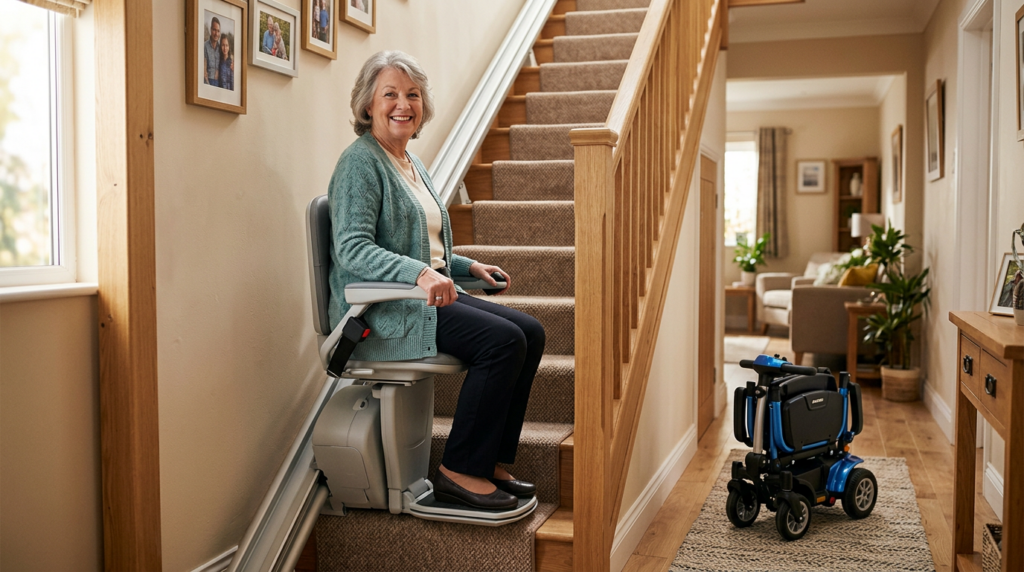
Two devices, one goal: never let stairs — or distance — slow you down.
By Frank Cannon | Updated July 2026
This guide breaks down exactly when each device matters, how they work together in a real home, and — critically — how to avoid overpaying for either one.
Mobility Scooter vs. Stairlift: They’re Not Competing, They’re Teammates
The 5 Warning Signs You Need a Stairlift (Not Just a Scooter)
- You’ve started sitting down partway up the stairs to rest. This is the single biggest predictor cited by home-safety assessors — if you’re pausing mid-staircase more than occasionally, a fall risk is already forming.
- You avoid the second floor of your own house. If you’ve unofficially “moved” your bedroom downstairs to skip the stairs, that’s not a lifestyle choice — that’s your body telling you the stairs have become the obstacle.
- A caregiver or family member has started walking behind you on stairs “just in case.” If someone else has noticed this risk before you have, it’s usually further along than it feels.
- You’ve had a stair-related near-miss — a stumble, a missed step, a grab for the railing that worked but scared you. This is the point most stairlift buyers finally act, but the ideal window to act is before this happens, not after.
- You already rely on a mobility scooter for outdoor and level-ground movement, per our guide on the top signs you’re ready to upgrade your mobility scooter — if you’ve already accepted assistance for flat-ground mobility, stairs are very often the next fall risk to address, not a separate issue to ignore.
What a Stairlift Actually Costs in 2026 (And Why the List Price Isn’t the Real Number)
Does Medicare Pay for a Stairlift?
- Medicaid HCBS waivers cover stairlifts in many states when medically necessary and tied to a home-care plan.
- VA grants (HISA, SAH, SHA) can fund stairlifts for eligible veterans.
- Long-term care insurance frequently includes home modification riders that cover part or all of the cost.
- Some installers offer their own in-house financing at 0% for 12–24 months.
If you haven’t already checked whether your mobility scooter itself qualifies for reimbursement, do that first — it’s usually the faster win:
👉 Find Out If Medicare Will Help Pay for Your Mobility Scooter — Even If You Were Denied Before
How a Stairlift and a Mobility Scooter Work Together in the Same Home
The most common real-world setup we see described by readers looks like this:
- Outdoors and around the block: a lightweight or long-range mobility scooter — see our comparisons of best lightweight mobility scooters and long-range models that keep you moving all day.
- Indoors, tight spaces: a compact scooter built for tight indoor spaces, since full-size scooters rarely fit through interior doorways or hallways.
- Between floors: the stairlift, closing the one gap neither scooter type can touch.
Straight vs. Curved Stairlifts: Why This Distinction Changes Everything
- Straight rail: Installs in as little as a few hours, often without any wall modification, and is the cheaper of the two by a wide margin.
- Curved rail: Custom-measured and fabricated per staircase — expect a 2–6 week lead time and a meaningfully higher price tag.
If your staircase has a landing, a turn, or a spiral, budget for the curved category and get multiple quotes — pricing variance between installers is enormous on curved units specifically, far more than on straight rails.
Safety Features Worth Paying Extra For
- Swivel seat at the top landing — reduces the twisting motion that causes most stairlift-adjacent falls (getting on/off, not riding).
- Seatbelt and sensor obstruction detection — stops the lift automatically if something is on the track.
- Battery backup operation — critical if you lose power; a stairlift that only runs on mains power is a liability during outages.
- Remote call/send controls at both the top and bottom of the stairs, so a spouse or caregiver can summon it without you climbing to fetch it.
A Simple Decision Framework
Ask yourself these three questions in order:
- Is the mobility issue mainly about distance/endurance on flat ground? → A mobility scooter alone likely solves it. Revisit our guide to choosing the right scooter for your lifestyle.
- Is the mobility issue mainly about stairs specifically — going up/down safely? → A stairlift is the direct fix, independent of whether you own a scooter.
- Is it both? → This is the most common answer among readers over 70, and it simply means budgeting for both across your household — not choosing one over the other.
Frequently Asked Questions
We Tried Living Without a Car for 30 Days Using Only an Enclosed Mobility Scooter — What Happened Will Surprise You
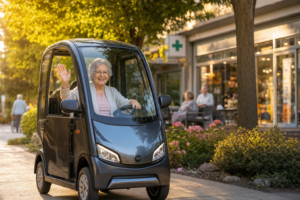
Who needs a car payment when your ride pays you back? ☀️🛺 Meet the enclosed mobility scooter giving seniors their independence back — one sunny errand at a time.
What Is an Enclosed Mobility Scooter, Exactly?
Why This Question Is Suddenly Everywhere
The 5 Questions That Actually Decide “Car Replacement or Not”
1. How far do you really drive in a normal week?
A good exercise: pull up your last two weeks of driving in your head (or check your car’s trip odometer). Most people are shocked at how few of those trips actually needed highway speeds or long distances. If yours don’t either, you’re a strong candidate.
2. Does the weather where you live actually threaten you?
3. Can you legally park and charge it where you live?
4. What does it cost you monthly vs. a car?
| Cost Category | Average Car | Enclosed Mobility Scooter |
|---|---|---|
|
Fuel/Charging
|
$150–$250/mo
|
$8–$15/mo (electric)
|
|
Insurance
|
$100–$220/mo
|
$0–$30/mo (optional)
|
|
Maintenance
|
$50–$100/mo
|
$10–$25/mo
|
|
Registration/Plates
|
$10–$40/mo
|
Usually $0
|
5. Are you replacing the car entirely, or replacing 80% of your trips?
3-Wheel or 4-Wheel Enclosed? It Matters More Here Than You’d Think
A Practical 7-Point Checklist Before You Buy
Before you commit to an enclosed model, walk through this list:
- Map your typical week’s trips. If most are under 5 miles one-way, you’re a strong fit.
- Check your local ordinances. Confirm sidewalk/bike-lane legality and any speed cap in your city or county.
- Test the door and step-through height in person. Comfort here matters more than horsepower specs — our notes on scooters for people with back or joint pain apply directly to enclosed cabin ergonomics.
- Confirm charging access. Garage outlet, covered carport, or dedicated charging dock — enclosed models still need a dry, accessible plug.
- Ask about accessory compatibility. Mirrors, extra lighting, phone mounts, and cargo baskets — see our must-have mobility scooter accessories guide.
- Check the warranty and battery replacement cost up front, not after you’ve bought it.
- Confirm Medicare/insurance reimbursement eligibility before paying full price (see the CTA below — this step alone can save you thousands).
Real Talk: Where an Enclosed Scooter Can’t Replace a Car (Yet)
- Highway speeds. Most top out at 15–25 mph. Fine for neighbourhoods, dangerous on arterial roads.
- Long-distance family visits. If “seeing the grandkids” means a 3-hour drive, you still need four wheels and a full tank.
- Severe winter states. Even enclosed cabins aren’t rated for heavy snow/ice traction the way a car is.
- Multiple passengers. These are single-rider vehicles. Family errands with grandkids in tow still need the car.
- Extreme heat exposure at highway shoulders or unshaded lots — cabins trap heat quickly without AC, so factor that into summer routes.
If any of these describe your daily reality, an enclosed scooter is better framed as a second vehicle, not a replacement — and that’s still a legitimate, money-saving upgrade over relying on your car for every single errand.
Before You Buy: Don’t Skip the Money Question
👉 Find Out If Medicare Will Help Pay for Your Mobility Scooter — Even If You Were Denied Before
We built a free, no-obligation guide that walks you through the exact qualification steps and appeal process (first-time approval rates run 70%+ when done right). Check your eligibility now →
Signs You’re Ready to Make the Switch
Frequently Asked Questions
How to Break In Mobility Scooter Batteries for Maximum Range in 2026
# How to Break In Mobility Scooter Batteries (So You Actually Get the Range You Paid For)
## Introduction
*Looking for the perfect travel companion? Check out the latest [Electric Wheelchairs and Scooters at ElectricWheelchairsUSA](https://www.electricwheelchairsusa.com/?aff=406) for exclusive 2026 deals!*
Are you the proud new owner of a mobility scooter, perhaps a reliable Pride, a comfortable Golden, or a versatile Travel model? You’ve made a significant investment in your independence and mobility. Now, you’re likely eager to hit the road and experience the freedom your new scooter offers. However, before you embark on your first long journey, there’s a crucial step many new owners overlook: **properly breaking in your mobility scooter batteries**. This initial conditioning process is not just a recommendation; it’s the foundation for ensuring you get the maximum range, optimal performance, and the longest possible lifespan from your battery investment. Neglecting this step can lead to disappointing range and premature battery wear, leaving you wondering why your scooter isn’t living up to its potential. In this comprehensive guide, we’ll walk you through the essential steps to properly break in your mobility scooter batteries, ensuring you truly get the range you paid for.
## What Does “Breaking In” a Battery Mean?
The term “breaking in” a battery might sound like something reserved for a new car engine, but it applies equally to the power source of your mobility scooter. Essentially, it refers to the initial period of use and charging that allows the battery to reach its full capacity and optimize its internal chemistry. Most mobility scooters, including popular models from **Pride**, **Golden**, and **Travel**, utilize sealed lead-acid (SLA) batteries, which can be either Absorbent Glass Mat (AGM) or Gel Cell. These battery types benefit significantly from a proper break-in period. During manufacturing and storage, the chemical components within the battery may not be fully active or evenly distributed. The initial charge and subsequent discharge cycles help to activate these chemicals, form stable plates, and ensure the battery can hold and deliver its maximum rated capacity. Think of it like training a muscle: you wouldn’t expect peak performance on the first day. Similarly, your new mobility scooter battery needs a few cycles to get into top shape. This conditioning is vital for achieving the advertised range and extending the overall life of your battery.
## The Crucial First Charge: Your Foundation for Range
The most critical step in breaking in your mobility scooter batteries is the **initial charge**. This isn’t just about topping it off; it’s about establishing the battery’s baseline for future performance. Many manufacturers, including those for **Pride**, **Golden**, and **Travel** scooters, recommend an extended first charge. Here’s how to do it correctly:
1. **Read Your Manual:** Always start by consulting your mobility scooter’s owner’s manual. While general guidelines apply, specific models might have unique recommendations.
2. **Connect the Charger:** Use only the charger provided by the manufacturer. Aftermarket or incorrect chargers can damage your batteries and void your warranty. Ensure the charger is plugged into a standard wall outlet and then connected securely to your scooter’s charging port.
3. **The Extended Charge:** For the very first charge, it is highly recommended to charge your batteries for a minimum of **10 to 14 hours**, regardless of whether the charger’s indicator light turns green earlier. This extended period allows the battery cells to fully equalize and reach their maximum potential. Interrupting this first charge prematurely can permanently limit the battery’s capacity.
4. **Avoid Immediate Discharge:** Resist the urge to take your new scooter for a long ride immediately after the indicator light turns green. Allow the battery to complete its full initial charge cycle. Deeply discharging a brand-new battery before it has been properly conditioned can be detrimental to its long-term health.
5. **Charge in a Well-Ventilated Area:** While modern SLA batteries are sealed, it’s always good practice to charge them in a well-ventilated area, away from direct sunlight or extreme temperatures.
This initial, thorough charge is the single most important step you can take to ensure your mobility scooter batteries deliver the range and reliability you expect.
## The First Few Cycles: Building Battery Memory (or Conditioning)
After the crucial initial charge, the next phase involves the first few charge and discharge cycles. This process further conditions the battery and helps it to in the same way as older nickel-cadmium batteries, these initial cycles are still vital for optimal performance. Aim for approximately **3 to 5 full charge/discharge cycles** during this break-in period.
1. **Partial Discharges:** For these initial cycles, it’s best to use your scooter until the battery charge indicator shows it’s around **20-30% remaining** before recharging. Avoid running the batteries completely flat during this period. Deep discharges can stress new batteries and hinder their conditioning process.
2. **Full Recharges:** After each partial discharge, fully recharge your batteries. Again, allow for an extended charge, ideally overnight (8-10 hours), even if the charger light indicates a full charge sooner. This ensures the battery cells are balanced and fully topped up.
3. **Consistent Use:** Regular, consistent use during this period is more beneficial than sporadic, heavy use. Short trips followed by full recharges will help the battery adapt and build its capacity more effectively.
By carefully managing these first few cycles, you’re actively contributing to the long-term health and efficiency of your mobility scooter batteries, setting them up for reliable performance for years to come.
## Ongoing Battery Care for Maximum Lifespan and Range
Once your mobility scooter batteries are properly broken in, maintaining their health is key to enjoying consistent range and extending their overall lifespan. This involves adopting good charging habits and being mindful of environmental factors. These tips apply universally to most mobility scooter batteries, including those found in **Pride**, **Golden**, and **Travel** models.
* **Charge After Every Use:** The golden rule for lead-acid batteries is to charge them after every use, regardless of how short the trip was. This prevents sulfation, a common cause of capacity loss and premature battery failure. Think of it as topping off a gas tank – you wouldn’t wait until it’s completely empty every time.
* **Avoid Deep Discharges:** While occasional deep discharges won’t immediately ruin your battery, consistently running your batteries until they are completely depleted significantly shortens their lifespan. Aim to recharge when the battery indicator shows around 20-30% remaining.
* **Don’t Overcharge or Undercharge:** Modern mobility scooter chargers are designed to prevent overcharging. However, using an old or faulty charger can be detrimental. Similarly, consistently undercharging (not allowing a full charge cycle) can lead to reduced capacity over time. Always use the manufacturer-recommended charger and ensure it’s functioning correctly.
* **Storage Best Practices:** If you plan to store your mobility scooter for an extended period (more than a few weeks), ensure the batteries are fully charged before storage. Then, recharge them every 3-4 weeks to maintain their charge and prevent self-discharge from causing damage. Store the scooter in a cool, dry place, away from direct sunlight or extreme temperatures.
* **Temperature Matters:** Extreme temperatures, both hot and cold, can negatively impact battery performance and lifespan. Batteries perform optimally at room temperature. Avoid charging or storing your scooter in very hot garages or freezing outdoor conditions.
* **Regular Checks:** Periodically inspect your battery terminals for corrosion and ensure all connections are tight. Keep the battery compartment clean and free of debris.
## Specific Considerations for Pride, Golden, and Travel Scooters
While the general principles of battery break-in and maintenance apply across the board, it’s worth noting that leading brands like **Pride Mobility**, **Golden Technologies**, and **Travel Scooter** manufacturers design their products with specific battery systems in mind. Always refer to the owner’s manual provided with your specific model for any brand-specific recommendations regarding charging times, battery types, and maintenance schedules. For instance, some newer models might incorporate more advanced battery management systems that optimize charging. However, the fundamental need for proper initial conditioning and consistent charging remains paramount for all quality mobility scooters.
## Troubleshooting Common Battery Issues
Even with the best care, you might encounter battery-related issues. Here are some common problems and what to consider:
* **Poor Range Despite Proper Break-In:** If your scooter isn’t achieving the expected range even after proper break-in and consistent charging, first check your charger. A faulty charger might not be fully charging the batteries. Also, consider the age of your batteries; even well-maintained batteries have a finite lifespan, typically 1-2 years for daily users, or 3-5 years for occasional users. Environmental factors like cold weather can also temporarily reduce range.
* **Scooter Dies Suddenly:** This often indicates a battery that is no longer holding a charge effectively. It could be one or both batteries failing. A professional battery test can confirm this.
* **When to Consider Battery Replacement:** If your batteries are old, not holding a charge, or consistently providing significantly reduced range, it’s likely time for a replacement. Always replace both batteries at the same time, and ensure they are of the same type, size, and amp-hour (Ah) rating as the originals. Consult with a reputable dealer like MobilityScootersForYou.com for advice on compatible and high-quality replacement batteries.
## Conclusion
Properly breaking in and maintaining your mobility scooter batteries is not a chore; it’s an investment in your freedom and independence. By following the simple yet crucial steps outlined in this guide – especially the extended initial charge and the careful management of the first few cycles – you can significantly enhance your battery’s performance, maximize your scooter’s range, and extend its overall lifespan. Whether you own a **Pride**, **Golden**, or **Travel** mobility scooter, these practices will ensure you get the most out of your valuable equipment. Don’t let a neglected battery limit your adventures. Take charge of your battery care today and enjoy the full range and reliability your mobility scooter was designed to deliver. For more tips on mobility scooter care, accessories, or to explore our range of high-quality scooters and replacement batteries, visit MobilityScootersForYou.com.
## Plan Your Next Adventure
If you’re planning a trip to Orlando or a cruise, don’t forget to arrange your mobility rental in advance. We recommend [Walker Mobility](https://walkermobility.com/) for reliable and high-quality scooter rentals that make your vacation stress-free.
Maximizing Your Freedom: The Ultimate 2026 Mobility Scooter Battery Maintenance Guide

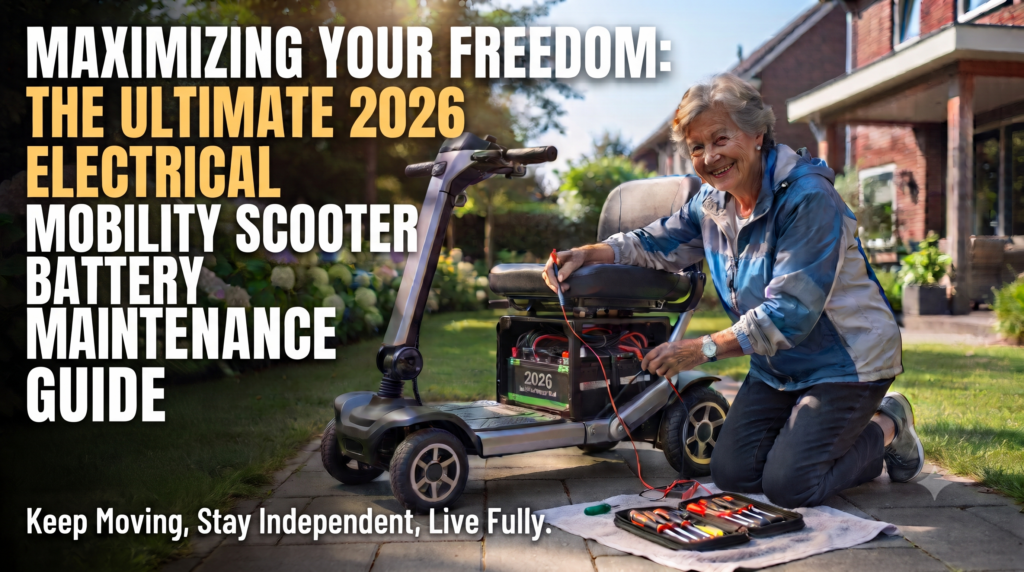
Feel the gentle breeze of absolute freedom wash over you… 🌊 Let a deep wave of calm reassurance fill your mind, knowing your journey is fully powered and completely supported. ✨ Breathe in, relax, and keep moving forward in perfect independence! 🔋🦽
Are you getting the full range your mobility scooter promised? For many seniors and travelers, the battery is the heart of their independence. Whether you’re cruising through a theme park or navigating your local neighborhood, a well-maintained battery ensures you’re never left stranded.
In 2026, battery technology has advanced, but the core principles of care remain the same. This guide covers everything you need to know to extend your battery life and maximize your daily range.
## 1. The “Break-In” Period
Many users don’t realize that new mobility scooter batteries require a break-in period. For the first 5-10 charging cycles, it’s essential to fully charge your battery and then use it until it’s at about 50% capacity. This helps the battery reach its full potential.
## 2. Consistency is Key
Don’t wait until your scooter is completely dead to charge it. Lead-acid and even newer lithium-ion batteries prefer consistent top-offs. If you’ve used your scooter for more than 30 minutes, plug it in when you get home.
## 3. Storage Matters
If you’re planning a trip and leaving your scooter behind, or if you’re a seasonal user, never store your batteries in a discharged state. Store them in a cool, dry place and ensure they are charged to at least 70% before long-term storage.
## 4. Temperature Awareness
Extreme heat and cold are the enemies of battery efficiency. In 2026, we see more “smart” chargers that adjust for temperature, but it’s still best to charge your scooter in a climate-controlled environment.
## Recommended Upgrade: High-Capacity Lithium Batteries
If you find yourself constantly worrying about range, it might be time for an upgrade. High-capacity lithium batteries offer longer life cycles and faster charging times.
**[Find the Perfect High-Capacity Scooter on Senior.com](https://senior.com/collections/bariatric-mobility-scooters)**
—
*Affiliate Disclosure: This post contains affiliate links to trusted partners like Senior.com and [ElectricWheelchairsUSA](https://www.electricwheelchairsusa.com/?aff=406). We may earn a commission if you make a purchase through these links, at no extra cost to you.*
As we navigate the golden years, maintaining our mobility isn’t just about the scooter we drive—it’s about the comfort of the body inside that seat. For many, chronic joint pain, persistent neuropathy, and slow recovery times become the silent barriers to a life well-lived. What if you could flip a switch, bathe your cells in restorative light, and reclaim your comfort?
Welcome to the breakthrough world of Red Light Therapy (RLT).
The Science: Why Your Body Craves This Light
At the core of every cell in your body, there is a tiny powerhouse called the mitochondria. As we age, these powerhouses naturally become less efficient, leading to slower healing, lower physical vitality, and increased muscle fatigue. Red light therapy uses specific, safe, medical-grade wavelengths—typically between 600 nanometers (nm) for surface skin care and 850nm for deep muscle tissue penetration—that pass deep past the surface of the skin to directly stimulate these cellular powerhouses.
This healing process is scientifically known as photobiomodulation. When these precise light waves are absorbed into your tissue, they increase cellular blood flow, trigger the rapid production of Adenosine Triphosphate (ATP)—which is the pure energy your cells use to repair damage—and significantly reduce systemic oxidative stress. For the senior community, this translates directly into three primary health breakthroughs:
-
Systemic Inflammation Reduction: Quieting the fires of chronic osteoarthritis, degenerated cartilage, and morning joint stiffness.
-
Neuropathy Management: Re-energising, stimulating, and waking up dormant nerve endings in the feet and hands to reduce daily numbness.
-
Accelerated Tissue Repair: Healing everyday skin bruises, accidental tears, and sore muscle groups in half the usual time.
Addressing the Challenges of Ageing & Mobility
Mobility scooters are incredible tools for movement, but they are tools for your environment. Red Light Therapy is a tool for how you physically feel inside your body. If you struggle with severe knee stiffness when getting out of your mobility scooter, or if you feel the agonising “pins and needles” of neuropathy during long travel days along the beautiful Pacific coast, RLT offers a non-invasive, drug-free path to relief that complements your active lifestyle perfectly.
The Critical Role of Deep Blood Flow
Many of the conditions we commonly associate with “just getting older” are actually direct symptoms of reduced micro-circulation. When blood vessels narrow over time, vital oxygen and nutrients cannot reach your joints or lower extremities. By bringing fresh, highly oxygenated blood directly to the deep tissues in your lower legs and feet, red light therapy helps to naturally reduce the fluid swelling and fluid retention that often makes walking, standing, or transferring from your scooter uncomfortable.
Selecting Your Device: Therapy Panels vs. Flexible Wraps
When setting up your personal home wellness corner, you have two main choices of medical-grade equipment. Selecting the right option depends entirely on your personal physical goals, your lifestyle, and your comfort requirements:
1. Targeted Flexible Wraps
These are perfect for wrapping directly around a sore knee joint, an aching lower back, or placing under sensitive, numb feet. They provide direct, snug contact to the skin, making them incredibly efficient at delivering energy to a concentrated area. Best of all, they are lightweight, travel-friendly, and can easily be used while you are relaxing in your favourite armchair, watching television or reading a book.
2. Full-Body LED Panels
These are the absolute gold standard for total body systemic wellness. By sitting comfortably in front of a standalone panel for just 10 to 15 minutes a day, you cover a massive surface area at once. This setup is highly recommended if you are looking to treat multiple joints simultaneously, improve overall systemic inflammation, boost daytime energy levels, and encourage deep, restorative nighttime sleep quality.
Your Simple 7-Day Protocol for Real Success
Consistency is the ultimate secret to gaining long-term relief from chronic issues. You do not need a complicated medical schedule; follow this simple, highly effective framework to see the best results:
-
Week 1 (The Introduction): Start with just 5 to 10 minutes daily per treatment area. Let your body gently adjust to the cellular light stimulation and increased blood flow.
-
Week 2 (The Building Phase): Increase your daily sessions to a full 15 minutes per area. Focus the light panels or wraps directly on your most painful joints or numb areas.
-
Week 3 and Beyond (The Maintenance Phase): Effortlessly integrate it into your regular daily routine—perhaps while you are enjoying your morning coffee, reading the daily news, or winding down before going to bed at night.
Maximizing the Longevity of Your Health
When we think about home wellness, it is easy to view treatments as temporary fixes. Red light therapy is fundamentally different because it works on a cumulative basis. Every session builds upon the last, slowly restoring cellular health over weeks and months. Seniors who stick to a dedicated routine frequently report that they rely less on temporary over-the-counter pain creams and feel a renewed sense of stamina when performing daily tasks around the home.
Choosing the Right Treatment Environment
To get the absolute most out of your therapy sessions, set up a dedicated space in your home. Ensure your chair is comfortable, supportive, and placed near a standard wall outlet. If you are using a full-body panel, position it securely on a sturdy table or use the included door-mount hardware so you never have to strain your muscles to get into position. Relaxation enhances blood flow, meaning a calm mind actually helps the light work better within your body.
The Future of True Senior Mobility
(Note: Always consult with your primary doctor before starting any brand new therapy routine, especially if you have highly sensitive skin, use a pacemaker, or are taking prescription medications that are known to increase your physical sensitivity to light waves.)