Rugged Power Scooters
“Explore the finest all-terrain mobility scooters for the intrepid explorer. We review robust suspension and high-torque motors designed for forest trails and rugged paths. Perfect for the adventurous rider seeking true independence off the pavement.”
Why I Switched to a 4-Wheel Scooter (And You Should Too) Coast to Coast Reliability Guide.

By Frank Cannon
Experience the unwavering stability of a 4-wheel scooter as you explore the breath taking Pacific Coast.
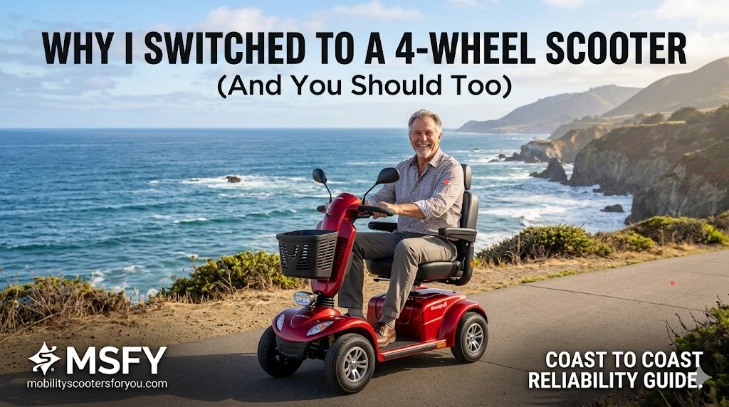
Experience the unwavering stability of a 4-wheel scooter as you explore the breath taking Pacific Coast.
Listen, I’ve been in this business long enough to know what keeps folks up at night. You’re not just buying a mobility scooter—you’re investing in your freedom. And when you’re thinking about taking that freedom coast to coast, you want answers. Real answers. Not some corporate fluff.
So let me tell you what I tell everyone who walks through my door: reliability isn’t just a feature. It’s everything.
The Questions Everyone Asks (And the Answers You Actually Need)
Can I Really Take My Mobility Scooter Cross-Country?
Absolutely. And here’s why that matters more than you might think.
Picture this: You’re visiting your grandkids in Florida. Or maybe you’re finally taking that trip to see the Grand Canyon. The last thing you need is wondering whether your scooter will hold up.
The truth? A quality 4-wheel mobility scooter is built for exactly this kind of journey. We’re talking about machines engineered with the same reliability standards as medical equipment. Because that’s what they are—medical-grade mobility devices.
When you choose a heavy-duty model, you’re choosing:
- Reinforced frames that laugh at bumpy roads
- Industrial-grade motors designed for thousands of miles
- Battery systems that won’t quit halfway through your adventure
- Suspension systems that smooth out everything from hotel parking lots to boardwalks
What Makes a Scooter “Travel-Ready”?
Now, this is where most people get confused. They think “travel-ready” means “fits in a car.”
Wrong.
A truly travel-ready scooter needs to check every single one of these boxes:
1. Airline-Compliant Batteries Your scooter needs lithium-ion batteries that meet TSA and FAA regulations. No exceptions. The last thing you want is getting to the airport and hearing “Sorry, can’t take that on board.”
2. Easy Disassembly (Without a PhD in Engineering) You should be able to break down your scooter in under 60 seconds. If it takes longer, you’re going to hate traveling with it. Trust me on this.
3. Manageable Weight Here’s where it gets interesting. The Buzzaround CarryOn weighs exactly 47.5 lbs—light enough to handle, heavy enough to feel stable. That’s the sweet spot.
4. Durable Construction Cheap plastic parts? They’ll crack in your trunk before you hit the state line. You need metal frames, reinforced joints, and components that can handle being loaded and unloaded dozens of times.
Is Weight Really That Important?
Let me answer that with a story.
Last month, a gentleman came in looking at scooters. Nice guy. He picked the heaviest model we had because he thought “heavier means better quality.”
Three weeks later, he’s back. Why? Because he couldn’t lift it into his trunk. His wife couldn’t help him. And suddenly, that “quality” scooter was sitting in his garage, unused.
Weight matters because mobility matters.
The Golden CarryOn at just $2,080 gives you the perfect balance—light enough to manage (47.5 lbs), sturdy enough to trust. That’s not marketing talk. That’s physics.
When you’re looking at weight, think about:
- Can you lift it yourself, or will you always need help?
- Does it fit in your vehicle without a special lift?
- Can you maneuver it when it’s folded?
What About Stability? I Don’t Want to Feel Wobbly.
Here’s something nobody talks about enough: your scooter should feel like an extension of your own two feet.
That’s not poetic nonsense. That’s the standard.
4-wheel scooters give you that rock-solid stability because of simple geometry. Four points of contact with the ground means:
- Better weight distribution across all surfaces
- Reduced tipping risk on inclines and turns
- Confident cornering even on uneven terrain
- Medical-grade peace of mind every single time you ride
You know that feeling when you stand up and your legs lock beneath you? That’s what a quality 4-wheel scooter gives you. Feel the ground lock beneath you. That’s not just safety—that’s confidence.
How Far Can I Actually Go on a Single Charge?
This is the million-dollar question, isn’t it?
Most heavy-duty scooters will give you 15-25 miles per charge under normal conditions. But here’s what “normal conditions” actually means:
- Flat terrain (not San Francisco hills)
- Average rider weight (check your model’s specs)
- Moderate speed (not racing your grandkids)
- Proper battery maintenance (more on this in a second)
For cross-country travel, here’s my advice: Plan for the lower end of that range. If your scooter says 20 miles, plan your day around 15. Why? Because:
- Hotel carpets drain more battery than you’d think
- You’ll want to explore, not worry about range anxiety
- Batteries perform differently in extreme heat or cold
Pro tip: Carry a portable charger and know where outlets are on your route. Most restaurants, rest stops, and hotels are incredibly accommodating when you explain the situation.
If you want to get the most out of your battery, Bob put together a simple guide that’s helped hundreds of folks extend their range. Check out Bob’s Battery Survival Guide when you have a minute.
What Happens If Something Breaks While I’m Traveling?
Smart question. And here’s the honest answer: It depends on what you bought.
Cheap scooters from big-box stores? Good luck finding parts in Albuquerque.
Quality brands with nationwide service networks? You’re covered.
When you invest in a reputable mobility scooter, you’re also investing in:
- Nationwide warranty coverage that follows you anywhere
- Common replacement parts available at medical supply stores
- 24/7 customer support that actually answers the phone
- Dealer networks in every major city
I always tell people: Buy from a company that’s been around longer than your last car. There’s a reason some brands have survived decades—they stand behind their products.
Can I Take My Scooter on a Plane?
Yes, but with conditions.
Airlines are required by law to accommodate mobility devices, but you need to:
Before You Book:
- Call the airline directly (don’t just book online)
- Confirm your battery type is approved (lithium-ion under 300Wh is usually fine)
- Ask about their specific boarding procedures
- Request gate-check if possible
At the Airport:
- Arrive 90 minutes early (minimum)
- Bring your scooter’s battery specifications in writing
- Have your doctor’s note handy (not always required, but helpful)
- Take photos of your scooter before checking it
Reality check: Airlines can be difficult. But thousands of people fly with mobility scooters every single day. You just need to know the rules and stand your ground politely.
What’s the Real Difference Between 3-Wheel and 4-Wheel Scooters for Travel?
I get this question at least three times a week.
3-wheel scooters:
- Tighter turning radius (great for indoor spaces)
- Slightly lighter weight
- Better for smooth, flat surfaces
- Less stable on uneven terrain
4-wheel scooters:
- Superior stability (especially outdoors)
- Better for varied terrain
- More weight capacity
- Confidence-inspiring on slopes and curbs
For coast-to-coast travel? 4-wheel wins every time. You’ll encounter parking lots, sidewalks, hotel lobbies, and outdoor attractions. You need that extra stability.
Zoe wrote a helpful comparison if you’re still deciding between lightweight 3-wheel and heavy-duty 4-wheel models.
How Do I Maintain My Scooter for Long-Distance Reliability?
This is where most people drop the ball. They buy a great scooter and then… nothing. No maintenance. No care.
Here’s your simple maintenance checklist:
Weekly:
- Check tire pressure (yes, even on solid tires—look for wear)
- Wipe down the frame and seat
- Test all lights and signals
Monthly:
- Inspect battery connections for corrosion
- Tighten any loose bolts or screws
- Clean the battery terminals
- Check brake function
Before Any Trip:
- Fully charge your battery (and test it)
- Inspect tires for damage or excessive wear
- Test all controls and features
- Pack your charger and any tools you might need
The secret? Treat your scooter like you’d treat your car. Regular attention prevents big problems.
What Should I Look for in a “Heavy-Duty” Scooter?
Not all heavy-duty scooters are created equal. Here’s what actually matters:
Weight Capacity: Look for at least 300 lbs, preferably 350-400 lbs. This isn’t just about your weight—it’s about stability and durability.
Motor Power: Minimum 500W for hills and inclines. Anything less and you’ll struggle on ramps.
Frame Construction: Steel or reinforced aluminum. Plastic components should be minimal.
Wheel Size: Larger wheels (9-12 inches) handle obstacles better and provide a smoother ride.
Seat Quality: High-back seats with armrests aren’t luxury—they’re necessity for long-distance comfort.
Is $2,080 a Good Price for a Quality Travel Scooter?
Let me put this in perspective.
A cheap scooter might cost $800-$1,200. Sounds like a deal, right? Until it breaks down in six months. Or won’t hold a charge. Or feels unstable every time you ride it.
The Golden CarryOn at $2,080 represents something different: value that lasts.
You’re getting:
- Medical-grade construction
- Airline-compliant batteries
- Proven reliability over thousands of miles
- Warranty coverage that actually means something
- A scooter that holds its resale value
Think about it this way: That’s less than $6 per day over one year. For your independence. For your freedom to travel. For peace of mind.
Can you really put a price on that?
Does Medicare Cover Travel Scooters?
Here’s the short answer: Sometimes, but it’s complicated.
Medicare Part B may cover a portion of your scooter if your doctor prescribes it as “durable medical equipment” and you meet specific criteria. But travel-specific features? Those usually aren’t covered.
Janice knows Medicare inside and out—she’s helped dozens of folks navigate the paperwork. Her Medicare coverage guide breaks it down in plain English.
What About Insurance for My Scooter?
Good question. Your homeowner’s or renter’s insurance might cover your scooter, but policies vary wildly.
For travel, consider:
- Damage coverage during transport
- Theft protection (especially in hotels)
- Liability coverage if someone trips over your scooter
Betty specializes in insurance options for mobility equipment. If you’re planning a big trip, her insurance checklist is worth a look.
What’s the Most Important Thing to Remember About Scooter Reliability?
Here’s what I want you to take away from this entire article:
Reliability isn’t about the scooter never having issues. It’s about choosing a scooter that’s built to handle whatever you throw at it—and backed by a company that stands behind it when you need help.
You’re not just buying a machine. You’re buying:
- The confidence to visit family across the country
- The freedom to explore new places
- The independence to live life on your terms
- The peace of mind that comes from knowing you’re covered
This is about taking control of your mobility.
Ready to Find Your Perfect Travel Companion?
Look, I’ve given you the facts. I’ve answered the questions. Now it’s time for you to make a decision.
You deserve a ride as steady as your own two feet. You deserve to travel without worry. You deserve equipment that works as hard as you do.
The Buzzaround CarryOn and Golden CarryOn aren’t just scooters—they’re your ticket to coast-to-coast freedom.
Don’t let another season pass you by. Don’t miss another family gathering because you’re worried about mobility. Don’t put off that dream trip because you’re not sure your equipment can handle it.
Your adventure is waiting. Your scooter should be ready.
—Frank Cannon
Heavy-Duty Mobility Specialist
California Cruising: 2026 Baja Raptor Review & New Scooter Laws
Control+HomeEnd
By Dr. Bob Daniels | Mobility Scooters For You

Like Bob and Janice, we are deep into analyzing the new 2026 California safety regulations impacting scooter reliability.
Janice and I spent thirty-five years in medicine. When you’ve spent that long telling patients what they should do, retirement feels like finally getting permission to do what you want. For us, that meant California. The coast, the farmers’ markets, the community paths that wind through our retirement village like they were designed specifically for people who’ve earned the right to take things slowly.
What we needed was a scooter that could keep up with that life. Not a showroom piece. Not something that handles like a shopping trolley. A real machine.
After a good deal of research — old habits die hard — we landed on the Pride Mobility Baja Raptor 2. And I want to give you an honest account of what it’s like to actually own and ride one in California in 2026, including some important legal points most reviews completely gloss over.
What Is the Baja Raptor 2?
The Baja Raptor 2 is Pride Mobility’s flagship outdoor recreational scooter. It comes in both a 3-wheel and a 4-wheel configuration — we went with the 4-wheel for the stability, and I’ll explain why that mattered in a moment.
This is not a travel scooter. It is not designed to fold up and slide into your trunk. It weighs 341.8 lbs and is a full-sized machine built for outdoor use — think coastal paths, retirement community grounds, farmers markets, and neighbourhood streets. If you want something lighter and portable, the team here has a full guide to lightweight travel scooters worth reading first. But if you want a scooter that feels like it was built to go somewhere, the Raptor 2 is worth your attention. Mobility Masters
The Specs — What Actually Matters
Let me give you the numbers that count, without the marketing language.
Speed: Top cruising speed of 13 mph — genuinely fast for a mobility scooter, and in a class of its own for this category. ACG Medical Supply
Range: Up to 21.2 miles at 200 lbs rider weight, or up to 15.1 miles at the full 400 lb capacity. For most daily use — community paths, errands, social outings — that is more than sufficient on a single charge. ACG Medical Supply
Weight Capacity: 400 lbs, with a 20″x18″ memory foam captain’s seat with manual adjustment and angle/width adjustable armrests. Comfortable for extended riding. Janice, who has some lower back issues, found the seat genuinely supportive. Bajamobility
Lighting: A full LED package including brake lights, turn signals, and headlights for maximum visibility — important if you ride in the early evening. Bajamobility
Braking: A dual electromechanical and regenerative braking system, with a hand brake for additional safety and control. PageDownEndBajamobility
Wheels: Four large all-terrain wheels designed to handle gravel, grass, and uneven surfaces with confidence. Mobility Equipment Recyclers
Console: An integrated LCD display showing speed, battery life, and mileage — easy to read, no fussing around. Bajamobility
Want to see how the Raptor compares to other top Pride models? We’ve put together a full 2026 Pride Mobility lineup comparison covering which model suits which lifestyle. Worth reading before you commit.
How Does It Ride?
Here’s where I’ll be direct: this is the most confidence-inspiring scooter I’ve ridden.
The full suspension system absorbs surface variations in a way that cheaper models simply don’t. We live in a community with a mix of smooth path and packed gravel, and the Raptor 2 handled both without drama. At 13 mph on a long flat stretch of coastal path, it felt planted and controlled — not nervous, not bouncy.
The turning radius is 92.5 inches — competitive for a scooter of this size, and manageable in most open outdoor environments. I’ll be honest: this is not a scooter for tight indoor corridors. It’s built for outside. If you primarily need indoor use, look at something smaller — the team here can point you in the right direction. Just reach out and ask. Bajamobility
The thumb throttle takes a few minutes to get used to if you’ve previously ridden a tiller-style scooter. Within half an hour I’d forgotten it was different.
The California Laws You Actually Need to Know
This is the section most reviews skip. Don’t skip it.
California draws a clear legal distinction between electric scooters — the rental-style units you see on city footpaths — and mobility scooters used by seniors or people with physical disabilities. The rules are meaningfully different, and knowing them matters.
Speed: Mobility scooters operated by seniors or those with a physical disability can travel at up to 30 mph on California roads — compared to the 15 mph hard cap that applies to standard electric scooters. At 13 mph, the Raptor 2 sits comfortably inside those limits. ValuePenguin
Sidewalks: When using mobility scooters on sidewalks and crosswalks, you must yield to pedestrians and maintain a safe, controlled speed. Unlike standard electric scooters, California law does not prohibit mobility scooter use in bicycle lanes either. Mobility Nest
No Registration Required. <a></a>d. <a></a> <a></a>d. <></a> a/>You do not need to register your mobility scooter with the California DMV. No licence plates, no annual registration fees.
Local Variations Matter: Many cities are updating their local ordinances beyond state law — Dublin’s recent ordinance prohibitsalkd riding citywide effective late 2025, with enforcement beginning in early 2026. Cities including San Jose and Danville have additional restrictions near parks and downtown areas. Always check your local city rules before riding somewhere new. TopRiding
Fines: Basic violations start around $197–$200, with court costs often exceeding $300 on top of that. It pays to know the rules before you roll. Rental Awareness
Frank covered the California coastal experience on the Raptor from a different angle — including the all-terrain test. Read his take on the top 3 all-terrain scooters here.
Who Is the Baja Raptor 2 For?
After several months of use, here’s my honest clinical assessment — retired physician’s opinion, no charge.
The Raptor 2 is ideal if you:
- Live in a retirement community, coastal area, or anywhere with good outdoor paths
- Want a scooter you can ride with genuine confidence and speed
- Need a 400 lb weight capacity with proper seating support
- Prioritise stability, visibility, and all-terrain capability over portability
It is probably not right for you if you:
- Need something that folds into a car boot — look at the travel scooter options here instead
- Primarily use a scooter indoors
- Need something covered under Medicare’s DME pathway — the Raptor 2 is a recreational device, not a medical one. Read our Medicare coverage guide to understand what qualifies
A Word on the Bariatric Question
The 400 lb capacity on the Raptor 2 covers most riders comfortably. But if you need a higher capacity, or specifically need a scooter designed and certified for bariatric use, that’s a different conversation. We’ve covered the best bariatric mobility scooters of 2026 in detail — no fluff, just the models that actually deliver.
Bob’s Honest Verdict
The Baja Raptor 2 is the best outdoor mobility scooter we have personally used. At 13 mph, with genuine all-terrain capability, full LED lighting, and a seat Janice actually looks forward to sitting in — it has genuinely expanded what our retirement looks like day to day.
If you’re in California, the legal picture is favourable for mobility scooter users. Know your local city rules, stay aware of any updated ordinances in your area, and ride sensibly.
If you’re not sure whether the Raptor 2 is the right fit for your situation — or whether a different model would serve you better — the team at Mobility Scooters For You are worth a conversation. No pressure. Just straight answers from people who know this equipment properly.
Frequently Asked Questions
Is the Baja Raptor 2 street legal in California? Yes. As a mobility scooter operated by a senior or person with a physical disability, it falls under California’s specific mobility scooter rules — separate from standard electric scooter law. It can legally travel up to 30 mph on public roads, well above the Raptor 2’s 13 mph top speed.
Does the Baja Raptor 2 come in 3-wheel and 4-wheel versions? Yes. The 3-wheel version features a full suspension system and 400 lb capacity, with a tighter turning circle. The 4-wheel version adds lateral stability — our preference for outdoor use on varied surfaces. Bajamobility
Can I ride the Baja Raptor 2 on California bike paths? Generally yes, though local rules vary. Always check the specific rules for the trail or path you plan to use, as some municipalities restrict motorised devices on certain routes.
Does Medicare cover the Baja Raptor 2? No — it is classified as a recreational device, not a medical one. Read our full Medicare guide to understand what categories of scooter do qualify for coverage.
How does the Raptor 2 compare to a 4-wheel stability scooter for everyday use? Frank covers that comparison in detail in his 4-wheel mobility scooter review — the short answer is that they serve different purposes. The Raptor 2 is about outdoor range and speed; a standard 4-wheel scooter is about portability and everyday convenience.
— Dr Bob Daniels
Bob is a retired physician and contributor at Mobility Scooters For You. He and his wife, Janice, review mobility equipment with the same rigour they applied to clinical decisions — evidence first, opinions second.
PageDown
 Frank always liked things built tough. After thirty years running a highly successful trucking empire, he expects machinery to handle whatever he throws at it without breaking a sweat, complaining, or stalling out. If it isn’t heavy-duty, Frank isn’t interested.
So, when his good friend Bob—a retired MD with an eagle eye for technical detail and microscopic precision—suggested they push the newest All-Terrain Mobility Scooters to their absolute limits down by the rugged Malibu coastline, Frank didn’t even hesitate. He just grabbed his jacket.
If you’re anything like Frank, you crave the absolute freedom to explore off the beaten path. You refuse to let a little uneven ground stop you. Whether it’s a sandy beach, a muddy forest trail, or navigating the treacherous, rocky Californian coves, an all-terrain mobility scooter is engineered precisely to give you back your power. In 2026, the outdoor mobility scooter market has introduced mind-blowing advancements in suspension and shock absorption, and Bob was eager to analyze every single spec.
## What is the “Secret Sauce” of an All-Terrain Mobility Scooter?
“It’s all in the shock absorption architecture,” Bob noted, methodically checking the undercarriage with total focus. Unlike those flimsy, standard indoor scooters, true all-terrain models are forged with heavy-duty frames and massive pneumatic or solid knobby tires. This allows them to devour uneven surfaces like gravel, dirt, and even hard-packed sand—meaning you never get stuck, you never damage the motor, and you never have to turn back.
## Bob & Frank’s Top 3 Powerhouse Picks for 2026!
### 1. The Trailblazer Heavy Duty: The Coast-Crusher
Equipped with a beastly dual-motor system, this design completely seduced Frank. The scooter absolutely thrives on steep inclines and terrifyingly rocky paths. The independent suspension ensures you won’t feel a single bump, leaving you perfectly comfortable. “It rides smoother than my old rig,” Frank laughed, revving the throttle.
### 2. The Coastline Cruiser: The Sand-Surfer
Perfect for beachgoers who refuse to be stuck on the boardwalk. Bob precisely analyzed the Coastline Cruiser’s specially engineered, ultra-wide tires that completely prevent sinking into deep sand. Even better? Its advanced anti-corrosion coating forms an invisible shield, protecting the essential mechanics from destructive, salty ocean air.
### 3. The Explorer Pro: The Marathon Champion
The Explorer boasts the longest battery range of the entire lineup. This is the absolute ideal choice for epic, full-day excursions along the coast without ever needing a recharge. Unstoppable, unyielding, and incredibly sleek.
## Your Adventure Doesn’t Wait!
Don’t let rough terrain cage you in. Modern 21st-century accessibility means you no longer have to compromise, stay behind, or watch the fun from afar. With a premium all-terrain mobility scooter, you get the ridiculous power and insane durability you need to keep up with the gang.
**Ready to Conquer the Wild?** Browse our exclusive collection at **Mobility Scooters For You** and find the absolute perfect match for your fearless outdoor lifestyle!
How Humidity and Moisture Damage Mobility Scooters (And How to Prevent It)
For many mobility scooter users, especially those living in coastal or high-humidity areas, the air doesn’t just feel heavy—it can be a silent enemy to your equipment. While we often focus on battery life and tire tread, the invisible
 threat of moisture can lead to costly repairs and unexpected breakdowns. In this guide, we’ll explore how humidity affects your ride and what you can do to protect your investment.**The Hidden Dangers of High Humidity**1. **Electronic Corrosion:** The delicate circuit boards and connectors inside your scooter’s tiller and controller are highly susceptible to oxidation when exposed to moist air over long periods.2. **Battery Performance:** Excessive moisture can lead to terminal corrosion, which increases resistance and drains your battery faster, leaving you stranded.3. **Upholstery and Frame:** Mold and mildew can quickly take hold in seat cushions, while metal components may begin to rust if not properly treated.**Top Prevention Tips for 2026**- **Indoor Storage is Key:** Always store your scooter in a climate-controlled environment when not in use. Avoid damp garages or sheds.- **Use a Breathable Cover:** If you must store it in a less-than-ideal spot, use a high-quality, breathable cover that allows moisture to escape while blocking external dampness.- **Regular Wipe-Downs:** After a ride in humid or misty conditions, use a soft, dry cloth to wipe down the tiller, seat, and any exposed metal parts.- **Silica Gel Packs:** Consider placing large silica gel desiccant packs inside the battery compartment or under the seat cover to absorb ambient moisture.**Recommended Products for Protection**To keep your scooter in top shape, we recommend checking out the latest weather-resistant accessories at [Electric Wheelchairs USA](https://www.electricwheelchairsusa.com/?aff=406). They offer a wide range of covers and maintenance kits designed for top brands like Pride and Golden.**Conclusion**
Don’t let humidity slow you down. By taking these simple preventative steps, you can ensure your mobility scooter remains reliable for years to come. For more expert tips on maintaining your independence, subscribe to our newsletter today!—
**Affiliate Integration:**
– [Browse Weather-Resistant Scooters at Electric Wheelchairs USA](https://www.electricwheelchairsusa.com/?aff=406)
– [Check out Mobility Department for Maintenance Kits](https://mobilitydepartment.com)
– [Find Orlando Rental Options at Walker Mobility](https://walkermobility.com)
Top Mobility Trends for 2026: What’s New in Wheelchairs, Scooters, and Accessibility Technology
**Introduction**

Exploring the intersection of high-tech AI and personal mobility in 2026.
The year 2026 is shaping up to be a transformative one for the mobility industry. From smarter power wheelchairs to ultra-lightweight materials, the latest advancements are designed with one goal in mind: your independence. Whether you’re looking to upgrade your current ride or are just starting your journey, these trends will redefine how you move through the world.**1. Smarter Power Wheelchairs and Scooters**
We’re seeing a massive shift toward “smart” mobility. This includes features like obstacle avoidance sensors, smartphone-integrated diagnostics, and even remote-control parking. These technologies not only enhance safety but also provide peace of mind for both users and their families.
**2. Lighter and Stronger Materials**
The days of heavy, cumbersome scooters are fading. Manufacturers like Pride and Golden are increasingly using aerospace-grade aluminum and carbon fiber. This makes travel scooters easier to lift into car trunks and more durable for daily use.
**3. Enhanced Battery Performance and Charging**
Battery technology is finally catching up to our needs. In 2026, we’re seeing the widespread adoption of lithium-ion batteries that offer longer ranges and significantly faster charging times. Some models can now reach an 80% charge in under two hours!
**4. Increased Home Accessibility Technology**
Mobility isn’t just about the scooter; it’s about the environment. New smart-home integrations allow users to control lights, doors, and even appliances directly from their scooter’s tiller or a connected app, creating a truly seamless living experience.
**5. Customization and Modular Design**
Your mobility solution should be as unique as you are. Modular designs now allow users to easily swap out seating systems, armrests, and even drive wheels to better suit their specific physical needs and lifestyle preferences.
**Conclusion**
The future of mobility is bright, and it’s all about empowering you to live life on your terms. To explore the latest models featuring these 2026 trends, visit our partners at [Electric Wheelchairs USA](https://www.electricwheelchairsusa.com/?aff=406). They have the newest releases from top brands ready for you to browse today!
—
**Affiliate Integration:**
– [Shop the Latest 2026 Mobility Models at Electric Wheelchairs USA](https://www.electricwheelchairsusa.com/?aff=406)
– [Upgrade Your Accessories at Mobility Department](https://mobilitydepartment.com)
– [Planning a Trip? Rent the Newest Models at Walker Mobility](https://walkermobility.com)
Best All-Terrain Mobility Scooters for Adventurous Riders

In a world where mobility and independence matter more than ever, all-terrain mobility scooters carve out a pathway—through forests, along sand-dusted beaches, across gravel tracks, and up sloping hills. For adventurous riders who crave freedom beyond the sidewalks, an all-terrain mobility scooter isn’t just a convenience: it’s a passport to renewed exploration, confidence, and autonomy. If you’re searching for the “best” among them, this guide will walk you through what to look for, why it matters, and which models stand out today.
Why Choose an All-Terrain Scooter?
Traditional mobility scooters are fine for smooth pavements, indoor centers, or mall visits. But put one on gravel, grass, sand, or an uneven trail, and the limitations become painfully clear: poor traction, lack of suspension, frequent battery drain, risk of tipping. By contrast, all-terrain mobility scooters are engineered for the unpredictable. They combine heavy-duty frame construction, robust tyres, powerful motors, and often enhanced suspension and ground clearance — enabling riders to traverse rough surfaces with stability and comfort.
This means not just a smoother ride, but a deeper, more empowering kind of independence. Whether it’s exploring a beach, navigating forest paths, visiting a countryside park, or simply enjoying a stroll through rugged terrain, these scooters broaden horizons.
What Makes a Scooter “All-Terrain”? Key Features to Inspect
Not all scooters labelled “all-terrain” perform equally. Some are barely paved-path scooters with big tyres; others are genuine off-road machines. When you evaluate candidates, pay close attention to the following:
• Tires and Wheels
Large pneumatic (air-filled) tires with deep treads — sometimes 14″ or larger — offer better grip on loose or uneven surfaces like gravel, dirt, or sand. Deep grooves help prevent slipping and improve stability. Solid tyres may require less maintenance, but pneumatic ones yield superior comfort and traction.
• Suspension & Ground Clearance
A sound suspension system — ideally, an independent suspension for each wheel — is essential for absorbing shocks from bumps, roots, rocks, and uneven surfaces, ensuring a smoother ride. Meanwhile, higher ground clearance (e.g., several inches) helps avoid scraping the undercarriage and lets the scooter clear obstacles with ease.
• Motor Power & Battery Capacity
Off-road riding demands more power: inclines, soft ground, and rough terrain all require stronger motors. Many all-terrain scooters are equipped with 500 W to 1000 W (or more) motors. High-capacity batteries are equally essential to ensure long travel ranges, given that rough terrain typically consumes more energy than smooth pavement.
• Weight Capacity & Build Strength
All-terrain scooters are often heavier, more robust, and designed to support higher weight limits — sometimes 350 lbs, 500 lbs, or more. A strong frame means durability and Safety even on rugged terrain.
• Comfort & Safety Features
Because outdoor adventures can involve longer rides and unpredictable surfaces, comfort and Safety matter a lot. Look for adjustable, cushioned seats, padded armrests, stable bases, anti-tip wheels, lights or reflectors for low-light use, and a reliable braking system.
• Practical Range & Portability
A long battery range lets you explore further before recharging. On the flip side, portability — while less critical for a heavy-duty scooter — can matter if you need to store or transport it (e.g., in a vehicle or for travel).
Top All-Terrain Mobility Scooters for 2025 — Recommended Picks
Below are several highly regarded all-terrain mobility scooters that stand out in 2025, each catering to slightly different needs: heavy-duty performance, a balance of comfort and power, long-range travel, or rugged portability.
Highlights of Notable Models
- Afikim Afiscooter S4 All-Terrain 4-Wheel Mobility Scooter — Often regarded as a gold standard among off-road scooters. With a powerful motor and large, treaded tires, it handles tricky surfaces (gravel, grass, dirt paths) with confidence. Its robust suspension, high weight capacity, and comfortable seat make it ideal for serious outdoor riders who value performance and durability.
- EV Rider Vita Monster S12X All-Terrain Mobility Scooter — A balanced all-terrain scooter blending power and comfort. It offers solid ground clearance and an adequate motor/battery combo, making it a good choice for riders who want dependable performance on mixed terrain without going for the heaviest-duty models.
- Golden Technologies Avenger GA541 Heavy-Duty Outdoor Mobility Scooter — A heavy-duty, high-capacity scooter built for rugged terrains. With a strong structural build and a design optimised for stability and Safety, this model is ideal for riders who need maximum support and reliability — beneficial for larger users or those carrying extra loads.
- LAGTOM 800W AllTerrain Electric Mobility Scooter 500 lbs Capacity — For riders looking for a more budget-friendly, yet capable all-terrain scooter. While not as premium as some models, it offers good power, reasonable weight capacity, and a sturdy setup that works well for grass, gravel, or uneven paths.
- MS02 MAX 1000W AllTerrain Electric Mobility Scooter — A high-capacity, long-range option suitable for riders who plan extended outdoor excursions. Its combination of strong motor, durable frame, and ample power makes it a solid pick for adventurous seniors or outdoor enthusiasts.
- VitaXpress All-Terrain Mobility Scooter — If you want a more compact yet rugged scooter that still delivers off-road capability, this is worth considering. Suitable for mixed terrain and shorter trips, it balances portability and ruggedness.
- SuperHandy AllTerrain 4-Wheel Mobility Scooter — Entry-level but capable. For those dipping their toes into all-terrain mobility scooters for the first time, this model offers a gentle introduction to rugged mobility: decent stability, acceptable terrain handling, and adequate comfort.
- Heavy Duty 4-Wheel Mobility Scooter for Adults & Seniors — A budget-oriented heavy-duty scooter that prioritises weight capacity and ruggedness. It may lack some premium bells and whistles, but it gets the job done for riders prioritising endurance and durability over luxury features.
How to Choose the Right Scooter for You
Given the diversity — both in terrain and in rider needs — picking the “right” scooter becomes a profoundly personal decision. Here are key guiding questions and considerations:
What terrain will you use it on most often?
If you’re primarily riding on light gravel, park trails, or sandy beaches, a mid-range all-terrain model with good suspension and tires may suffice. For rough, rocky, or heavily uneven terrain — opt for a heavy-duty model with high ground clearance, strong motor power, and robust wheels.
What’s your typical ride distance and frequency?
Long excursions, countryside outings, or frequent trips out demand high battery capacity and efficient motors. For occasional use — shorter rides — you may prioritise portability and ease of use over long range.
How much weight do you or your cargo need the scooter to carry?
Check the weight capacity carefully. If you’re heavier or plan to carry items (bags, groceries, equipment), it’s better to choose a model with a high weight limit and sturdy construction.
Comfort and Safety — how important are they to you?
For extended rides, especially on rough terrain, suspension, seat comfort, padded armrests, stability features (anti-tip wheels), lights/reflectors, and a reliable braking system make a big difference — not only in ride quality but also in the long-term safety and health of the user.
Portability and storage needs
If you’ll transport the scooter in a car or need to store it in a compact space, consider how easy/difficult it is to disassemble or lift. Heavy-duty off-road scooters tend to be large and bulky, so that trade-off is fundamental.
Real-World Use Cases for All-Terrain Scooters
- Nature trails & forest walks — Gravel paths, dirt tracks, forest clearings; off-road scooters can help you get access to scenic spots previously unreachable.
- Beach trips — Sand, pebbled shores, uneven coastal terrain — many all-terrain scooters with proper tires and power can navigate soft, loose ground.
- Camping & remote getaways — Traversing dirt roads, grassy patches, or unpaved paths becomes easier; scooters give mobility even in off-grid settings.
- Gardening/yard work / rural living — For those with larger properties or rural homes: moving around gardens, farms, or yards is simpler and safer on a rugged mobility scooter.
- Daily errands — even off paved roads — become more accessible. Running errands, going to shops, or visiting friends in areas with uneven sidewalks or semi-paved roads becomes easier.
Common Pitfalls & What to Watch Out For
- Overestimating portability. Many all-terrain scooters are heavy and bulky. If you frequently need to transport the scooter (e.g., in car trunks or small apartments), double-check the weight and disassembly requirements.
- Battery drain on rough terrain. Rough surfaces, slopes, and uneven ground require more power; the actual travel distance may be lower than the manufacturer claims. Plan accordingly.
- Terrain limitations — not all “off-road” is equal. Some scooters can manage grass or gravel but struggle on truly rugged terrain. A scooter suited for a beach or park may not be ideal for rocky trails or steep inclines.
- Comfort trade-offs. Heavy-duty build can mean less manoeuvrability; a rigid chassis may transmit more vibration if the suspension isn’t top-notch. Always test (if possible) or choose models with good suspension & comfort features.
- Maintenance. Pneumatic tires may need occasional inflation or repair; suspension/shocks may require maintenance if used frequently on rough terrain.
Maintenance Tips for All-Terrain Mobility Scooters
All-terrain mobility scooters are built tough, but rugged environments can take a toll on even the strongest machines. To keep your scooter performing at peak capacity—especially if you frequently explore forests, gravel paths, or sandy beaches—a consistent maintenance routine becomes essential. It not only extends the life of your scooter but also ensures safer, more comfortable rides.
Clean the Tires and Undercarriage Regularly
After each adventure, take a few minutes to remove dirt, mud, sand, or other debris from the tires or undercarriage. Allowing grime to accumulate can reduce traction and eventually damage mechanical components. A simple brush or low-pressure water spray can work wonders.
Check Tire Pressure and Tread Depth
Pneumatic tires give all-terrain scooters superior grip, but they lose air naturally over time—especially after long rides. Low tire pressure reduces efficiency and increases the risk of punctures. Likewise, keep an eye on tread depth. Worn treads can compromise stability on uneven or slippery surfaces.
Inspect Suspension & Shock Absorbers
Your scooter’s suspension absorbs bumps and vibrations from rugged terrain. If you notice extra jolting or reduced comfort, it may be time to check the shocks. Early detection prevents long-term damage and preserves smooth handling.
Keep the Battery in Optimal Condition
All-terrain rides—steep inclines, loose sand, rough trails—drain batteries faster. Charge your battery fully before each outing, avoid letting it drop to zero, and store it in a cool, dry place when not in use. Consider replacing batteries every 18–24 months for best performance.
Tighten Bolts and Inspect the Frame
Given the vibration and movement involved in off-road travel, bolts and fasteners may loosen over time. A quick inspection once a month ensures structural integrity and rider safety. Look for cracks or fatigue in the frame, primarily if your scooter handles heavy loads.
Lubricate Moving Parts
Components like steering columns, axle points, and the throttle mechanism benefit from occasional lubrication. It keeps movement smooth and prevents premature wear.
By taking preventative steps and addressing issues early, riders can maximize reliability, maintain comfort, and keep their scooters ready for the next great adventure.
Frequently Asked Questions
Are all-terrain mobility scooters safe for seniors?
Yes—when used correctly. All-terrain scooters are actually safer than standard scooters on rough ground because they offer better stability, wider frames, firmer suspension, and improved traction. Seniors should practice first in familiar areas and gradually increase speed before taking on challenging terrain.
Can these scooters be used on snow or wet surfaces?
Most all-terrain scooters can handle light snow, wet grass, and damp trails. However, deep snow or icy surfaces may compromise traction. Using scooters with deep-tread tires, operating at lower speeds, and exercising caution in wet conditions is recommended.
Do I need a special license or permit to use an all-terrain scooter?
In most regions, no. Mobility scooters are classified as assistive devices, not motor vehicles. You can operate them on sidewalks, paths, and trails where mobility devices are permitted. Always verify your local regulations to guarantee compliance.
How long does the battery last on all-terrain scooters?
Battery life varies depending on the model, terrain, rider weight, and speed. On smooth ground, many scooters achieve 20–35 miles per charge. On rough surfaces, expect 15–25 miles. Larger, high-capacity batteries perform better for hill climbing and long-distance adventures.
Can these scooters travel through sand or on the beach?
Yes, many high-quality all-terrain scooters handle compacted sand well. Soft or loose sand requires deeper tread tyres, higher torque motors, and moderate speed. Riders should avoid saltwater exposure when possible, as salt can corrode metal parts without proper cleaning.
How much weight can an all-terrain mobility scooter support?
Most heavy-duty all-terrain models support 300–500 lbs, with some reaching even higher weight capacities. Always select a scooter with a weight limit that exceeds the rider’s weight plus any expected cargo (bags, gear, accessories).
Are all-terrain scooters difficult to transport?
Some are indeed large and heavy, especially high-powered models. While a few disassemble into smaller pieces, many require a vehicle lift or ramp for transport. If portability matters, look for “compact all-terrain” or “travel-friendly rugged” models.
How fast do all-terrain mobility scooters go?
Speeds vary widely. Entry-level models peak at 6–8 mph, while premium off-road scooters reach 12–15 mph or more. Constantly adjust speed based on terrain and visibility—Safety first.
Can all-terrain scooters be used indoors?
Technically, yes—but it’s not recommended. Their larger size, wide turning radius, and aggressive tires make them cumbersome inside homes or narrow hallways. They’re designed specifically for the outdoors.
Are these scooters worth the price?
If you value freedom, outdoor access, or the ability to navigate varied terrain without fear, then yes—absolutely. The cost reflects their durability, power, and enhanced safety features. For adventurous riders, the improved mobility is often life-changing.
Conclusion
If you’re an adventurous rider — someone who dreams of rolling down a forest path, cruising across a beach shore, or exploring hills outside the city — then an all-terrain mobility scooter isn’t just a mobility aid. It’s a lifestyle enabler.
- Want raw power and rugged reliability? Go for heavy-duty picks like Afikim Afiscooter S4 or Golden Technologies Avenger GA541.
- Want a balance of comfort, off-road capability, and reasonable size? EV Rider Vita Monster S12X or MS02 MAX may suit you well.
- Looking for a budget-friendly entry into off-road mobility? LAGTOM 800W or SuperHandy 4-Wheel gives good value without breaking the bank.
At the end of the day, what matters is matching the scooter’s features to your lifestyle: the terrain you’ll ride on, the distance you travel, the comfort you need, and the level of independence you crave.
Why This Matters — Beyond Convenience
Mobility isn’t just about getting from A to B. For many, mobility defines access to nature, social life, independence, and dignity. All-terrain mobility scooters tear down barriers. They offer a renewed sense of freedom, letting riders reclaim adventures once thought inaccessible.
Whether it’s feeling the crunch of sand under wheels, hearing birds in a forest, or simply visiting a friend beyond the paved sidewalk, the right scooter delivers more than mobility. It restores possibility.
Best Heavy-Duty Mobility Scooters Built for Strength and Stability: Top Picks for Power, Comfort & Reliability

Mobility challenges can alter how someone moves through the world—but choosing the right mobility scooter should never feel like settling. For those who need exceptional strength, stability, and unwavering support, a heavy-duty mobility scooter is not just equipment; it’s a lifeline. Whether navigating uneven terrain, carrying higher weight loads, or ensuring all-day comfort, these scooters are engineered with reinforced frames, advanced suspension systems, and rock-solid durability.
We go further into the top heavy-duty mobility scooters specifically designed for strength and stability in this extensive guide. You’ll discover what sets them apart, how to choose the right model, and which scooters outperform the rest in real-world use.
Why Choose a Heavy-Duty Mobility Scooter?
Heavy-duty mobility scooters aren’t simply larger versions of standard scooters. They are built with a completely different purpose in mind—to deliver unmatched structural strength, enhanced stability, and superior comfort, especially for users with higher weight capacities or who traverse challenging terrain.
Higher Weight Capacity
Most standard scooters cap out around 250–300 lbs. Heavy-duty models surpass that by a wide margin, with many supporting 400–500 lbs or more. This gives users confidence, safety, and comfort without performance degradation.
Enhanced Durability
These scooters are used:
- Reinforced steel or aircraft-grade aluminum frames
- Thicker wheels
- Industrial-grade suspension
- High-torque motors
The result? A mobility machine that can withstand continuous daily use and harsher environmental conditions.
Superior Stability
Because of their wider bases, lower centers of gravity, and rugged tires, heavy-duty scooters remain stable even when navigating slopes, grass, gravel, and uneven terrain—areas where lightweight scooters struggle.
Extended Range and Stronger Motors
Heavy-duty scooters tend to include larger batteries and high-power motors, offering:
- Longer travel distances
- Better hill-climbing ability
- Reliable performance under maximum load
These aren’t scooters that quit halfway through the day. They’re built to keep going.
Top 7 Best Heavy-Duty Mobility Scooters Built for Strength and Stability
Below is a curated list of the strongest, most reliable heavy-duty mobility scooters on the market today. Each model excels in weight capacity, stability, comfort, and overall performance.
Pride Mobility Wrangler MV600
Best Overall for Rugged Terrain and Power
The Wrangler MV600 is a powerhouse designed for users who want the confidence to go almost anywhere. This scooter’s focus on rugged durability makes it exceptional for outdoor adventures.
Key Features
- Weight capacity: 450 lbs
- Top speed: 11 mph
- Range: Up to 29 miles
- Suspension: Full enhanced suspension for off-road use
- Tires: Extra-large, 14.5-inch pneumatic tires
Why It Excels
Built like an all-terrain vehicle, the Wrangler MV600 offers unmatched shock absorption, powerful torque, and fantastic stability. The broad base and heavy frame create an anchored feel on rough, bumpy paths. It’s ideal for rural areas, farms, gravel roads, and parks.
Drive Medical Cobra GT4
Best for Comfort and Long-Distance Travel
The Cobra GT4 delivers a perfect blend of size, style, strength, and comfort. For users who spend long hours on their scooters, this model provides luxury-level seating and ergonomic design.
Key Features
- Weight capacity: 450 lbs
- Top speed: 10 mph
- Range: 35 miles
- Seat: Captain’s seat with multiple adjustments
- Lighting: Ultra-bright LED package
Why It Excels
With its long-range battery and ultra-comfortable seating, the Cobra GT4 is ideal for those who want an extremely stable, smooth ride over extended periods. The stability stems from its wide wheelbase and sophisticated suspension system.
Golden Technologies Baja Raptor 2
Best for Speed and Performance
This scooter stands in a category of its own, offering motorcycle-like performance paired with exceptional stability and strength.
Key Features
- Weight capacity: 400 lbs
- Top speed: 14 mph
- Range: Up to 31 miles
- Braking: Regenerative braking system
- Suspension: Full front and rear suspension
Why It Excels
The Baja Raptor 2 is ideal for users who want powerful acceleration and responsiveness. Despite its speed, the scooter maintains excellent stability due to its low center of gravity and torque-efficient motor.
Afikim Afiscooter S4
Best for Stability and User Safety
Afikim is known for its premium build quality, and the S4 is no exception. It’s one of the most stable heavy-duty scooters available.
Key Features
- Weight capacity: 450 lbs
- Top speed: 9.3 mph
- Range: Up to 38 miles
- Tires: Extra-wide, shock-absorbing pneumatic tires
- Safety: Advanced control system and rear bumper
Why It Excels
The Afiscooter S4 has some of the best rider stability features on the market. Its advanced suspension system keeps the scooter level even on uneven ground, providing a safe, balanced ride.
E-Wheels EW-72
Best for High Performance and Style
E-Wheels scooters combine performance with aesthetics, and the EW-72 balances both exceptionally well.
Key Features
- Weight capacity: 500 lbs
- Top speed: 15 mph
- Range: Up to 43 miles
- Braking: Hydraulic rear disc brakes
- Frame: Heavy reinforced frame for extra stability
Why It Excels
One of the fastest and strongest scooters on this list, the EW-72 offers a remarkably stable ride thanks to its wide rear axle and heavy-duty construction. It’s built for users who want absolute confidence on the road.
Merits Health S941L Silverado Extreme
Best for Outdoor Adventures and Heavy Loads
The Silverado Extreme is a workhorse—built for longevity, harsh weather, and maximum user support.
Key Features
- Weight capacity: 450 lbs
- Top speed: 9.6 mph
- Range: 55 miles (one of the longest available)
- Lighting: Smart LED lights
- Suspension: Full front and rear suspension
Why It Excels
This scooter boasts one of the greatest travel ranges on the market, making it excellent for customers who need consistent long-distance capacity. Stability is outstanding, thanks to its thick tires and reinforced frame.
Bangeran Heavy-Duty Mobility Scooter
★ Best Budget-Friendly Heavy-Duty Option**
Not everyone wants premium-priced scooters, and the Bangeran model offers solid performance at a more reasonable cost.
Key Features
- Weight capacity: 400 lbs
- Top speed: 7.5 mph
- Range: 20–25 miles
- Design: Anti-tip wheels and reinforced chassis
Why It Excels
This scooter provides impressive stability and strength without breaking the bank. For users who need a reliable and supportive scooter for daily tasks, it’s a fantastic option.
What to Look for in a Heavy-Duty Mobility Scooter
Choosing a heavy-duty mobility scooter isn’t just about the highest weight capacity. Below are essential factors to consider to make sure you get the right fit.
Weight Capacity
Aim for a scooter that exceeds your current weight by at least 50–75 lbs to ensure longevity and performance.
Stability Features
Look for:
- Low center of gravity
- Wide wheelbase
- Anti-tip wheels
- High-quality suspension
These factors significantly enhance safety and handling.
Suspension Quality
A great suspension means:
- Less jarring movement
- Better control over uneven terrain
- Increased comfort for long trips
Heavy-duty scooters usually feature dual or complete suspension.
Motor Power
High-torque motors provide:
- Better hill-climbing ability
- Improved acceleration
- More stability at higher speeds
Battery Range
For daily use, aim for a range of 20–30 miles. If you enjoy long excursions or rural living, a 40+ mile range is ideal.
Seat Comfort and Adjustability
Comfort directly affects usability. Look for:
- Captain’s seats
- Swivel base
- Adjustable armrests
- Lumbar support
Comfort is key to maintaining long-term mobility.
Tire Type
Evaluating tires is essential:
- Pneumatic tires: Best for outdoor use and smoothness
- Solid tires: Best for indoor or flat surfaces
- Large-diameter tires: Improved stability and traction
Understanding the Engineering Behind Heavy-Duty Mobility Scooters
Heavy-duty scooters are more than oversized versions of standard scooters—they’re the result of precise engineering and an intricate combination of mechanical systems working in harmony. Beneath the sleek exterior and plush seats lies an entire ecosystem of structural reinforcements.
Reinforced Chassis Architecture
Manufacturers use:
- High-tensile steel
- Aircraft-grade aluminum
- Dual-welded frame joints
These materials provide torsional stiffness, reducing sway and vibration while supporting increased weight loads. The result? A ride that feels planted, stable, and safe—even at top speed.
High-Torque Motor Systems
Unlike lightweight scooters, heavy-duty variants often use:
- Brushless DC motors
- Torque-optimized gear ratios
- Thermal protection systems
These components ensure the scooter maintains power even on steep inclines or under maximum load, providing reliability in all travel conditions.
Advanced Suspension Mechanics
Heavy-duty scooters frequently include:
- Dual-coil shock absorbers
- Independent front suspensions
- Rear swing-arm suspensions
This kind of engineering absorbs bumps and vibrations, making the scooter glide over uneven surfaces rather than jolt or bounce.
Benefits of Heavy-Duty Mobility Scooters Beyond Weight Capacity
While weight capacity is often the headline feature, the benefits of heavy-duty scooters extend far beyond accommodating larger riders.
Enhanced Psychological Comfort
A stable scooter doesn’t just improve physical comfort—it also enhances mental peace. Users report feeling:
- Less anxious on slopes
- More confident outdoors
- Safer in environments with unpredictable terrain
Greater Longevity
Because components are built to withstand greater stress, heavy-duty scooters typically last longer and experience fewer mechanical failures. Even under daily, heavy use, they maintain structural integrity.
Better Posture Support
The seating on heavy-duty scooters tends to be larger, more ergonomic, and more adjustable than standard models. This helps:
- Reduce back strain
- Improve circulation
- Prevent fatigue during long rides
These benefits make heavy-duty scooters ideal for people with chronic pain, arthritis, or limited core strength.
Comparing Heavy-Duty vs. Standard Mobility Scooters: What Makes the Difference?
To understand why heavy-duty scooters command higher prices, it’s essential to compare what sets them apart from standard models.
| Feature | Heavy-Duty Scooter | Standard Scooter |
| Weight Capacity | 400–600 lbs | 250–300 lbs |
| Frame Material | Reinforced steel/aluminum | Lightweight aluminum |
| Motor Type | High-torque motors | Standard output motors |
| Suspension | Full suspension | Minimal or no suspension |
| Tires | Oversized, pneumatic | Standard solid tires |
| Terrain Capability | Grass, gravel, hills | Primarily flat indoor/outdoor |
| Stability | High due to the wide wheelbase | Moderate |
This comparison makes it clear: a heavy-duty scooter isn’t a “nice-to-have “—it’s essential for those who depend on maximum stability and durability.
Who Should Use a Heavy-Duty Mobility Scooter?
Heavy-duty mobility scooters aren’t only for individuals who need higher weight capacity. They’re ideal for a variety of users with differing lifestyle needs.
Rural or Suburban Residents
Those who live in areas with:
- Uneven sidewalks
- Dirt paths
- Gravel driveways
- Grass yards
…benefit significantly from the rugged design.
Users Who Travel Long Distances
If you regularly visit:
- Shopping centers
- Parks
- Medical facilities
- Community events
…a long-range heavy-duty scooter provides consistent, dependable support.
Individuals with Balance Issues
The broad base and low center of gravity help prevent tipping, making heavy-duty scooters especially beneficial for individuals with:
- Vertigo
- MS
- Parkinson’s
- Limited core strength
People Who Need Extra Seating Support
The larger seat width, memory foam cushioning, and adjustable ergonomics are perfect for those seeking improved posture and comfort.
Maintenance Tips to Keep Your Heavy-Duty Scooter in Peak Condition
Heavy-duty scooters last longer when properly maintained. Here are essential tips to ensure performance and longevity:
Check Tire Pressure Weekly
Pneumatic tires provide the best stability, but they require regular pressure checks. Underinflated tires reduce:
- Range
- Speed
- Stability
Clean and Inspect the Motor Housing
Efficiency might be decreased by dust and debris building up around the engine and cooling vents. A quick monthly wipe-down helps maintain airflow and prevent overheating.
Charge the Batteries Properly
Avoid:
- Overcharging
- Fully draining
- Storing batteries in extreme temperatures
These simple practices can extend battery life by years.
Lubricate Moving Parts
Steering joints, suspension pivots, and folding mechanisms benefit from light lubrication. This keeps movements smooth and secure.
Schedule Annual Professional Servicing
Technicians can check:
- Brake calibration
- Motor efficiency
- Structural welding
- Suspension health
This ensures your scooter remains safe and reliable in the long term.
Heavy-Duty Mobility Scooter Accessories to Enhance Comfort and Safety
Accessories can dramatically improve the daily usability of a heavy-duty scooter.
Popular Add-ons Include:
- Canopies and umbrellas for sun and rain protection
- Rear metal baskets for groceries and packages
- Front storage bags
- Cup holders
- USB charging ports
- Cane or walker holders
- Oxygen tank brackets
Upgrade for Stability and Safety
- All-terrain tire upgrades
- Enhanced LED lighting systems
- Horn alarms or anti-theft locks
These not only boost comfort but also reinforce stability and mobility freedom.
Heavy-Duty Mobility Scooters: Are They Worth the Investment?
Short answer: absolutely—if you need one, there’s no substitute.
Here’s Why Users Say They’re Worth Every Penny:
- Increased independence
- Ability to navigate places once off-limits
- Reliable support for daily activities
- Higher safety ratings
- Less physical strain
- Better long-term mobility outcomes
A high-quality heavy-duty scooter becomes more than a device; it becomes a pathway to reclaiming freedom and confidence.
Where to Buy Heavy-Duty Mobility Scooters
For the best selection, warranty support, and service options, consider purchasing from:
- Authorized medical equipment dealers
- Mobility specialty storefronts
- Reputable online retailers
SpinLife
MobilityScootersDirect
Scootaround
Amazon (for select models)
Pro Tip:
Always check for:
- Extended warranties
- In-home repair services
- Battery replacement policies
- Return or exchange guidelines
This prevents unpleasant surprises later.
Conclusion
Choosing the best heavy-duty mobility scooter depends on your lifestyle and priorities. Here’s a quick summary:
- Best Overall: Pride Wrangler MV600
- Best for Comfort: Cobra GT4
- Best for Speed: Baja Raptor 2
- Most Stable: Afiscooter S4
- Best Value: Bangeran Heavy-Duty Scooter
Each scooter listed offers exceptional strength, durability, and stability—and all are engineered to deliver safe, smooth, and comfortable mobility for heavy-duty users.
Frequently Asked Questions
Are heavy-duty mobility scooters safe on uneven terrain?
Yes—these scooters are designed with reinforced frames, thick tires, and superior suspension, allowing them to handle grass, gravel, sand, and slight inclines with ease.
Do heavy-duty scooters work indoors?
Some do, but large turning radii may make indoor navigation challenging. Three-wheel heavy-duty models offer better indoor maneuverability.
How long do heavy-duty scooters last?
With proper maintenance, many models last 5–10 years or longer. Replacing the battery every 1–3 years is typical.
Can you travel with a heavy-duty scooter?
Some heavy-duty scooters can be disassembled, but many full-size models require vehicle lifts or ramps for transport because of their size and weight.