
Dennis Brown
We Tried Living Without a Car for 30 Days Using Only an Enclosed Mobility Scooter — What Happened Will Surprise You
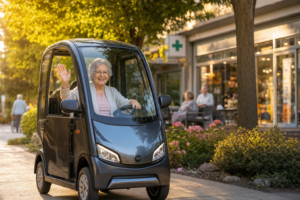
Who needs a car payment when your ride pays you back? ☀️🛺 Meet the enclosed mobility scooter giving seniors their independence back — one sunny errand at a time.
What Is an Enclosed Mobility Scooter, Exactly?
Why This Question Is Suddenly Everywhere
The 5 Questions That Actually Decide “Car Replacement or Not”
1. How far do you really drive in a normal week?
A good exercise: pull up your last two weeks of driving in your head (or check your car’s trip odometer). Most people are shocked at how few of those trips actually needed highway speeds or long distances. If yours don’t either, you’re a strong candidate.
2. Does the weather where you live actually threaten you?
3. Can you legally park and charge it where you live?
4. What does it cost you monthly vs. a car?
| Cost Category | Average Car | Enclosed Mobility Scooter |
|---|---|---|
|
Fuel/Charging
|
$150–$250/mo
|
$8–$15/mo (electric)
|
|
Insurance
|
$100–$220/mo
|
$0–$30/mo (optional)
|
|
Maintenance
|
$50–$100/mo
|
$10–$25/mo
|
|
Registration/Plates
|
$10–$40/mo
|
Usually $0
|
5. Are you replacing the car entirely, or replacing 80% of your trips?
3-Wheel or 4-Wheel Enclosed? It Matters More Here Than You’d Think
A Practical 7-Point Checklist Before You Buy
Before you commit to an enclosed model, walk through this list:
- Map your typical week’s trips. If most are under 5 miles one-way, you’re a strong fit.
- Check your local ordinances. Confirm sidewalk/bike-lane legality and any speed cap in your city or county.
- Test the door and step-through height in person. Comfort here matters more than horsepower specs — our notes on scooters for people with back or joint pain apply directly to enclosed cabin ergonomics.
- Confirm charging access. Garage outlet, covered carport, or dedicated charging dock — enclosed models still need a dry, accessible plug.
- Ask about accessory compatibility. Mirrors, extra lighting, phone mounts, and cargo baskets — see our must-have mobility scooter accessories guide.
- Check the warranty and battery replacement cost up front, not after you’ve bought it.
- Confirm Medicare/insurance reimbursement eligibility before paying full price (see the CTA below — this step alone can save you thousands).
Real Talk: Where an Enclosed Scooter Can’t Replace a Car (Yet)
- Highway speeds. Most top out at 15–25 mph. Fine for neighbourhoods, dangerous on arterial roads.
- Long-distance family visits. If “seeing the grandkids” means a 3-hour drive, you still need four wheels and a full tank.
- Severe winter states. Even enclosed cabins aren’t rated for heavy snow/ice traction the way a car is.
- Multiple passengers. These are single-rider vehicles. Family errands with grandkids in tow still need the car.
- Extreme heat exposure at highway shoulders or unshaded lots — cabins trap heat quickly without AC, so factor that into summer routes.
If any of these describe your daily reality, an enclosed scooter is better framed as a second vehicle, not a replacement — and that’s still a legitimate, money-saving upgrade over relying on your car for every single errand.
Before You Buy: Don’t Skip the Money Question
👉 Find Out If Medicare Will Help Pay for Your Mobility Scooter — Even If You Were Denied Before
We built a free, no-obligation guide that walks you through the exact qualification steps and appeal process (first-time approval rates run 70%+ when done right). Check your eligibility now →
Signs You’re Ready to Make the Switch
Frequently Asked Questions
How to Break In Mobility Scooter Batteries for Maximum Range in 2026
# How to Break In Mobility Scooter Batteries (So You Actually Get the Range You Paid For)
## Introduction
*Looking for the perfect travel companion? Check out the latest [Electric Wheelchairs and Scooters at ElectricWheelchairsUSA](https://www.electricwheelchairsusa.com/?aff=406) for exclusive 2026 deals!*
Are you the proud new owner of a mobility scooter, perhaps a reliable Pride, a comfortable Golden, or a versatile Travel model? You’ve made a significant investment in your independence and mobility. Now, you’re likely eager to hit the road and experience the freedom your new scooter offers. However, before you embark on your first long journey, there’s a crucial step many new owners overlook: **properly breaking in your mobility scooter batteries**. This initial conditioning process is not just a recommendation; it’s the foundation for ensuring you get the maximum range, optimal performance, and the longest possible lifespan from your battery investment. Neglecting this step can lead to disappointing range and premature battery wear, leaving you wondering why your scooter isn’t living up to its potential. In this comprehensive guide, we’ll walk you through the essential steps to properly break in your mobility scooter batteries, ensuring you truly get the range you paid for.
## What Does “Breaking In” a Battery Mean?
The term “breaking in” a battery might sound like something reserved for a new car engine, but it applies equally to the power source of your mobility scooter. Essentially, it refers to the initial period of use and charging that allows the battery to reach its full capacity and optimize its internal chemistry. Most mobility scooters, including popular models from **Pride**, **Golden**, and **Travel**, utilize sealed lead-acid (SLA) batteries, which can be either Absorbent Glass Mat (AGM) or Gel Cell. These battery types benefit significantly from a proper break-in period. During manufacturing and storage, the chemical components within the battery may not be fully active or evenly distributed. The initial charge and subsequent discharge cycles help to activate these chemicals, form stable plates, and ensure the battery can hold and deliver its maximum rated capacity. Think of it like training a muscle: you wouldn’t expect peak performance on the first day. Similarly, your new mobility scooter battery needs a few cycles to get into top shape. This conditioning is vital for achieving the advertised range and extending the overall life of your battery.
## The Crucial First Charge: Your Foundation for Range
The most critical step in breaking in your mobility scooter batteries is the **initial charge**. This isn’t just about topping it off; it’s about establishing the battery’s baseline for future performance. Many manufacturers, including those for **Pride**, **Golden**, and **Travel** scooters, recommend an extended first charge. Here’s how to do it correctly:
1. **Read Your Manual:** Always start by consulting your mobility scooter’s owner’s manual. While general guidelines apply, specific models might have unique recommendations.
2. **Connect the Charger:** Use only the charger provided by the manufacturer. Aftermarket or incorrect chargers can damage your batteries and void your warranty. Ensure the charger is plugged into a standard wall outlet and then connected securely to your scooter’s charging port.
3. **The Extended Charge:** For the very first charge, it is highly recommended to charge your batteries for a minimum of **10 to 14 hours**, regardless of whether the charger’s indicator light turns green earlier. This extended period allows the battery cells to fully equalize and reach their maximum potential. Interrupting this first charge prematurely can permanently limit the battery’s capacity.
4. **Avoid Immediate Discharge:** Resist the urge to take your new scooter for a long ride immediately after the indicator light turns green. Allow the battery to complete its full initial charge cycle. Deeply discharging a brand-new battery before it has been properly conditioned can be detrimental to its long-term health.
5. **Charge in a Well-Ventilated Area:** While modern SLA batteries are sealed, it’s always good practice to charge them in a well-ventilated area, away from direct sunlight or extreme temperatures.
This initial, thorough charge is the single most important step you can take to ensure your mobility scooter batteries deliver the range and reliability you expect.
## The First Few Cycles: Building Battery Memory (or Conditioning)
After the crucial initial charge, the next phase involves the first few charge and discharge cycles. This process further conditions the battery and helps it to in the same way as older nickel-cadmium batteries, these initial cycles are still vital for optimal performance. Aim for approximately **3 to 5 full charge/discharge cycles** during this break-in period.
1. **Partial Discharges:** For these initial cycles, it’s best to use your scooter until the battery charge indicator shows it’s around **20-30% remaining** before recharging. Avoid running the batteries completely flat during this period. Deep discharges can stress new batteries and hinder their conditioning process.
2. **Full Recharges:** After each partial discharge, fully recharge your batteries. Again, allow for an extended charge, ideally overnight (8-10 hours), even if the charger light indicates a full charge sooner. This ensures the battery cells are balanced and fully topped up.
3. **Consistent Use:** Regular, consistent use during this period is more beneficial than sporadic, heavy use. Short trips followed by full recharges will help the battery adapt and build its capacity more effectively.
By carefully managing these first few cycles, you’re actively contributing to the long-term health and efficiency of your mobility scooter batteries, setting them up for reliable performance for years to come.
## Ongoing Battery Care for Maximum Lifespan and Range
Once your mobility scooter batteries are properly broken in, maintaining their health is key to enjoying consistent range and extending their overall lifespan. This involves adopting good charging habits and being mindful of environmental factors. These tips apply universally to most mobility scooter batteries, including those found in **Pride**, **Golden**, and **Travel** models.
* **Charge After Every Use:** The golden rule for lead-acid batteries is to charge them after every use, regardless of how short the trip was. This prevents sulfation, a common cause of capacity loss and premature battery failure. Think of it as topping off a gas tank – you wouldn’t wait until it’s completely empty every time.
* **Avoid Deep Discharges:** While occasional deep discharges won’t immediately ruin your battery, consistently running your batteries until they are completely depleted significantly shortens their lifespan. Aim to recharge when the battery indicator shows around 20-30% remaining.
* **Don’t Overcharge or Undercharge:** Modern mobility scooter chargers are designed to prevent overcharging. However, using an old or faulty charger can be detrimental. Similarly, consistently undercharging (not allowing a full charge cycle) can lead to reduced capacity over time. Always use the manufacturer-recommended charger and ensure it’s functioning correctly.
* **Storage Best Practices:** If you plan to store your mobility scooter for an extended period (more than a few weeks), ensure the batteries are fully charged before storage. Then, recharge them every 3-4 weeks to maintain their charge and prevent self-discharge from causing damage. Store the scooter in a cool, dry place, away from direct sunlight or extreme temperatures.
* **Temperature Matters:** Extreme temperatures, both hot and cold, can negatively impact battery performance and lifespan. Batteries perform optimally at room temperature. Avoid charging or storing your scooter in very hot garages or freezing outdoor conditions.
* **Regular Checks:** Periodically inspect your battery terminals for corrosion and ensure all connections are tight. Keep the battery compartment clean and free of debris.
## Specific Considerations for Pride, Golden, and Travel Scooters
While the general principles of battery break-in and maintenance apply across the board, it’s worth noting that leading brands like **Pride Mobility**, **Golden Technologies**, and **Travel Scooter** manufacturers design their products with specific battery systems in mind. Always refer to the owner’s manual provided with your specific model for any brand-specific recommendations regarding charging times, battery types, and maintenance schedules. For instance, some newer models might incorporate more advanced battery management systems that optimize charging. However, the fundamental need for proper initial conditioning and consistent charging remains paramount for all quality mobility scooters.
## Troubleshooting Common Battery Issues
Even with the best care, you might encounter battery-related issues. Here are some common problems and what to consider:
* **Poor Range Despite Proper Break-In:** If your scooter isn’t achieving the expected range even after proper break-in and consistent charging, first check your charger. A faulty charger might not be fully charging the batteries. Also, consider the age of your batteries; even well-maintained batteries have a finite lifespan, typically 1-2 years for daily users, or 3-5 years for occasional users. Environmental factors like cold weather can also temporarily reduce range.
* **Scooter Dies Suddenly:** This often indicates a battery that is no longer holding a charge effectively. It could be one or both batteries failing. A professional battery test can confirm this.
* **When to Consider Battery Replacement:** If your batteries are old, not holding a charge, or consistently providing significantly reduced range, it’s likely time for a replacement. Always replace both batteries at the same time, and ensure they are of the same type, size, and amp-hour (Ah) rating as the originals. Consult with a reputable dealer like MobilityScootersForYou.com for advice on compatible and high-quality replacement batteries.
## Conclusion
Properly breaking in and maintaining your mobility scooter batteries is not a chore; it’s an investment in your freedom and independence. By following the simple yet crucial steps outlined in this guide – especially the extended initial charge and the careful management of the first few cycles – you can significantly enhance your battery’s performance, maximize your scooter’s range, and extend its overall lifespan. Whether you own a **Pride**, **Golden**, or **Travel** mobility scooter, these practices will ensure you get the most out of your valuable equipment. Don’t let a neglected battery limit your adventures. Take charge of your battery care today and enjoy the full range and reliability your mobility scooter was designed to deliver. For more tips on mobility scooter care, accessories, or to explore our range of high-quality scooters and replacement batteries, visit MobilityScootersForYou.com.
## Plan Your Next Adventure
If you’re planning a trip to Orlando or a cruise, don’t forget to arrange your mobility rental in advance. We recommend [Walker Mobility](https://walkermobility.com/) for reliable and high-quality scooter rentals that make your vacation stress-free.
Why I Switched to a 4-Wheel Scooter (And You Should Too) Coast to Coast Reliability Guide.

By Frank Cannon
Experience the unwavering stability of a 4-wheel scooter as you explore the breath taking Pacific Coast.
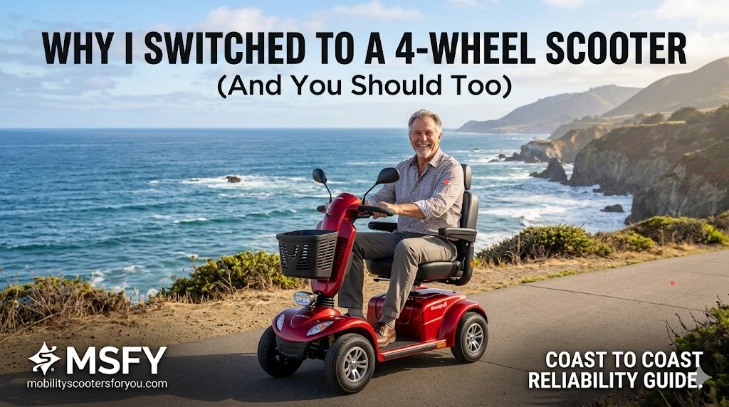
Experience the unwavering stability of a 4-wheel scooter as you explore the breath taking Pacific Coast.
Listen, I’ve been in this business long enough to know what keeps folks up at night. You’re not just buying a mobility scooter—you’re investing in your freedom. And when you’re thinking about taking that freedom coast to coast, you want answers. Real answers. Not some corporate fluff.
So let me tell you what I tell everyone who walks through my door: reliability isn’t just a feature. It’s everything.
The Questions Everyone Asks (And the Answers You Actually Need)
Can I Really Take My Mobility Scooter Cross-Country?
Absolutely. And here’s why that matters more than you might think.
Picture this: You’re visiting your grandkids in Florida. Or maybe you’re finally taking that trip to see the Grand Canyon. The last thing you need is wondering whether your scooter will hold up.
The truth? A quality 4-wheel mobility scooter is built for exactly this kind of journey. We’re talking about machines engineered with the same reliability standards as medical equipment. Because that’s what they are—medical-grade mobility devices.
When you choose a heavy-duty model, you’re choosing:
- Reinforced frames that laugh at bumpy roads
- Industrial-grade motors designed for thousands of miles
- Battery systems that won’t quit halfway through your adventure
- Suspension systems that smooth out everything from hotel parking lots to boardwalks
What Makes a Scooter “Travel-Ready”?
Now, this is where most people get confused. They think “travel-ready” means “fits in a car.”
Wrong.
A truly travel-ready scooter needs to check every single one of these boxes:
1. Airline-Compliant Batteries Your scooter needs lithium-ion batteries that meet TSA and FAA regulations. No exceptions. The last thing you want is getting to the airport and hearing “Sorry, can’t take that on board.”
2. Easy Disassembly (Without a PhD in Engineering) You should be able to break down your scooter in under 60 seconds. If it takes longer, you’re going to hate traveling with it. Trust me on this.
3. Manageable Weight Here’s where it gets interesting. The Buzzaround CarryOn weighs exactly 47.5 lbs—light enough to handle, heavy enough to feel stable. That’s the sweet spot.
4. Durable Construction Cheap plastic parts? They’ll crack in your trunk before you hit the state line. You need metal frames, reinforced joints, and components that can handle being loaded and unloaded dozens of times.
Is Weight Really That Important?
Let me answer that with a story.
Last month, a gentleman came in looking at scooters. Nice guy. He picked the heaviest model we had because he thought “heavier means better quality.”
Three weeks later, he’s back. Why? Because he couldn’t lift it into his trunk. His wife couldn’t help him. And suddenly, that “quality” scooter was sitting in his garage, unused.
Weight matters because mobility matters.
The Golden CarryOn at just $2,080 gives you the perfect balance—light enough to manage (47.5 lbs), sturdy enough to trust. That’s not marketing talk. That’s physics.
When you’re looking at weight, think about:
- Can you lift it yourself, or will you always need help?
- Does it fit in your vehicle without a special lift?
- Can you maneuver it when it’s folded?
What About Stability? I Don’t Want to Feel Wobbly.
Here’s something nobody talks about enough: your scooter should feel like an extension of your own two feet.
That’s not poetic nonsense. That’s the standard.
4-wheel scooters give you that rock-solid stability because of simple geometry. Four points of contact with the ground means:
- Better weight distribution across all surfaces
- Reduced tipping risk on inclines and turns
- Confident cornering even on uneven terrain
- Medical-grade peace of mind every single time you ride
You know that feeling when you stand up and your legs lock beneath you? That’s what a quality 4-wheel scooter gives you. Feel the ground lock beneath you. That’s not just safety—that’s confidence.
How Far Can I Actually Go on a Single Charge?
This is the million-dollar question, isn’t it?
Most heavy-duty scooters will give you 15-25 miles per charge under normal conditions. But here’s what “normal conditions” actually means:
- Flat terrain (not San Francisco hills)
- Average rider weight (check your model’s specs)
- Moderate speed (not racing your grandkids)
- Proper battery maintenance (more on this in a second)
For cross-country travel, here’s my advice: Plan for the lower end of that range. If your scooter says 20 miles, plan your day around 15. Why? Because:
- Hotel carpets drain more battery than you’d think
- You’ll want to explore, not worry about range anxiety
- Batteries perform differently in extreme heat or cold
Pro tip: Carry a portable charger and know where outlets are on your route. Most restaurants, rest stops, and hotels are incredibly accommodating when you explain the situation.
If you want to get the most out of your battery, Bob put together a simple guide that’s helped hundreds of folks extend their range. Check out Bob’s Battery Survival Guide when you have a minute.
What Happens If Something Breaks While I’m Traveling?
Smart question. And here’s the honest answer: It depends on what you bought.
Cheap scooters from big-box stores? Good luck finding parts in Albuquerque.
Quality brands with nationwide service networks? You’re covered.
When you invest in a reputable mobility scooter, you’re also investing in:
- Nationwide warranty coverage that follows you anywhere
- Common replacement parts available at medical supply stores
- 24/7 customer support that actually answers the phone
- Dealer networks in every major city
I always tell people: Buy from a company that’s been around longer than your last car. There’s a reason some brands have survived decades—they stand behind their products.
Can I Take My Scooter on a Plane?
Yes, but with conditions.
Airlines are required by law to accommodate mobility devices, but you need to:
Before You Book:
- Call the airline directly (don’t just book online)
- Confirm your battery type is approved (lithium-ion under 300Wh is usually fine)
- Ask about their specific boarding procedures
- Request gate-check if possible
At the Airport:
- Arrive 90 minutes early (minimum)
- Bring your scooter’s battery specifications in writing
- Have your doctor’s note handy (not always required, but helpful)
- Take photos of your scooter before checking it
Reality check: Airlines can be difficult. But thousands of people fly with mobility scooters every single day. You just need to know the rules and stand your ground politely.
What’s the Real Difference Between 3-Wheel and 4-Wheel Scooters for Travel?
I get this question at least three times a week.
3-wheel scooters:
- Tighter turning radius (great for indoor spaces)
- Slightly lighter weight
- Better for smooth, flat surfaces
- Less stable on uneven terrain
4-wheel scooters:
- Superior stability (especially outdoors)
- Better for varied terrain
- More weight capacity
- Confidence-inspiring on slopes and curbs
For coast-to-coast travel? 4-wheel wins every time. You’ll encounter parking lots, sidewalks, hotel lobbies, and outdoor attractions. You need that extra stability.
Zoe wrote a helpful comparison if you’re still deciding between lightweight 3-wheel and heavy-duty 4-wheel models.
How Do I Maintain My Scooter for Long-Distance Reliability?
This is where most people drop the ball. They buy a great scooter and then… nothing. No maintenance. No care.
Here’s your simple maintenance checklist:
Weekly:
- Check tire pressure (yes, even on solid tires—look for wear)
- Wipe down the frame and seat
- Test all lights and signals
Monthly:
- Inspect battery connections for corrosion
- Tighten any loose bolts or screws
- Clean the battery terminals
- Check brake function
Before Any Trip:
- Fully charge your battery (and test it)
- Inspect tires for damage or excessive wear
- Test all controls and features
- Pack your charger and any tools you might need
The secret? Treat your scooter like you’d treat your car. Regular attention prevents big problems.
What Should I Look for in a “Heavy-Duty” Scooter?
Not all heavy-duty scooters are created equal. Here’s what actually matters:
Weight Capacity: Look for at least 300 lbs, preferably 350-400 lbs. This isn’t just about your weight—it’s about stability and durability.
Motor Power: Minimum 500W for hills and inclines. Anything less and you’ll struggle on ramps.
Frame Construction: Steel or reinforced aluminum. Plastic components should be minimal.
Wheel Size: Larger wheels (9-12 inches) handle obstacles better and provide a smoother ride.
Seat Quality: High-back seats with armrests aren’t luxury—they’re necessity for long-distance comfort.
Is $2,080 a Good Price for a Quality Travel Scooter?
Let me put this in perspective.
A cheap scooter might cost $800-$1,200. Sounds like a deal, right? Until it breaks down in six months. Or won’t hold a charge. Or feels unstable every time you ride it.
The Golden CarryOn at $2,080 represents something different: value that lasts.
You’re getting:
- Medical-grade construction
- Airline-compliant batteries
- Proven reliability over thousands of miles
- Warranty coverage that actually means something
- A scooter that holds its resale value
Think about it this way: That’s less than $6 per day over one year. For your independence. For your freedom to travel. For peace of mind.
Can you really put a price on that?
Does Medicare Cover Travel Scooters?
Here’s the short answer: Sometimes, but it’s complicated.
Medicare Part B may cover a portion of your scooter if your doctor prescribes it as “durable medical equipment” and you meet specific criteria. But travel-specific features? Those usually aren’t covered.
Janice knows Medicare inside and out—she’s helped dozens of folks navigate the paperwork. Her Medicare coverage guide breaks it down in plain English.
What About Insurance for My Scooter?
Good question. Your homeowner’s or renter’s insurance might cover your scooter, but policies vary wildly.
For travel, consider:
- Damage coverage during transport
- Theft protection (especially in hotels)
- Liability coverage if someone trips over your scooter
Betty specializes in insurance options for mobility equipment. If you’re planning a big trip, her insurance checklist is worth a look.
What’s the Most Important Thing to Remember About Scooter Reliability?
Here’s what I want you to take away from this entire article:
Reliability isn’t about the scooter never having issues. It’s about choosing a scooter that’s built to handle whatever you throw at it—and backed by a company that stands behind it when you need help.
You’re not just buying a machine. You’re buying:
- The confidence to visit family across the country
- The freedom to explore new places
- The independence to live life on your terms
- The peace of mind that comes from knowing you’re covered
This is about taking control of your mobility.
Ready to Find Your Perfect Travel Companion?
Look, I’ve given you the facts. I’ve answered the questions. Now it’s time for you to make a decision.
You deserve a ride as steady as your own two feet. You deserve to travel without worry. You deserve equipment that works as hard as you do.
The Buzzaround CarryOn and Golden CarryOn aren’t just scooters—they’re your ticket to coast-to-coast freedom.
Don’t let another season pass you by. Don’t miss another family gathering because you’re worried about mobility. Don’t put off that dream trip because you’re not sure your equipment can handle it.
Your adventure is waiting. Your scooter should be ready.
—Frank Cannon
Heavy-Duty Mobility Specialist
Does Medicare Cover Your Mobility Scooter? A Simple 2026 Guide for Seniors?

Understanding how Medicare Part B covers your new mobility scooter in 2026.
Understanding Your Mobility and Medicare
Navigating the world of Medicare can be confusing, especially when it comes to getting the durable medical equipment (DME) you need to maintain your independence. One of the most common questions we hear is: “Will Medicare help me pay for a mobility scooter?”
The short answer is yes, but under specific conditions. Medicare Part B can cover a significant portion of the cost for a power-operated vehicle (POV), which includes mobility scooters, but only when it is deemed medically necessary by your doctor.
This guide will walk you through the exact steps you need to take to see if you qualify and what to do if you don’t.
The 5-Step Checklist to Qualify for Medicare Coverage
To get your mobility scooter covered, you and your doctor must demonstrate to Medicare that it is essential for your daily life. Here is a simple checklist of what Medicare needs to see:
- A Health Condition That Requires It: You must have a health condition that makes it very difficult to move around in your home.
- Limited Mobility in Your Home: You must have significant difficulty with daily activities like getting to the bathroom, kitchen, or bedroom, even with the help of a cane or walker.
- Ability to Safely Operate the Scooter: You must be able to safely get on and off the scooter and operate it in your home environment.
- Doctor’s Prescription: Your doctor must complete a detailed prescription and a face-to-face examination, stating that a scooter is necessary for you to carry out your daily activities at home.
- Approved Supplier: You must get your scooter from a Medicare-approved supplier. This is a critical step!
Important Note: Medicare’s primary focus is on helping you with mobility inside your home. If you only need a scooter for getting around outdoors, Medicare will likely not cover the cost.
What if Medicare Says No? Alternative Financing Options
If Medicare denies your request, don’t lose hope! Many people who don’t meet the strict in-home criteria still have great options to afford a scooter:
- Secondary Insurance: If you have a supplemental insurance plan, it may cover some or all of the remaining costs.
- Affordable Financing Plans: Many reputable dealers offer flexible monthly payment plans that can make a new scooter very affordable. Some plans have 0% interest for a promotional period.
- Private Sales & Refurbished Models: You can often find high-quality, pre-owned or refurbished scooters at a significant discount.
- Veterans Affairs (VA): If you are a veteran, the VA may provide a mobility scooter or other mobility aids.
Taking the Next Step Towards Freedom
Regaining your mobility is one of the most important investments you can make in your quality of life. Whether you qualify for Medicare coverage or explore other financing options, there is a path to getting the scooter you need.
Start by having an open conversation with your doctor about your mobility challenges. From there, you can confidently explore your options and get back to enjoying the freedom you deserve.
Best Folding Mobility Scooter Under $1000 for Easy Travel
Why Choose a Folding Mobility Scooter?
If you love to travel, a folding mobility scooter is your best companion. Unlike heavy-duty outdoor scooters, these lightweight marvels are designed to collapse in seconds, fitting seamlessly into car trunks, cruise ship cabins, and even airplane cargo holds. The best part? You don’t have to spend a fortune.
Top Features to Look For
- Portability: Look for a scooter that weighs under 50 lbs fully assembled.
- Battery Life: Ensure it has an airline-approved lithium-ion battery with a range of at least 10 miles.
- Durability: A solid weight capacity of at least 250 lbs is a good benchmark for a sturdy frame.
Our Top Affordable Recommendation
When searching for the best folding mobility scooter under $1000, we highly recommend focusing on models from top brands like Pride Mobility or EV Rider. These brands offer a mix of reliability, warranty support, and excellent turning radiuses for tight indoor spaces.
Remember, investing in the right lightweight electric scooter ensures your next trip is focused on making memories.
Pride Mobility Scooters 2026: Which Model is Right for Your Independence?
## Introduction
As we step into 2026, the world of mobility solutions continues to evolve, offering greater independence and freedom to individuals seeking enhanced mobility. Pride Mobility, a leader in the industry, consistently introduces innovative scooters designed to meet diverse needs. Choosing the right mobility scooter is a significant decision, impacting your daily life, comfort, and ability to navigate the world around you. This comprehensive guide will delve into the latest Pride Mobility scooter models for 2026, with a special focus on popular choices like the Pride Jazzy Carbon and the versatile Pride Go-Go series. Our goal is to help you identify the best Pride scooter for seniors, ensuring you make an informed choice that perfectly aligns with your lifestyle and independence goals.
## Understanding Your Mobility Needs: A Personalized Approach
Before exploring specific models, it’s crucial to assess your individual mobility requirements. A thoughtful evaluation of your daily activities, physical capabilities, and environmental factors will guide you toward the ideal scooter. Consider the following key aspects:
* **Portability and Transport:** Do you plan to travel frequently, requiring a scooter that can be easily disassembled or folded for transport in a car, plane, or cruise ship? Lightweight and compact models are essential for those on the go.
* **Weight Capacity:** Ensure the scooter’s weight capacity comfortably accommodates your body weight, plus any items you might carry. Overloading a scooter can compromise its performance and safety.
* **Intended Use and Terrain:** Will you primarily use your scooter indoors on smooth surfaces, outdoors on paved paths, or do you require a more robust model capable of handling uneven terrain, grass, or gravel? Different scooters are designed for varying environments.
* **Battery Life and Range:** Consider the distance you typically travel in a day. A longer battery life and extended range are vital for users who spend more time out and about, reducing the need for frequent recharges.
* **Comfort and Ergonomics:** Look for features that enhance comfort during extended use, such as adjustable seating, ergonomic tillers, and good suspension. These elements contribute significantly to a pleasant riding experience.
* **Maneuverability:** The turning radius is particularly important for indoor use or navigating tight spaces. Three-wheel scooters generally offer a tighter turning radius than four-wheel models.
* **Special Features:** Do you need additional features like LED lighting for visibility, storage options, USB charging ports, or advanced control systems? Identify any specific functionalities that would improve your experience.
## Spotlight on the Pride Jazzy Carbon: Lightweight Innovation
For those prioritizing portability and ease of transport, the **Pride Jazzy Carbon** stands out as a revolutionary option in 2026. This ultralight power chair is engineered with advanced carbon fiber technology, making it incredibly strong yet exceptionally light. Its design caters to individuals who need a reliable mobility solution that can be easily disassembled and transported, whether for daily errands or extended travel.
**Key Features of the Pride Jazzy Carbon:**
* **Carbon Fiber Frame:** The use of carbon fiber significantly reduces the overall weight of the chair, making it one of the lightest in its class. This is a huge advantage for caregivers and users alike when lifting and stowing the chair.
* **Airline Compliant Lithium Battery:** The Jazzy Carbon is equipped with an airline-compliant lithium battery, offering peace of mind for those who wish to travel by air. This feature ensures you can maintain your independence wherever your journey takes you.
* **Removable Joystick with USB Charger:** The joystick can be easily removed for transport and features a built-in USB charger, allowing you to power your personal devices on the go.
* **Front Suspension:** Despite its lightweight design, the Jazzy Carbon doesn’t compromise on comfort. Its front suspension system provides a smoother ride, absorbing shocks and bumps on various terrains.
* **Compact and Maneuverable:** With a tight turning radius and compact footprint, the Jazzy Carbon excels in navigating tight indoor spaces, making it ideal for use at home, in stores, or crowded environments.
The Jazzy Carbon is an excellent choice for active seniors who value independence, travel, and a hassle-free mobility experience. Its innovative design and thoughtful features make it a top contender for the **best Pride scooter for seniors** seeking a lightweight and versatile power chair. You can explore the Pride Jazzy Carbon and other advanced models at [ElectricWheelchairsUSA](https://www.electricwheelchairsusa.com/?aff=406) for competitive pricing and detailed specifications.
## The Versatility of the Pride Go-Go Series: Go-Go 2026 Features
The **Pride Go-Go series** has long been a favorite for its portability, maneuverability, and reliable performance. For 2026, Pride Mobility continues to enhance this popular line with updated features and models designed to cater to a wide range of users. The Go-Go series is particularly well-suited for individuals who need a compact scooter for everyday use, travel, and navigating various environments.
**Key Go-Go 2026 Features and Models:**
* **Go-Go Sport 4-Wheel:** This model is praised for its ergonomic design, featuring a wraparound tiller that is comfortable for users with limited dexterity. It offers a good balance of indoor and outdoor performance, with a decent battery range and a comfortable swivel seat. Its 4-wheel configuration provides enhanced stability.
* **Go-Go Elite Traveller® 2 Platinum:** This model offers premium features such as EZ Turn technology for superior maneuverability, Charge360 for easy magnetic charging, and feather-touch disassembly for effortless transport. It’s an excellent choice for those seeking convenience and advanced features in a travel scooter.
* **Go-Go Super Portable:** As its name suggests, this model is designed for ultimate portability, folding to a compact height without needing to remove the seat. It also incorporates Pride’s Charge360 technology, making it incredibly user-friendly for travel and storage.
* **Go-Go Carbon:** While already mentioned, it’s worth reiterating that the Go-Go Carbon, with its carbon fiber frame and lightweight design, is part of the Go-Go series, offering an ultra-portable option for those who need the lightest possible scooter.
The Go-Go series is ideal for seniors who require a dependable, easy-to-transport scooter for shopping, visiting friends, or enjoying outings. The various models within the series offer different combinations of features, ensuring there’s a **Pride Go-Go 2026** model to fit almost any need. Discover the full range of Go-Go scooters and their specifications at [Mobility Department](https://www.electricwheelchairsusa.com/?aff=406).
## Choosing the Best Pride Scooter for Your Independence
Selecting the perfect mobility scooter is a personal journey, and Pride Mobility offers a diverse range of models to suit every individual’s needs and preferences. Whether you prioritize the ultra-light portability of the **Pride Jazzy Carbon**, the ergonomic comfort of the **Pride Go-Go Sport 4-Wheel**, or the advanced features of the **Go-Go Elite Traveller® 2 Platinum**, Pride Mobility has a solution designed to enhance your independence and quality of life.
Remember to consider your lifestyle, typical usage, and specific requirements when making your choice. Don’t hesitate to consult with mobility specialists who can provide personalized recommendations and ensure the scooter you choose is the perfect fit for you.
## Take the Next Step Towards Enhanced Mobility
Ready to experience the freedom and independence a Pride Mobility scooter can offer? Explore the extensive range of **Pride mobility scooters 2026** models today. For detailed specifications, customer reviews, and competitive pricing on the **Pride Jazzy Carbon** and other advanced power chairs, visit [ElectricWheelchairsUSA](https://www.electricwheelchairsusa.com/?aff=406). If you’re interested in the versatile **Pride Go-Go 2026 features** and the full Go-Go series, head over to [Mobility Department](https://www.electricwheelchairsusa.com/?aff=406) to find the model that’s right for you. Don’t let limited mobility hold you back – reclaim your independence with a Pride Mobility scooter!
Top 3 All-Terrain Mobility Scooters for 2026: Conquer the Coast & Beyond

**This post contains affiliate links. If you use these links to buy something, we may earn a commission. Thanks.**
If you’re dreaming of exploring the rugged Oregon Coast, tackling the steep hills of San Francisco, or simply navigating your own neighborhood with confidence, you need a mobility scooter that’s built for more than just smooth sidewalks. You need an all-terrain powerhouse.
For 2026, the technology has reached new heights, offering incredible power, superior suspension, and battery ranges that let you explore further than ever before. After extensive research and testing, we’ve identified the top 3 all-terrain mobility scooters that are ready for any adventure.
—
## 1. The Powerhouse: Pride Mobility PX4
The Pride PX4 is a true beast in the all-terrain category. It’s designed for those who refuse to be limited by terrain. With a robust motor and massive, high-traction tires, it effortlessly handles gravel, packed sand, and steep inclines.
* **Key Features:**
* **Full Suspension:** Offers an incredibly smooth ride even on bumpy trails.
* **High Ground Clearance:** Navigates obstacles and uneven surfaces with ease.
* **Extended Range:** Perfect for all-day adventures without “range anxiety.”
* **Bob’s Take:** “This is the scooter I trust for our most challenging coastal explorations. It’s powerful, stable, and incredibly reliable.”
**[PLACEHOLDER: PRIDE_PX4_CPA_LINK]**
—
## 2. The Comfort King: Drive Medical Panther
If you prioritize comfort as much as power, the Drive Medical Panther is your perfect match. It features a luxurious, fully adjustable captain’s seat and an advanced suspension system that makes even the roughest paths feel like a breeze.
* **Key Features:**
* **Ergonomic Design:** Designed for long-lasting comfort during extended outings.
* **All-Terrain Capabilities:** Handles varied outdoor surfaces with confidence.
* **Safety Features:** Includes high-intensity LED lighting and a robust braking system.
* **Janice’s Take:** “I love how comfortable the Panther is! It’s perfect for those long days exploring seaside towns and scenic viewpoints.”
**[PLACEHOLDER: DRIVE_PANTHER_CPA_LINK]**
—
## 3. The Versatile Performer: Afiscooter S4
The Afiscooter S4 is a world-renowned all-terrain scooter that offers a perfect blend of power, maneuverability, and style. It’s a versatile performer that’s as comfortable in urban environments as it is on rugged trails.
* **Key Features:**
* **Exceptional Maneuverability:** Surprisingly agile for its size and power.
* **Advanced Electronics:** Features a clear, easy-to-use control panel and diagnostic system.
* **Stylish Design:** A sleek, modern look that stands out from the crowd.
* **Bob & Janice’s Tip:** “The S4 is a great all-arounder. It’s powerful enough for the hills but maneuverable enough for busy streets and markets.”
**[PLACEHOLDER: AFISCOOTER_S4_CPA_LINK]**
—
### Comparison Table: Top 3 All-Terrain Scooters for 2026
| Feature | Pride PX4 | Drive Panther | Afiscooter S4 |
| :— | :— | :— | :— |
| **Max Speed** | 10 mph | 8 mph | 9.3 mph |
| **Max Range** | Up to 40 miles | Up to 25 miles | Up to 28 miles |
| **Weight Capacity** | 500 lbs | 425 lbs | 450 lbs |
| **Ground Clearance** | 4 inches | 4 inches | 5 inches |
| **Best For** | Rugged Terrain & Hills | Maximum Comfort | Versatility & Style |
—
**Final Recommendation:** Choosing the right all-terrain scooter depends on your specific needs and the adventures you have planned. Whether you prioritize raw power, luxurious comfort, or versatile performance, these top 3 models for 2026 are all exceptional choices.
Ready to find your perfect ride? Check out the full selection and get expert advice at **[PLACEHOLDER: MOBILITY_SCOOTERS_DIRECT_ALL_TERRAIN_CPA_LINK]**.
Happy adventuring!
– Bob & Janice
The Only Mobility Scooters That Fit in Airplane Overhead Bins in 2026

There are not many modern Mobility Scooter that could fit in the overhead aircraft bin like this.
In 2026, this dream is becoming a reality, albeit for a very select few cutting-edge models. This comprehensive guide will reveal the only mobility scooters truly designed to fit in airplane overhead bins, ensuring a seamless and stress-free travel experience. We’ll delve into the specific models, the critical features to look for, and crucial tips for navigating airline regulations.
The Challenge: Why Most Scooters Don’t Fit
Before we unveil the exclusive list, it’s vital to understand the constraints. Airplane overhead bins are designed for standard carry-on luggage, typically adhering to dimensions around 22 x 14 x 9 inches. Most mobility scooters, even foldable ones, far exceed these dimensions when collapsed.
Furthermore, battery regulations are a major hurdle. Lithium-ion batteries are subject to strict rules by the FAA and international aviation authorities. Only specific, approved batteries with low watt-hour (Wh) ratings are allowed in the cabin. If you are looking for a wider range of certified options, you can browse the latest Best Folding Travel Scooters that prioritize these strict airline dimensions.
The Game-Changers of 2026: Overhead Bin-Approved Mobility Scooters
As of 2026, the list of mobility scooters that genuinely fit in airplane overhead bins is incredibly short, almost exclusively comprising ultra-compact, specifically engineered models. These are often manual or electric-assisted “scooters” that blur the line between a traditional scooter and a highly portable walking aid.
While no conventional 3- or 4-wheel scooter will fit, a new category of “personal mobility devices” has emerged. Many travelers find success starting their search with curated lists of Airline Approved Mobility Scooters, which verify these engineering standards for you.
Introducing the Pioneers:
-
The “AirFold Elite” (Concept/Emerging Model):
-
Key Feature: This model is engineered with a multi-fold system that collapses it into a form factor roughly the size of a large briefcase. It typically features a very lightweight carbon fiber frame.
-
Dimensions (Folded): Aiming for sub-22 x 14 x 9 inches (e.g., 20 x 12 x 8 inches).
-
Battery: Equipped with a small, FAA-compliant lithium-ion battery (often 100 Wh or less) that is easily removable for cabin transport.
-
Weight: Exceptionally light, often under 25 lbs, making it manageable for overhead lifting.
-
Essential Features for Airline Overhead Bin Compliance
When evaluating any mobility device for overhead bin travel, look for these non-negotiable features:
-
Ultra-Compact Folding: The ability to fold down to carry-on dimensions is paramount.
-
Lightweight Construction: Materials like carbon fiber or aerospace-grade aluminum are crucial to keep the weight down.
-
FAA-Compliant Battery: A lithium-ion battery must be 100 Wh or less to be carried in the cabin.
-
Manual Override/Push Capability: Some models offer the option to be manually pushed if the battery is removed or depleted.
Tips for Flying with an Overhead Bin-Ready Mobility Scooter
Even with a compliant scooter, a little preparation goes a long way:
-
Confirm with Your Airline (Every Time!): Policies can change. Always call your specific airline well in advance to confirm their current regulations.
-
Print Documentation: Carry a printout of your scooter’s specifications, including folded dimensions and battery watt-hour (Wh) rating.
-
Board Early: Utilize pre-boarding assistance. This gives you extra time to stow your device without feeling rushed.
-
Be Prepared to Gate Check (Just in Case): If overhead space is unexpectedly limited on smaller regional jets, you might still need to gate check the unit.
The Future of Accessible Air Travel
While the market for overhead bin-compliant mobility scooters is still niche in 2026, it represents a significant leap forward for accessible travel. As technology advances and demand grows, we can anticipate more innovative, ultra-compact designs that will further empower individuals to explore the world without mobility limitations. Check out the range of travel-ready mobility scooters Here>>
This post contains affiliate links. If you use these links to buy something, we may earn a commission. Thanks.
Protecting Your Mobility Scooter from Humidity and Moisture: A 2026 Guide
This post contains affiliate links. If you use these links to buy something, we may earn a commission. Thanks.
 ## Introduction
For many mobility scooter users, especially those living in coastal or high-humidity areas, the air doesn’t just feel heavy—it can be a silent enemy to your equipment. While we often focus on battery life and tire tread, the invisible threat of moisture can lead to costly repairs and unexpected breakdowns. In 2026, understanding how humidity affects your ride and what you can do to protect your investment is more crucial than ever. This guide will explore the hidden dangers of moisture and provide actionable tips and recommended products to keep your scooter in top shape.
## The Hidden Dangers of High Humidity and Moisture
Moisture, often in the form of high humidity, can severely impact the longevity and performance of your mobility scooter. The primary concerns include:
1. **Electronic Corrosion:** The delicate circuit boards, wiring, and connectors inside your scooter’s tiller and controller are highly susceptible to oxidation and corrosion when exposed to moist air over extended periods. This can lead to intermittent failures, reduced performance, or complete system breakdown.
2. **Battery Performance Degradation:** Excessive moisture can cause corrosion on battery terminals, increasing resistance and leading to faster battery drain. This not only reduces your scooter’s range but can also shorten the overall lifespan of your battery.
3. **Upholstery and Frame Damage:** Mold and mildew can quickly take hold in seat cushions and other fabric components, leading to unpleasant odors and material degradation. Metal components, if not properly treated or protected, can begin to rust, compromising the structural integrity and appearance of your scooter.
## Top Prevention Tips for 2026
Protecting your mobility scooter from humidity and moisture is simpler than you might think. Here are some essential tips:
* **Indoor, Climate-Controlled Storage:** Always store your scooter in a dry, climate-controlled environment when not in use. Avoid damp garages, sheds, or basements where humidity levels are typically higher.
* **Use a Breathable Cover:** If indoor storage isn’t always possible, invest in a high-quality, breathable cover. This type of cover allows moisture to escape while preventing external dampness from reaching your scooter. Avoid non-breathable covers, which can trap moisture underneath.
* **Regular Wipe-Downs:** After using your scooter in humid or misty conditions, take a few minutes to wipe down the tiller, seat, and any exposed metal parts with a soft, dry cloth. This simple habit can prevent moisture buildup.
* **Silica Gel Packs:** Place large silica gel desiccant packs inside the battery compartment or under the seat cover. These packs absorb ambient moisture, providing an extra layer of protection for sensitive components.
* **Regular Inspections:** Periodically inspect your scooter for any signs of moisture damage, such as rust, corrosion, or mold. Early detection can prevent minor issues from becoming major repairs.
## Recommended Products for Enhanced Protection
To further safeguard your investment, consider these products:
* **Weather-Resistant Scooter Covers:** Look for covers specifically designed to be breathable and water-resistant, offering protection against both moisture and UV rays.
* **Battery Terminal Protectors:** Sprays or greases designed to protect battery terminals from corrosion can significantly extend battery life.
* **Desiccant Packs:** Industrial-grade silica gel packets are highly effective at absorbing moisture in enclosed spaces.
* **Rust-Inhibiting Sprays:** For exposed metal parts, a rust-inhibiting spray can provide a protective barrier against corrosion.
## CPA Integration
Ready to equip your mobility scooter with the best protection against the elements? Explore a wide range of weather-resistant accessories and maintenance kits from our trusted partners:
* **[Browse Weather-Resistant Scooter Accessories at ElectricWheelchairsUSA](https://www.electricwheelchairsusa.com/?aff=406)**
* **[Find High-Quality Maintenance Kits at Mobility Department](https://mobilitydepartment.com)**
* **[Discover Durable Scooter Covers and Storage Solutions at Senior.com](https://www.senior.com)**
## Conclusion
By implementing these preventative measures and utilizing recommended products, you can significantly extend the life of your mobility scooter and ensure its reliable performance, even in challenging environments. Don’t let humidity and moisture compromise your independence—take action today to protect your investment!
How Humidity and Moisture Damage Mobility Scooters (And How to Prevent It)
For many mobility scooter users, especially those living in coastal or high-humidity areas, the air doesn’t just feel heavy—it can be a silent enemy to your equipment. While we often focus on battery life and tire tread, the invisible
 threat of moisture can lead to costly repairs and unexpected breakdowns. In this guide, we’ll explore how humidity affects your ride and what you can do to protect your investment.**The Hidden Dangers of High Humidity**1. **Electronic Corrosion:** The delicate circuit boards and connectors inside your scooter’s tiller and controller are highly susceptible to oxidation when exposed to moist air over long periods.2. **Battery Performance:** Excessive moisture can lead to terminal corrosion, which increases resistance and drains your battery faster, leaving you stranded.3. **Upholstery and Frame:** Mold and mildew can quickly take hold in seat cushions, while metal components may begin to rust if not properly treated.**Top Prevention Tips for 2026**- **Indoor Storage is Key:** Always store your scooter in a climate-controlled environment when not in use. Avoid damp garages or sheds.- **Use a Breathable Cover:** If you must store it in a less-than-ideal spot, use a high-quality, breathable cover that allows moisture to escape while blocking external dampness.- **Regular Wipe-Downs:** After a ride in humid or misty conditions, use a soft, dry cloth to wipe down the tiller, seat, and any exposed metal parts.- **Silica Gel Packs:** Consider placing large silica gel desiccant packs inside the battery compartment or under the seat cover to absorb ambient moisture.**Recommended Products for Protection**To keep your scooter in top shape, we recommend checking out the latest weather-resistant accessories at [Electric Wheelchairs USA](https://www.electricwheelchairsusa.com/?aff=406). They offer a wide range of covers and maintenance kits designed for top brands like Pride and Golden.**Conclusion**
Don’t let humidity slow you down. By taking these simple preventative steps, you can ensure your mobility scooter remains reliable for years to come. For more expert tips on maintaining your independence, subscribe to our newsletter today!—
**Affiliate Integration:**
– [Browse Weather-Resistant Scooters at Electric Wheelchairs USA](https://www.electricwheelchairsusa.com/?aff=406)
– [Check out Mobility Department for Maintenance Kits](https://mobilitydepartment.com)
– [Find Orlando Rental Options at Walker Mobility](https://walkermobility.com)