Folding Mobility Scooters for Easy Transport
The Fold-in-10 Travel Challenge: Can Your Scooter Keep Up at the Mall?

Taste the Freedom with the Fold in 10 challenge
Hi everyone! It’s Zoe again! If you haven’t met me yet, I’m the one with the super-blinged-out scooter that’s got more style than a Hollywood red carpet. Being disabled doesn’t mean you can’t have the most eye-catching ride in the neighborhood. Today, I want to take you on a little trip to the mall, but it’s not just for shopping—it’s for a challenge that will change the way you think about travel and freedom.
The Magic of the Mall and the Pacific Coast Lifestyle
Living near the Pacific Coast means we are always on the move. Whether we are heading down to the boardwalk or navigating the busy crowds at the local mall, speed and simplicity are everything. Grandad Bob—you might know him as the webmaster who runs mobilityscootersforyou.com—always says that if a plan isn’t simple enough for a 12-year-old, it’s too complicated.
That’s why I came up with the Fold-in-10 Challenge. I wanted to see if I could get my scooter from “Ready-to-Ride” to “Ready-to-Load” in just ten seconds. Why ten seconds? Because when the sun is out and the coast is calling, nobody wants to spend twenty minutes wrestling with heavy metal parts and confusing levers.
[GENTLE CTA] Are you ready to find the stability you deserve? Explore our curated selection of 4-Wheel Scooters and find the one that feels like it was made just for you.
How the Fold-in-10 Challenge Works
The challenge is so easy to understand. You start the timer, and you have exactly ten seconds to fold your scooter into its most compact shape. I did this right in the middle of the mall food court! People were stopping their snacks just to watch.
-
Step 1: Clear your basket and make sure your “bling” is secure.
-
Step 2: Hit the release lever or the remote button.
-
Step 3: Watch it fold like a piece of high-tech origami.
-
Step 4: Stop the clock!
If you want to see how I did it, you should check out my new “Vertical Video” on TikTok or see it as an Idea Pin on our Pinterest page. We call it The Raptor Test for the bigger scooters, but for my travel ride, it’s all about the fold.
Why 4-Wheel Stability Matters in the Real World
While we were at the mall, I was thinking about why I love my 4-wheel ride so much. You might have seen our post on Why I Switched to a 4-Wheel Scooter (And You Should Too). In a crowded mall, you need to know that your scooter isn’t going to tip when you’re making a sharp turn around a shoe display.
A 4-wheel scooter gives me that “Coast-to-Coast Reliability” that Grandad Bob and his friend Frank always talk about. Frank and Betty live about 30 miles away and they have a pickup truck and scooters, so they know all about loading and unloading quickly. They always say that a scooter that is hard to fold is a scooter that stays in the garage. We don’t want that! We want to be out there, exploring and staying independent.
The 2026 Laws and Your Safety
Now, I know legal stuff sounds boring, but Grandad Bob and Grandma Janice have been spending a lot of time in the study looking at the 2026 California Scooter Laws. It turns out that having a scooter that is easy to manage isn’t just about fun—it’s about staying safe and following the rules.
When we do the Fold-in-10 Challenge, we are also making sure the battery is secure. The new laws are really strict about Battery Safety Standards and UL Certification. Because I use my scooter every day, I need to know it’s reliable from the “Coast-to-Coast” and everywhere in between. You can read all about Bob’s research in our California Cruising: 2026 Baja Raptor Review & New Scooter Laws post.
Don’t let the clock stop your fun. Check out our Travel Scooter Guide to see which models pass Zoe’s challenge and get you back to what matters most.
Space Planning for Guests and Mobility
When Betty and Frank come over to stay at our large country house, we have to think about space. They often stay in our guest rooms which are a bit limited in space, so having an indoor scooter that can fold up is a total lifesaver. Even in a small guest house, a folding scooter means you don’t have to trip over wheels in the middle of the night.
Whether you are at the mall or staying with friends, simplicity is the key to a happy life. Grandad says that having a CPA office for now is enough since we don’t have the traffic of big manufacturers yet, but we always treat our customers like family.
Simple Maintenance for Maximum Reliability
If you want your scooter to pass the Fold-in-10 Challenge every time, you have to take care of it. Grandad Bob created a special Maintenance & Battery Guide for Bob’s “Coast-to-Coast” Reliability Tips.
Here are three things I do to keep my ride fast and snappy:
-
Keep it Clean: Dust from the mall or sand from the Pacific Coast can get into the folding joints.
-
Check the Battery: A strong battery means the automatic folding motor works every time.
-
Tighten the Bling: You don’t want your decorations getting caught in the gears!
Knowledge is the key to true freedom. Read Bob’s full breakdown of the 2026 California Laws so you can cruise with total peace of mind and complete reliability.
Join the Challenge and Stay Independent!
I want to see you do it! Whether you have a Pride Go-Go, a Golden Technologies model, or a heavy-duty Drive Medical scooter, give it a try. Can you beat my time?
Remember, the goal is Senior Independence & Accessibility. We want everyone to feel like they can go anywhere without needing a whole team of people to help them move their equipment. If I can do it at 12 years old, I promise you can do it too.
Grandad Bob and I are always updating the site with new guides, so keep an eye on mobilityscootersforyou.com. We are even learning Vietnamese together so we can help more people stay mobile!
We’re here to help you stay mobile on the Pacific Coast and beyond. Visit MobilityScootersForYou.com today and let us help you map out your next great escape.
The Only Mobility Scooters That Fit in Airplane Overhead Bins in 2026

There are not many modern Mobility Scooter that could fit in the overhead aircraft bin like this.
In 2026, this dream is becoming a reality, albeit for a very select few cutting-edge models. This comprehensive guide will reveal the only mobility scooters truly designed to fit in airplane overhead bins, ensuring a seamless and stress-free travel experience. We’ll delve into the specific models, the critical features to look for, and crucial tips for navigating airline regulations.
The Challenge: Why Most Scooters Don’t Fit
Before we unveil the exclusive list, it’s vital to understand the constraints. Airplane overhead bins are designed for standard carry-on luggage, typically adhering to dimensions around 22 x 14 x 9 inches. Most mobility scooters, even foldable ones, far exceed these dimensions when collapsed.
Furthermore, battery regulations are a major hurdle. Lithium-ion batteries are subject to strict rules by the FAA and international aviation authorities. Only specific, approved batteries with low watt-hour (Wh) ratings are allowed in the cabin. If you are looking for a wider range of certified options, you can browse the latest Best Folding Travel Scooters that prioritize these strict airline dimensions.
The Game-Changers of 2026: Overhead Bin-Approved Mobility Scooters
As of 2026, the list of mobility scooters that genuinely fit in airplane overhead bins is incredibly short, almost exclusively comprising ultra-compact, specifically engineered models. These are often manual or electric-assisted “scooters” that blur the line between a traditional scooter and a highly portable walking aid.
While no conventional 3- or 4-wheel scooter will fit, a new category of “personal mobility devices” has emerged. Many travelers find success starting their search with curated lists of Airline Approved Mobility Scooters, which verify these engineering standards for you.
Introducing the Pioneers:
-
The “AirFold Elite” (Concept/Emerging Model):
-
Key Feature: This model is engineered with a multi-fold system that collapses it into a form factor roughly the size of a large briefcase. It typically features a very lightweight carbon fiber frame.
-
Dimensions (Folded): Aiming for sub-22 x 14 x 9 inches (e.g., 20 x 12 x 8 inches).
-
Battery: Equipped with a small, FAA-compliant lithium-ion battery (often 100 Wh or less) that is easily removable for cabin transport.
-
Weight: Exceptionally light, often under 25 lbs, making it manageable for overhead lifting.
-
Essential Features for Airline Overhead Bin Compliance
When evaluating any mobility device for overhead bin travel, look for these non-negotiable features:
-
Ultra-Compact Folding: The ability to fold down to carry-on dimensions is paramount.
-
Lightweight Construction: Materials like carbon fiber or aerospace-grade aluminum are crucial to keep the weight down.
-
FAA-Compliant Battery: A lithium-ion battery must be 100 Wh or less to be carried in the cabin.
-
Manual Override/Push Capability: Some models offer the option to be manually pushed if the battery is removed or depleted.
Tips for Flying with an Overhead Bin-Ready Mobility Scooter
Even with a compliant scooter, a little preparation goes a long way:
-
Confirm with Your Airline (Every Time!): Policies can change. Always call your specific airline well in advance to confirm their current regulations.
-
Print Documentation: Carry a printout of your scooter’s specifications, including folded dimensions and battery watt-hour (Wh) rating.
-
Board Early: Utilize pre-boarding assistance. This gives you extra time to stow your device without feeling rushed.
-
Be Prepared to Gate Check (Just in Case): If overhead space is unexpectedly limited on smaller regional jets, you might still need to gate check the unit.
The Future of Accessible Air Travel
While the market for overhead bin-compliant mobility scooters is still niche in 2026, it represents a significant leap forward for accessible travel. As technology advances and demand grows, we can anticipate more innovative, ultra-compact designs that will further empower individuals to explore the world without mobility limitations. Check out the range of travel-ready mobility scooters Here>>
This post contains affiliate links. If you use these links to buy something, we may earn a commission. Thanks.
How Humidity and Moisture Damage Mobility Scooters (And How to Prevent It)
For many mobility scooter users, especially those living in coastal or high-humidity areas, the air doesn’t just feel heavy—it can be a silent enemy to your equipment. While we often focus on battery life and tire tread, the invisible
 threat of moisture can lead to costly repairs and unexpected breakdowns. In this guide, we’ll explore how humidity affects your ride and what you can do to protect your investment.**The Hidden Dangers of High Humidity**1. **Electronic Corrosion:** The delicate circuit boards and connectors inside your scooter’s tiller and controller are highly susceptible to oxidation when exposed to moist air over long periods.2. **Battery Performance:** Excessive moisture can lead to terminal corrosion, which increases resistance and drains your battery faster, leaving you stranded.3. **Upholstery and Frame:** Mold and mildew can quickly take hold in seat cushions, while metal components may begin to rust if not properly treated.**Top Prevention Tips for 2026**- **Indoor Storage is Key:** Always store your scooter in a climate-controlled environment when not in use. Avoid damp garages or sheds.- **Use a Breathable Cover:** If you must store it in a less-than-ideal spot, use a high-quality, breathable cover that allows moisture to escape while blocking external dampness.- **Regular Wipe-Downs:** After a ride in humid or misty conditions, use a soft, dry cloth to wipe down the tiller, seat, and any exposed metal parts.- **Silica Gel Packs:** Consider placing large silica gel desiccant packs inside the battery compartment or under the seat cover to absorb ambient moisture.**Recommended Products for Protection**To keep your scooter in top shape, we recommend checking out the latest weather-resistant accessories at [Electric Wheelchairs USA](https://www.electricwheelchairsusa.com/?aff=406). They offer a wide range of covers and maintenance kits designed for top brands like Pride and Golden.**Conclusion**
Don’t let humidity slow you down. By taking these simple preventative steps, you can ensure your mobility scooter remains reliable for years to come. For more expert tips on maintaining your independence, subscribe to our newsletter today!—
**Affiliate Integration:**
– [Browse Weather-Resistant Scooters at Electric Wheelchairs USA](https://www.electricwheelchairsusa.com/?aff=406)
– [Check out Mobility Department for Maintenance Kits](https://mobilitydepartment.com)
– [Find Orlando Rental Options at Walker Mobility](https://walkermobility.com)
flying-with-mobility-scooter-airline-rules-2026


Navigating air travel in 2026: Your ultimate guide to flying stress-free with a mobility scooter.
Travelling can be an enriching experience, and for many, a mobility scooter is essential for maintaining independence and comfort. However, flying with a mobility scooter can seem daunting due to airline regulations and logistical considerations. This comprehensive guide will help you navigate the process, ensuring a smooth and stress-free journey with your mobility device in 2026.
## Planning Your Trip: Before You Fly
Thorough preparation is key to a hassle-free travel experience. Here’s what you need to consider before booking your flight:
### 1. Understand Airline Policies
Each airline may have slightly different policies regarding mobility devices. It is crucial to contact your chosen airline *before* booking your tickets to inquire about their specific procedures for traveling with a mobility scooter. Be prepared to provide your scooter’s make, model, weight, and dimensions. Also, have information about your battery type and size readily available, usually found in your scooter’s user manual.
### 2. Documentation Requirements
Many airlines require a special mobility aid information form for each flight. Complete this form well in advance and confirm whether it needs to be attached to your scooter or presented at check-in. Having all necessary paperwork organized will expedite the check-in process.
### 3. Battery Compliance: A Critical Factor
Battery regulations are a primary concern when flying with mobility scooters. There are two common types of batteries:
* **Sealed Lead-Acid Batteries:** These are generally permitted to remain installed in your scooter if they are non-spillable.
* **Lithium-Ion Batteries:** Most U.S. airlines accept lithium-ion batteries up to 300 watt-hours (Wh) or two batteries under 160 Wh each. However, these batteries typically need to be removed from your scooter and carried in your carry-on luggage. Always bring a copy of your battery specifications and be ready to remove and carry the battery in your carry-on bag, ideally in a protective bag or its original packaging. [1]
It’s advisable to check the latest guidelines from the Federal Aviation Administration (FAA) regarding hazardous materials and mobility devices for up-to-date information. [2]
## Day of Travel: What to Expect at the Airport
### 1. Arrive Early
Check-in procedures for mobility scooters can take additional time. Plan to arrive at the airport at least two to three hours before your scheduled departure to allow ample time for all necessary steps.
### 2. Declare Your Device
Upon arrival, inform the airline staff that you are traveling with a mobility scooter. They will inspect your device and determine whether it will be gate-checked (allowing you to use it up to the plane door and retrieve it immediately after landing) or baggage-checked.
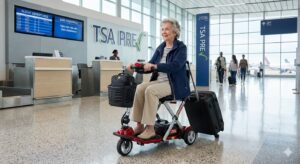
### 3. TSA Screening
Be prepared for Transportation Security Administration (TSA) screening. TSA mobility scooter rules allow security personnel to swab, inspect, or request a demonstration of battery removal. Cooperating fully will ensure a smooth screening process.
## On the Plane and Upon Arrival
### 1. Boarding Assistance
Check in with the airline staff at your gate to request any necessary assistance with boarding. If your scooter is gate-checked, attach a tag with your contact information and destination, along with a copy of your device details. Remember, if you are travelling with a lithium-ion scooter battery, it *must* be carried with you in the cabin.
### 2. Arrival at Your Destination
Upon landing, request assistance to disembark. Airline staff will typically bring your scooter to you at the gate, or they may offer a wheelchair for your use until your scooter is returned.
## Consider Renting a Mobility Scooter at Your Destination
For those who prefer to avoid the complexities of flying with their own scooter, renting a mobility scooter at your destination is an excellent alternative. Services like Scootaround offer reliable, travel-approved scooter rentals in numerous locations worldwide, allowing you to leave your device at home and pick up a suitable model upon arrival. This can significantly reduce travel stress and simplify your journey. [3]
## Recommended Travel Mobility Scooters for 2026
When choosing a mobility scooter for travel, consider lightweight, foldable, and airline-approved models. Here are some top recommendations for 2026 that balance portability with performance:
* **Pride Mobility Go-Go Endurance AL+:** Known for its lightweight design and easy disassembly, making it ideal for air travel. [4]
* **Golden Technologies Buzzaround CarryOn HD:** A robust yet portable option with a higher weight capacity, offering convenience for various travel scenarios. [5]
* **Transformer 2 Folding Mobility Scooter:** Features remote-controlled automatic folding, simplifying storage and transport. [6]
These models are often available through reputable dealers like ElectricWheelchairsUSA, which offers a wide selection and competitive pricing. [7]
* **Another very good provider of often less expensive Mobility Scooters, Electric wheelchairs, and Bariatric Foldable wheelchairs is The Mobility Department.com
## Conclusion
Flying with a mobility scooter in 2026 is entirely manageable with proper planning and awareness of airline and TSA regulations. By following this guide, you can confidently embark on your travels and enjoy the freedom and independence your mobility scooter provides.
## References
[1] Scootaround. *The Ultimate Guide to Flying With a Mobility Scooter*. [https://scootaround.com/en/the-ultimate-guide-to-flying-with-a-mobility-scooter](https://scootaround.com/en/the-ultimate-guide-to-flying-with-a-mobility-scooter)
[2] Federal Aviation Administration. *Pack Safe: Wheelchairs and Mobility Devices*. [https://www.faa.gov/hazmat/packsafe/wheelchairs-mobility-devices](https://www.faa.gov/hazmat/packsafe/wheelchairs-mobility-devices)
[3] Scootaround. *Book your scooter rental online*. [https://scootaround.com/en/rental/booking](https://scootaround.com/en/rental/booking)
[4] Pride Mobility. *Go Go® Endurance AL+*. [https://www.pridemobility.com/pride-mobility-scooters/models.asp](https://www.pridemobility.com/pride-mobility-scooters/models.asp)
[5] Golden Technologies. *New Buzzaround CarryOn HD Scooter by Golden*. [https://goldentech.com/new-buzzaround-carryon-hd-scooter-by-golden/](https://goldentech.com/new-buzzaround-carryon-hd-scooter-by-golden/)
[6] Best Power Wheelchair. *Top 3 Best Folding Mobility Scooters for Adults in 2026*. [https://bestpowerwheelchair.com/pages/3-best-folding-mobility-scooters-for-adults-in-2026](https://bestpowerwheelchair.com/pages/3-best-folding-mobility-scooters-for-adults-in-2026)
[7] ElectricWheelchairsUSA. [https://www.electricwheelchairsusa.com/?aff=406](https://www.electricwheelchairsusa.com/?aff=406)
Flying with Your Mobility Scooter in 2026: A Complete Guide to TSA and Airline Rules
 Introduction
Traveling with a mobility scooter can offer unparalleled freedom, but navigating airport security and airline regulations requires careful planning. As of 2026, new guidelines and increased awareness around battery safety are shaping how individuals can fly with their mobility aids. This comprehensive guide will help you understand the essential TSA and airline rules to ensure a smooth journey [1].
Key Regulations for 2026
1. Advance Notification to Airlines
Most airlines require passengers traveling with mobility scooters or electric wheelchairs to provide at least 48 hours’ notice [2]. This allows the airline to make necessary arrangements for storage and handling of your device. It’s advisable to inform them at the time of booking or as soon as possible thereafter.
2. Battery Regulations: A Critical Update
The most significant changes in 2026 revolve around lithium-ion batteries, primarily due to fire safety concerns. The FAA (Federal Aviation Administration) and IATA (International Air Transport Association) have updated their guidelines:
- Lithium-ion Battery Size Limit: The size of lithium-ion batteries is generally limited to 300 watt-hours (Wh) [3] [4].
- Spare Batteries: Spare lithium-ion batteries must be carried in carry-on baggage only [3]. They are not permitted in checked baggage.
- Installed Batteries: Batteries installed in the scooter must be protected from short circuits and securely attached [2].
- Removal Requirement: For mobility scooters with removable lithium-ion batteries, the battery often needs to be removed and carried in the cabin [5].
It is crucial to check with your specific airline for their exact battery policies, as some may have stricter requirements or require specific documentation from the manufacturer [1].
3. TSA Screening Process
When going through security, your mobility scooter will undergo screening. This may include visual inspection, X-ray screening, and potentially a pat-down for the passenger. Seat cushions and any non-removable pouches should also be screened [6].
- Mobility Aids: Walkers, crutches, and other mobility aids must undergo X-ray screening [7].
- Documentation: Having a copy of your scooter’s manual and battery specifications readily available can expedite the screening process [8].
Preparing Your Scooter for Flight
- Documentation: Carry all necessary documentation, including battery specifications (watt-hours) and a copy of your scooter’s manual.
- Disassembly: If your scooter disassembles, understand how to do so quickly and efficiently. Airlines may require this for storage.
- Protection: Consider protecting your scooter with padding or covers to prevent damage during handling.
- Labeling: Clearly label your scooter with your contact information.
- Pre-Flight Check: Ensure your scooter is in good working condition before arriving at the airport.
Onboard and At Your Destination
- Stowage: Power wheelchairs and scooters are typically stowed in the cargo hold. They are generally not allowed in the passenger cabin due to size and weight [9].
- Rentals: For those who prefer not to travel with their own scooter, consider renting one at your destination. Services like Walker Mobility offer convenient rental options, especially in popular travel destinations [10].
Conclusion
Flying with a mobility scooter in 2026 is manageable with proper preparation and awareness of current regulations. By understanding airline policies, especially regarding batteries, and preparing for TSA screening, you can ensure a stress-free and enjoyable travel experience. Always confirm the latest guidelines with your airline before your trip.
References
[1] Scootaround. (n.d.). The Ultimate Guide to Flying With a Mobility Scooter. Retrieved from https://scootaround.com/en/the-ultimate-guide-to-flying-with-a-mobility-scooter
[2] Malisa Mobility. (n.d.). Flying with a Mobility Scooter: Airline & FAA Rules Guide. Retrieved from https://malisamobility.com/blogs/news/flying-with-mobility-scooter-guide
[3] FAA. (n.d.). Airline Passengers and Batteries. Retrieved from https://www.faa.gov/hazmat/packsafe/airline-passengers-and-batteries
[4] The Street. (2025, September 16). Southwest Airlines cites FAA guidance for strict new lithium battery rules. Retrieved from https://www.thestreet.com/travel/southwest-airlines-cites-faa-guidance-for-strict-new-lithium-battery-rules
[5] Travelscoot USA. (n.d.). International Airline Policies for Mobility Scooters. Retrieved from https://travelscootusa.com/policies/international/
[6] Southwest Airlines. (n.d.). Wheelchair and Mobility Aid Information. Retrieved from https://support.southwest.com/helpcenter/s/article/I-am-bringing-my-own-wheelchair-or-mobility-aid
[7] TSA. (n.d.). Disabilities and Medical Conditions. Retrieved from https://www.tsa.gov/travel/tsa-cares/disabilities-and-medical-conditions
[8] WHILL. (n.d.). Your Guide to Traveling With an Electric Wheelchair. Retrieved from https://whill.inc/us/your-guide-to-traveling-with-an-electric-wheelchair/
[9] Quantum Rehab. (n.d.). Flying with an Electric Wheelchair. Retrieved from https://www.quantumrehab.com/resources/consumer-article-flying-with-an-electric-wheelchair.asp
[10] Walker Mobility. (n.d.). Affiliate Program. Retrieved from https://walkermobility.com/affiliate-program/
Top Folding Mobility Scooters for Easy Travel and Storage
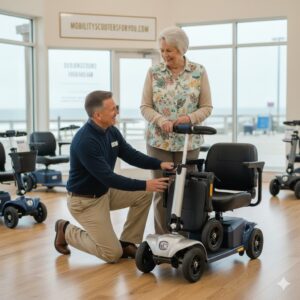
In a world where mobility and independence matter more than ever, folding mobility scooters have emerged as quietly transformative devices — blending practicality, portability, and dignity. For many individuals with mobility challenges, these compact scooters offer far more than merely “getting around.” They unlock freedom: the freedom to explore, visit friends or family, shop, travel, and reclaim autonomy.
But not all scooters are created equal. As demand surges, so does variety from ultra-lightweight commuters to rugged four-wheelers built for outdoor travel. The right foldable mobility scooter must balance portability, comfort, safety, and usability.
This article explores why folding mobility scooters have become indispensable for travel and storage, delves into the features to look for, and highlights several top models on the market today for varied needs — whether you’re a frequent traveller, a city-dweller with limited storage, or someone seeking ease of use.
What Is a Folding Mobility Scooter?
A folding mobility scooter is, at its core, a battery-powered mobility aid deliberately engineered to fold — or collapse — into a compact form. Unlike traditional, full-size mobility scooters that are large, heavy, and cumbersome to transport, a foldable scooter can often be tucked into a car trunk, stored under a bed, or carried onto public transport without special equipment.
These scooters differ in two significant ways:
- Portability and Size: They are constructed from lighter materials (aluminium, lightweight alloys, reinforced plastics) and designed so that their frames compress or fold via hinges, latches, or automatic mechanisms.
- Simplified Storage and Transport: Once folded, they occupy minimal space and can be stored in compact environments — such as small apartments, car trunks, or closets — or easily transported for air, train, or rideshare travel.
Because of these features, folding mobility scooters serve as a bridge between “need for mobility assistance” and “desire for flexibility and independence.”
Why Folding Mobility Scooters Are Gaining Popularity
Portability & Travel-Readiness
One of the strongest appeals of foldable mobility scooters is their portability. For many users — seniors, post-surgery patients, people with chronic mobility limitations — the ability to fold their scooter and bring it along for travel, errands, or family visits is life-changing. Foldable units are often light enough to lift, carry, or store without special equipment.
Furthermore, many of these scooters are suitable for multiple modes of transport: cars, buses, trains, even airplanes or cruise ships (depending on the battery type and airline regulations).
Space-Saving & Easy Storage
For people living in small apartments, houses with limited storage, or anyone who wants to keep their living space clutter-free, foldable scooters make a big difference. When not in use, they can be tucked away under furniture, in closets, car trunks, or compact storage spaces — unlike traditional scooters that require large storage areas.
Independence & Flexibility
The most crucial benefit is intangible: independence. For users with mobility challenges, these scooters restore the ability to move freely without constantly depending on others. Whether it’s going to the grocery store, visiting a friend, or travelling to a new city, folding mobility scooters enable self-reliance and dignity.
Versatility: Indoor & Outdoor Use (Within Limits)
While many foldable scooters are primarily designed for smooth surfaces — malls, sidewalks, airports — there are models tailored for more challenging terrain, offering better wheels, higher ground clearance, or stronger frames.
However, users must recognize the tradeoffs. Folding scooters typically have lower suspension, lower ground clearance, and a less robust build than heavy-duty scooters, which can limit performance on rough terrain or uneven surfaces.
Key Features to Evaluate When Choosing a Folding Mobility Scooter
Before diving into specific products, it helps to understand what makes a folding scooter stand out — or fall short. Here are the critical attributes to consider:
Weight & Portability
- Look for scooters under ~50–70 pounds if frequent lifting or transportation is required.
- Consider whether the unit allows battery removal — removable batteries make it lighter and easier to carry.
Folding Mechanism: Manual vs Automatic
- Manual Folding: Requires some physical effort — may be fine for users with sufficient strength, often more budget-friendly.
- Automatic Folding: It is much simpler to operate; anyone with limited hand strength or mobility will find it ideal since it opens and closes with the touch of a button or key fob.
Battery Life & Range
- Most folding scooters offer a typical range of 8–15 miles per charge (varies by model, battery type, and terrain).
- If you plan frequent outings or longer journeys, opt for higher-capacity lithium-ion batteries and pay attention to charging time and ease of recharging.
Comfort & Ergonomics
- Ride comfort is enhanced by features such as adjustable seats, footrests, armrests, and suspension, particularly on longer trips.
- Maneuverability (a tight turning radius) matters for indoor use or for navigating crowded spaces.
Stability & Safety
- Four-wheel designs generally offer better stability than three-wheel versions (especially on uneven ground).
- Anti-tip features, reliable brakes, solid frame materials, and suitable weight capacity (matching the user’s body weight) are essential.
Portability vs Performance Tradeoff
- Lighter, more compact scooters are easier to transport and store — but often sacrifice ride smoothness, ground clearance, and ruggedness.
- If you expect rough terrain, longer rides, or heavier loads, you may need to sacrifice some portability for a sturdier build and better performance.
Budget & Value
- Folding scooters vary widely in price depending on features, build quality, range, and brand.
- Consider long-term value — battery replacement cost, maintenance, durability — rather than just upfront price.
Top Folding Mobility Scooters Worth Considering
Here are some of the top-rated folding mobility scooters as of 2025, each geared toward slightly different user needs — frequent travelers, everyday users, or those needing maximum portability.
Quick Highlights
- EV Rider Auto Fold 4-Wheel Mobility Scooter — Possibly the most convenient foldable scooter on the market for frequent travelers. Its automatic folding mechanism (fold/unfold with a button press) makes it highly user-friendly, especially for users with limited hand strength or mobility. When folded, it becomes compact enough for most car trunks or closets — ideal for those always on the go.
- Enhance Mobility Transformer 2 Folding Scooter — A balanced pick for those who want a durable, reliable scooter that remains portable. It combines respectable weight capacity and decent range with ease of folding and moderate portability — a strong compromise between portability and sturdiness.
- Golden Technologies Buzzaround CarryOn Folding Scooter — A top choice for users seeking stability and portability on a budget. Its “fold-flat” technology lets it collapse to a very compact size, and removal of the seat can make it light enough for easier transport — ideal for apartments, small storage spaces, or frequent car trips.
- Pride i-Go Folding Mobility Scooter — A versatile mid-range scooter offering a combination of portability, comfort, and value. Suitable for everyday use — shopping, short commutes, errands — with a weight capacity and battery life that balance convenience and performance.
- FreeRider Luggie Standard Folding Scooter — A solid budget-friendly folding scooter. For users new to mobility scooters or those needing a simple, easy-to-store device for occasional use, this model offers reasonable portability and basic functionality at a reasonable price.
- HandyScoot Travel Folding Mobility Scooter — Among the lightest scooters around, this is ideal for those who prioritise maximum portability — especially frequent flyers or users who often need to carry the scooter —and is a good option for light errands, travel, or quick trips.
- iLiving i3 Folding Mobility Scooter — A compact travel-friendly scooter with a respectable battery range, suitable for regular outings, errands, or indoor use. Its simpler folding design and balanced feature set make it a middle-ground choice for users who want portability without going ultra-light.
- So Lite Mobility Scooter by Journey — For absolute portability lovers, this ultra-lightweight scooter may be the easiest to carry and store. Perfect for small spaces, frequent travellers, or users who want a scooter that disappears into a closet or car trunk when not in use.
How to Choose the Right Folding Mobility Scooter for You
Deciding among these options — or others you find — boils down to your personal lifestyle, needs, and priorities. Here’s how to approach the choice:
- Frequent travel / frequent transport? → Opt for a lightweight, fold-flat, or auto-fold scooter (like the EV Rider Auto Fold, So Lite, or HandyScoot). The ease of folding/unfolding and portability will matter most.
- Need everyday comfort & moderate portability? → Balanced models like the Transformer 2, Pride i-Go, or iLiving i3 deliver a good mix of usability, comfort, and convenience.
- Budget-conscious, occasional use, or small-space home storage? → Smaller, simpler scooters like the FreeRider Luggie or Buzzaround CarryOn offer essential mobility at a lower cost, without overwhelming bulk.
- Expect to travel outdoors or need stability on uneven terrain? → Prioritise sturdier builds, 4-wheel models, larger tires, and good suspension — even if that means sacrificing some portability.
Also, always check the manufacturer’s specs for weight capacity, battery range, folding method, and real-world folded dimensions. These details often make or break daily convenience.
Typical Tradeoffs & What to Watch Out For
No product is perfect — and folding mobility scooters are no exception. Awareness of tradeoffs helps avoid buyer’s remorse.
- Portability vs Stability: Lighter scooters are easier to carry — but often less stable, with lower ground clearance and weaker suspension. That means rough terrain, bumps, or uneven sidewalks may be uncomfortable or unsafe.
- Battery Life vs Size/Weight: Smaller scooters — especially ultra-light models — tend to have lower-capacity batteries, meaning shorter range per charge, which can be a problem for frequent users.
- Comfort vs Compactness: Compact scooters often have smaller seats, fewer comfort features (less suspension, more straightforward controls). For short errands, it’s fine; for prolonged rides — maybe not.
- Durability and Load Capacity: Most folding scooters have a weight limit (commonly 250–300 lbs). If a user is near that limit or needs a sturdier build, a folding scooter may not be ideal.
Maintenance, Care & Safety Tips
To ensure your folding mobility scooter remains reliable and safe for years, consider the following:
- Battery care: Charge regularly, avoid deep discharges, and, if removable, store the battery separately when not in use. This prolongs battery life and reduces degradation.
- Check folding mechanism regularly: Hinges, latches, or automatic fold motors should be inspected periodically — especially if you travel often or fold/unfold frequently.
- Tire and wheel maintenance: Keep tires inflated (if pneumatic) or free of debris. Worn or damaged wheels can compromise stability, especially in 4-wheel models.
- Seat/comfort adjustment check: Ensure seat height, armrests, and footrests remain secure; loose parts can affect ergonomics or safety.
- Avoid misuse on rough terrain: Foldable scooters are usually optimized for smooth surfaces — sidewalks, malls, airports — not off-road or heavily uneven paths.
By properly maintaining the scooter and using it within its intended design limits, you maximize safety and lifespan.
Are Folding Mobility Scooters Right for You?
A folding mobility scooter isn’t a one-size-fits-all solution. But for frequent travellers, seniors, those living in smaller dwellings, or anyone wanting mobility without sacrificing portability, it can be life-changing.
You might benefit if:
- You travel often (by car, bus, train, and air) and need a scooter you can pack efficiently.
- You live in a small apartment or space-constrained home.
- You value convenience and independence — not just mobility, but freedom.
- Your daily use involves smooth indoor/outdoor surfaces (shopping malls, sidewalks, urban surroundings).
You might want to reconsider if:
- You frequently traverse rough terrain, cobblestones, grassy or uneven ground.
- You need maximum stability or support (especially if near the upper limit of the scooter’s weight capacity).
- You prefer comfort and long-range over portability — traditional, larger mobility scooters might suit you better.
Conclusion
Folding mobility scooters stand at the intersection of necessity and convenience — bridging the gap between mobility assistance and independent living. With thoughtful selection, one can enjoy the freedom to move, travel, and live on one’s own terms.
Whether you’re a frequent traveler seeking a compact companion, a city-dweller with limited storage, or someone needing easy mobility for errands and outings, there’s likely a foldable scooter tailored to your lifestyle.
Because mobility is more than just movement: it’s dignity, independence, and control. And for many, a foldable mobility scooter restores just that.